I've worked in window coverings since 2006, starting on the shop floor of a small roller shade factory in Suzhou that exported to Europe. Xiamen Goodwood Industry Co., Ltd., the company behind Shadesmart, was founded in 2008, and I joined that same year. Across nearly 20 years of manufacturing and exporting, one quality trap in cellular shades shows up again and again, especially in low-priced products: the honeycomb cells slowly collapse. Today our 16-person QC team inspects 100% of finished shades before they ship, and fabric weight is one of the first things they look at.
A cellular shade lasts when its fabric weight is matched to its cell depth. A 25mm (1 in) cell built from fabric below about 75 g/m² typically starts to ripple within two to three years, no matter how good it looked at delivery. If you are comparing cellular shade manufacturers, cell depth and fabric weight are the two numbers to ask for before anything else.
A note on the title: I won't put a lifespan number on any shade, including ours, and this article makes no warranty claim. What I can do is show you where the 3-year failures come from. They are predictable, and you can screen for them before you place an order.
What actually makes a cellular shade fail after three years?
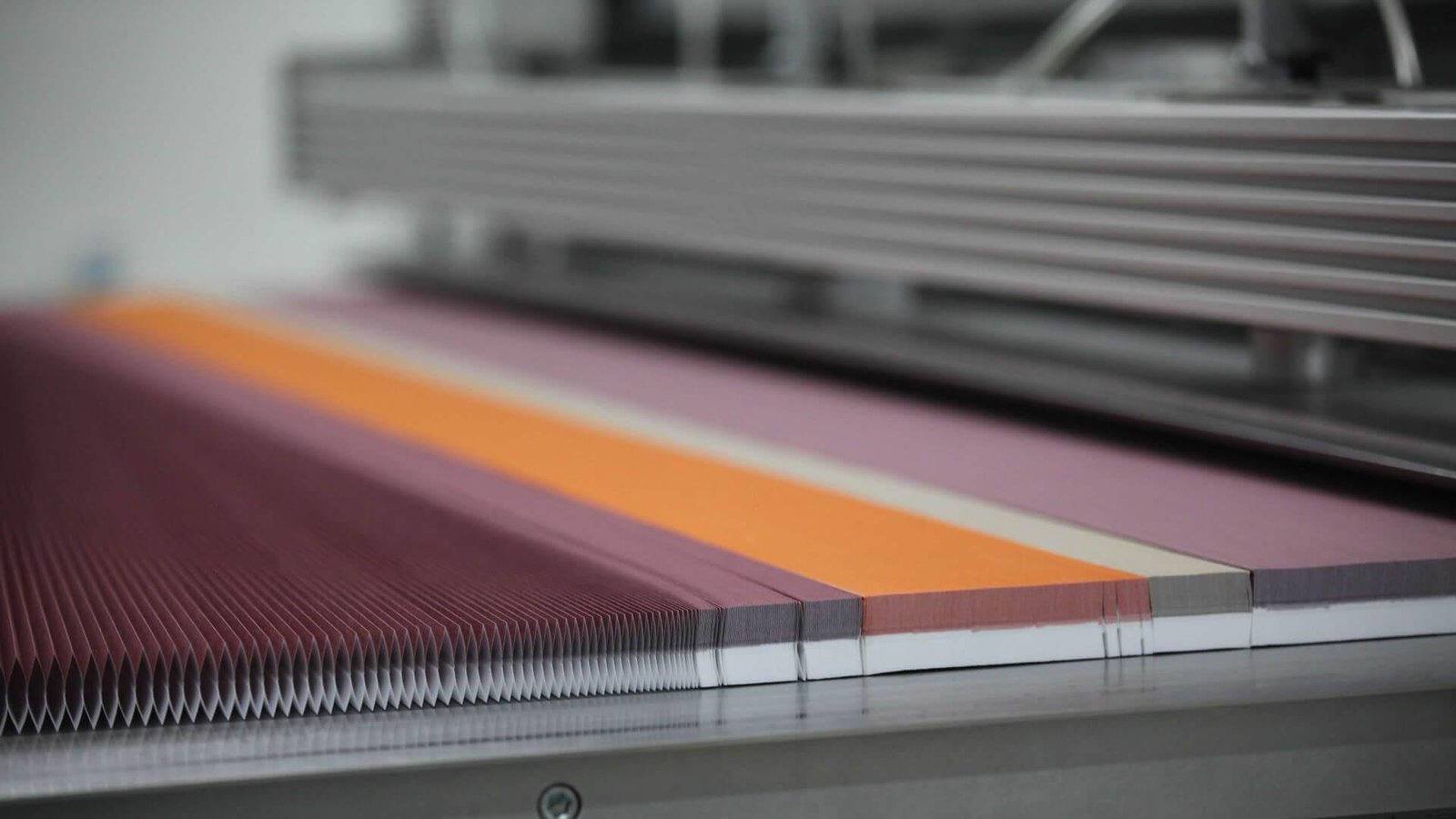
Cellular shades fail early when the fabric is too light to hold its cells open on its own. Nothing supports the honeycomb shape except the fabric's own stiffness, so an underweight fabric gradually sags, ripples along the sides, or flattens under its own folds.
The timing depends on cell depth. In our production experience:
- 9mm cells start to collapse within 1–2 years when the fabric is underweight.
- 25mm cells show side ripples in 2–3 years.
- 38mm cells flatten in 3–4 years.
Deeper cells take longer to show the problem, but every depth has a weight floor.
The problem is that none of this shows up when the product ships. A sample, a photo, and a freshly delivered shade all look identical to a properly built one. The failure happens in the end customer's home a year or two later, after the return window has closed.
What is the minimum fabric weight for each cell depth?
From our production experience, the minimum self-supporting fabric weight is 55 g/m² for 9mm (0.35 in) cells, 75 g/m² for 25mm (1 in) cells, and 90 g/m² for 38mm (1.5 in) cells. Below these floors, expect collapse within one to four years, depending on depth.
| Cell depth | Minimum fabric weight | What happens below it | Shadesmart internal standard |
|---|---|---|---|
| 9mm (0.35 in) | 55 g/m² | Cells start collapsing within 1–2 years | — |
| 25mm (1 in), single cell | 75 g/m² | Side ripples within 2–3 years | 85 g/m² |
| 38mm (1.5 in), double cell | 90 g/m² | Cells flatten within 3–4 years | 105 g/m² |
| 38mm (1.5 in), triple cell | 90 g/m² | Cells flatten within 3–4 years | 120 g/m² |
Our internal standards sit 10 to 30 g/m² above the relevant floor. For a single-cell 25mm shade we specify 85 g/m², a full 10 g/m² above the safe line. That margin is deliberate: I want every shade to sit comfortably above the floor, not right on it.
These numbers are our own production thresholds, not an industry-mandated requirement, and the failure timelines are approximate. Treat them as a screening tool. If a supplier's number is far below the table, that is a reason to ask more questions.
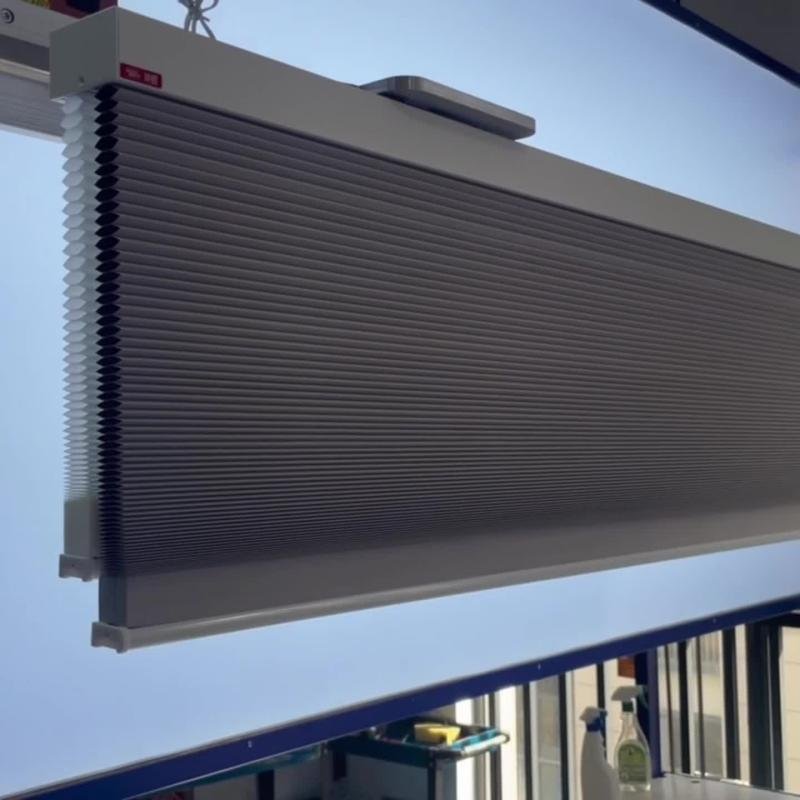
Why do underweight wholesale cellular shades look fine on day one?
Underweight shades look fine at first because collapse is a slow failure. Cell shape depends on fabric stiffness, and that only shows itself after months of raising, lowering, and hanging. A sample cannot tell you what year three looks like.
The market is full of 25mm cellular shades built from 60–65 g/m² fabric. They look excellent when new, and in our experience they all deform by year three. This is one of the reasons we don't compete on the lowest price. To match a price built on 60–65 g/m² fabric, we would have to build a shade I already know will fail.
If you're sourcing wholesale cellular shades, here is what I would ask any supplier:
- "What is the fabric weight in g/m² for each cell depth in your line?" Get it in writing. If the quote lists only color and cell size, ask why.
- "How does that compare to your product's real-world failure threshold?" Check the answer against the table above. A 25mm shade under 75 g/m² is a red flag.
- "How do you verify fabric weight on incoming material?" A supplier that buys fabric and never weighs it has no way of knowing what it ships.
How do cellular shade manufacturers check fabric weight before a shade is built?
In our plant, fabric weight is one of the checks at incoming quality control (IQC), before the material goes into production. IQC also checks fabric color difference, and every finished shade passes final inspection before it ships. You can read more about our quality control process on the site.
Our QC system has four checkpoints:
- IQC checks incoming materials. For fabric, that means weight and color.
- IPQC checks cutting accuracy and hem quality during production.
- FQC checks the finished product.
- OQC checks quantity, labels, and packaging before shipment.
Every incoming batch is sampled at IQC. Because raw materials are traceable through the whole process, we can trace a problem batch back to its source.
An incoming weight check does not prove a shade will last ten years. It only verifies that the fabric on the roll matches the spec we designed the shade around. But it is the difference between a spec and a hope, and it is the check I would most want to see from any factory making cellular shades. If you want the wider picture of how we build, see our factory and production setup.
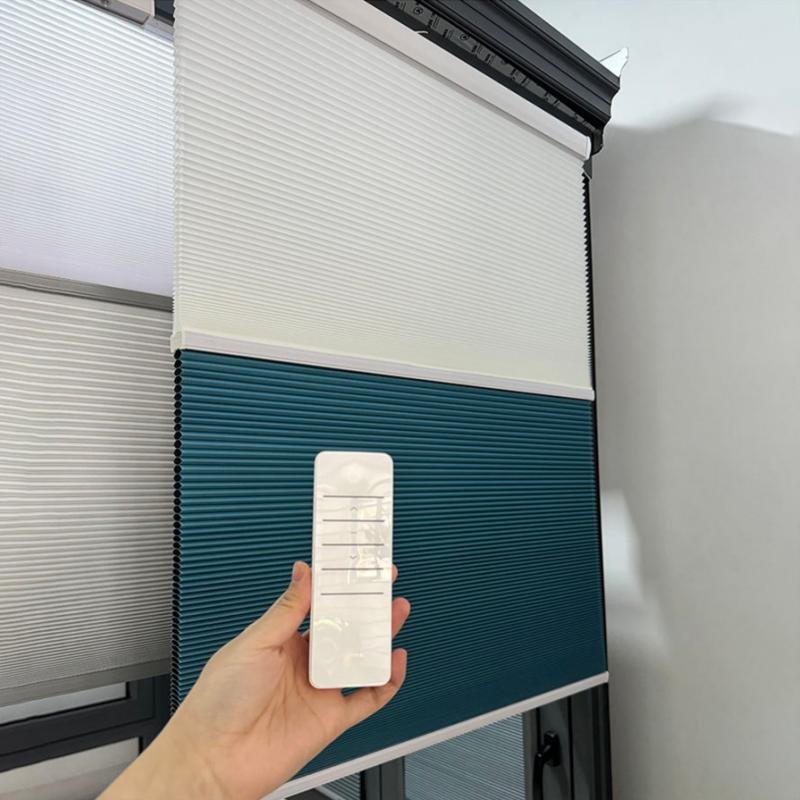
When is a cellular shade the wrong choice?
A cellular shade is the wrong choice when the main requirement is total darkness. The cell depth makes the shade thick, so an inside-mount installation leaves a gap of about 3–8mm on each side between the shade and the window frame.
On a 2,400 × 2,400mm (about 94 × 94 in) window, those gaps add up to roughly 30–50 cm² (5–8 sq in) of light leakage. In normal room light you won't notice it. In a bedroom that needs cinema-level darkness, it shows as vertical light lines on the wall.
If total blackout is the first requirement, a blackout roller shade with side channels controls light leakage better than any cellular shade. I would rather tell you that than win the order and hear about it six months later. If that describes your project, start with our roller shades instead.
Cellular shades earn their place on insulation. Cell depth drives the R-value1: a single-cell 9mm shade is around R-0.8–1.2, while a triple-cell 38mm shade reaches R-4.8–5.8. Those are the shade's own figures. The real energy savings depend on your existing glass, which I'll cover in a separate article.
The short version
Cellular shades fail in three years when fabric weight doesn't match cell depth. Screening for that takes three steps:
- Get the g/m² spec for each cell depth in writing.
- Compare it against the minimums: 55 g/m² for 9mm, 75 g/m² for 25mm, 90 g/m² for 38mm.
- Choose the right product for the job. Cellular is for insulation, not blackout.
Next step: check the spec before you commit
If you're comparing suppliers, request a fabric sample card and check the g/m² spec against the table above. If you're sourcing at volume, check current production capacity for your product mix before you finalize a supplier.
FAQ
What fabric weight should a 25mm cellular shade have? In our production experience, at least 75 g/m² for a 25mm cell. Below that, side ripples typically appear within 2–3 years. Our own internal standard for a single-cell 25mm shade is 85 g/m², which leaves a 10 g/m² margin.
How long do cellular shades last? It depends on the fabric weight, cell depth, and how the shade is used, so I don't give one number. What I can say is that underweight fabric fails on a predictable schedule: 1–2 years for 9mm cells, 2–3 for 25mm, and 3–4 for 38mm.
How can I tell if a cellular shade is underweight before ordering? Ask the supplier for the fabric weight in g/m² for each cell depth, in writing, and compare it with the minimums above. Also ask how they verify fabric weight on incoming material.
Are cellular shades good for blackout? Not on their own. Inside-mount cellular shades leave a 3–8mm gap on each side, which shows as light lines in a very dark room. For total blackout, a blackout roller shade with side channels is the better choice.
Curious what R-value actually measures? This page explains how insulation resistance is rated. ↩