
Full article
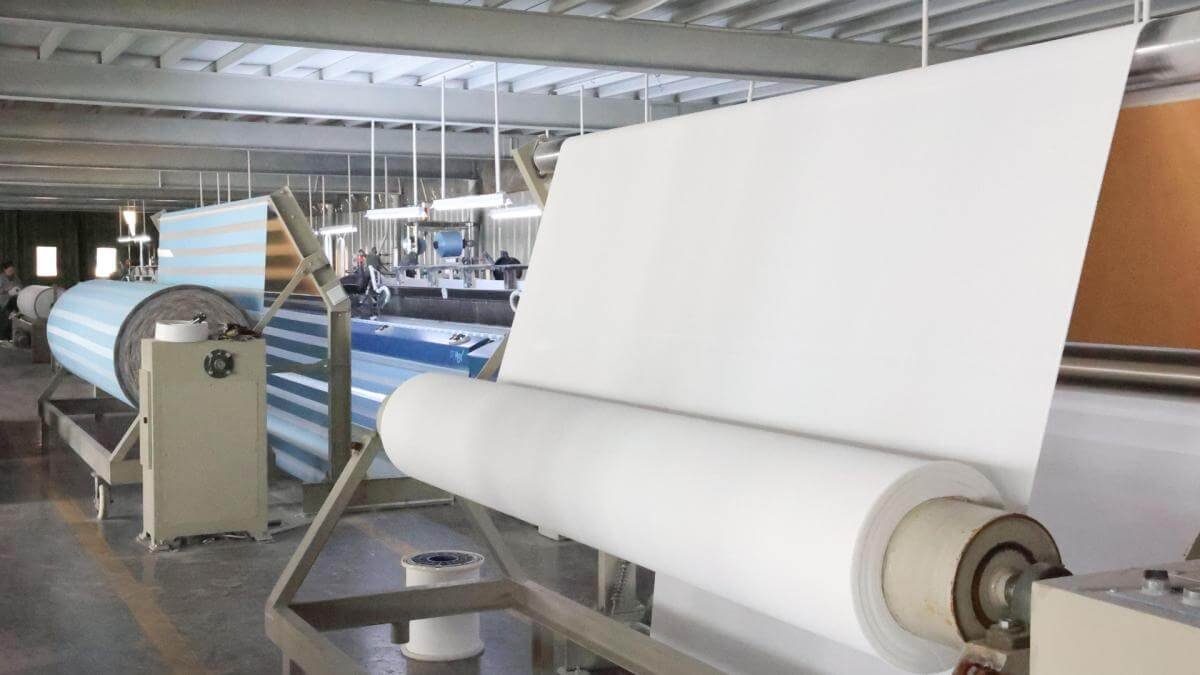
Hotel roller shade projects usually go wrong in two places: the fire documentation doesn't match the fabric that actually arrives, and a replacement shade ordered late doesn't match the original color. Both surface after the contract is signed. I've worked in window coverings since 2006, and I'm production director at Shadesmart, part of Xiamen Goodwood Industry Co., Ltd., founded in 2008. Our 16-person QC team inspects 100% of finished shades before they ship. Here is what I'd ask any commercial roller shade manufacturer, including us, before a PO is signed.
What should a hospitality buyer ask a manufacturer about fire ratings?
Ask which exact fabric and coating the fire report covers, which test standard and version was used, and whether the fabric you receive can be traced back to the tested one. A report for a similar fabric is not documentation for your fabric.
Fire requirements depend on the project's location, the building type, and the owner's specification. Two commonly referenced test standards are NFPA 7011 in the US and BS 58672 in the UK, but which one applies, and at what performance level, is decided by your local fire code and your spec. A blog post can't decide that for you, and I won't pretend otherwise.
These are the four questions I'd put in writing:
- Which fabric does the report cover? A report is tied to the material that was tested. Confirm it names the specific fabric series and coating you're buying, and ask whether it also covers your colorway.
- Which test standard, and which version? Match it against what your owner or consultant specified, not against what the supplier says is "equivalent."
- Was the fabric tested, or the finished shade? Some specs ask about the fabric only; others care about the assembled product. Find out which one yours requires.
- Can this fabric be traced to your shipment? A report is only useful if the fabric in your boxes can be tied back to it. We maintain raw material traceability through the full production process, and I'd expect any manufacturer you shortlist to explain theirs just as specifically.
I'd strongly recommend fire documentation be confirmed in writing, per fabric and per project, at the quotation stage, not after production starts. If a supplier answers "all our fabrics are fine" without naming a fabric, a standard, and a document, treat that as a no-answer.
How much color difference between dye lots is acceptable in a hotel?
For a hotel, I treat a ΔE above 2.0 between dye lots as a problem inside the same room, and above 3.5 as a problem anywhere in the same project. The eye catches color shifts between neighboring windows faster than most buyers expect.
ΔE here refers to the CIE 1976 color difference measure3. This is the scale we use to judge fabric lots:
| ΔE value | What the eye sees | How we handle it |
|---|---|---|
| < 1.0 | Not detectable | Acceptable within a batch in any situation |
| 1.0–2.0 | Noticeable on careful inspection | Use with caution across windows in the same room; get customer confirmation |
| 2.0–3.5 | Visible at normal viewing angle | We reject mixing these across windows in the same room; for different rooms, we tell the customer first |
| > 3.5 | Obvious difference | Different batches should not be used in the same project |
This is our internal handling standard, not an industry mandate. Where it comes from is complaint history. In our 2019–2024 return and complaint records, color difference made up 18% of cases, and every one of them was caused by fabric from different production batches being mixed. It was never a one-off dye error. In other words, this problem is almost entirely preventable with batch discipline, which is why the next section matters.
On our side, incoming fabric is checked at IQC for color difference and weight (g/m²) on every batch. You can see the full inspection sequence on our quality control page. But incoming inspection only protects you if the project is planned so that one batch can cover it.
How do you control batches on a hotel project with 30+ windows?
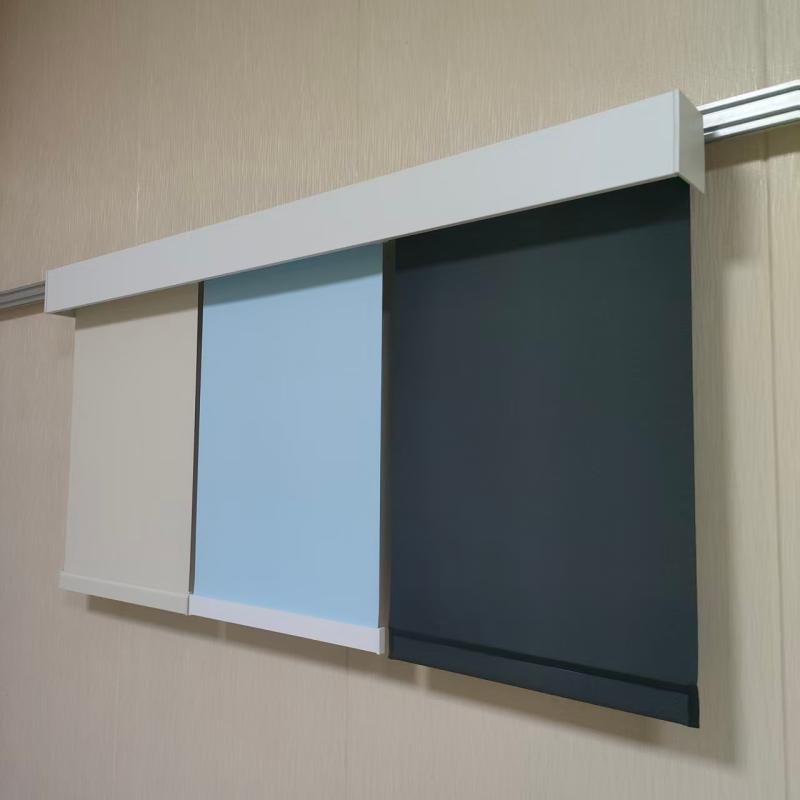
Plan the whole project's fabric up front: one machine, one dye lot, produced together, plus a spare allowance. For any project over 30 panels, our standard practice is to require a production schedule in advance, run all fabric from the same machine and the same dye lot, and order 15% more fabric than the project needs for replacements.
That is our own internal rule, not an industry requirement. Here is why I hold to it.
What happens without it. One hotel project we know of is the clearest example. A month before opening, one room needed an extra shade because of a measurement error. The original batch had sold out, so the replacement was made from a new batch. That batch measured ΔE = 2.8 against the original, a difference visible at normal viewing angle. Nobody noticed until the quality inspection. The resulting claim dispute ran for 8 months, over one shade.
What we do now. That experience is why the 15% spare allowance and the advance scheduling are standard procedure rather than favors. Measurement errors, damaged panels, and late design changes happen on every large project. The only question is whether you can fix them from the same batch.
Check the lead time before you commit to a spare quantity. Fabric for custom colors takes time, and engineered project colors take the longest:
| Fabric type | Custom color/spec fabric lead time |
|---|---|
| Standard roller fabric (100–250 g/m²) | 20–30 days |
| Blackout-coated fabric | 25–35 days |
| Project-specific color or pattern | 45–60 days |
These are fabric procurement lead times only. They are not the time from your order to delivery of finished shades. Confirm finished-goods delivery separately for your project. Those figures are quoted per project, and fabric lead times shift with the raw material market, so treat the table above as a planning guide, not a promise.
A few other controls on the production side matter for hotel consistency. In-process checks sample cutting accuracy every 2 hours per line, against a width tolerance of ±1mm and a height tolerance of ±2mm. Shades with a cut width error over ±2mm are sent back to the workshop. Every finished shade goes through three full extension cycles and an operating force check before shipping.
When is a roller shade the wrong choice for a hotel project?
Roller shades suit most hotel guest rooms, but three situations call for a different recommendation: true blackout, thermal performance, and very wide openings. I'd rather tell you this before quotation than after installation.
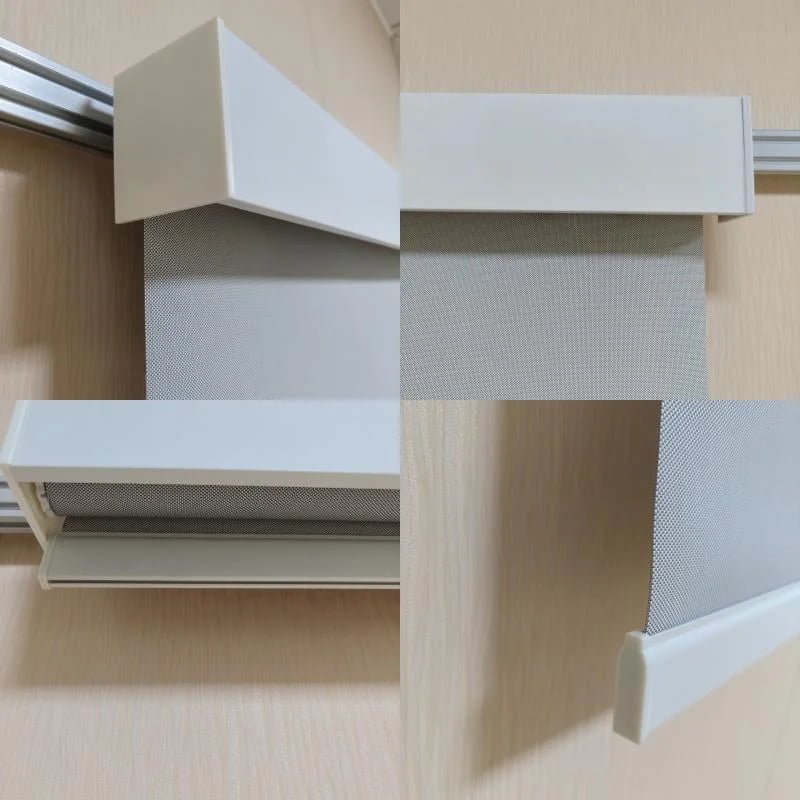
Guest room blackout needs three components. A fabric rated "blackout" does not make a blackout installation. Real blackout requires the blackout fabric, a cassette housing over the roller tube, and side channels sealing both edges. Without side channels, a 3–8mm light gap runs down each side. On a 2,400mm × 2,400mm window, that adds up to roughly 38 cm² of leakage, very noticeable in a dark room. Many products sold as "Blackout" are really Room Darkening once installed. If your brand standard requires full darkness, specify all three and price all three. "We'll add side channels if guests complain" is a plan I've seen go badly many times. Our roller shades range page covers the options.
Roller shades are not a thermal solution. Their R-value is below 0.5. If energy performance is a project driver, such as in a cold-climate hotel, cellular shades are the better product.
Very wide single shades perform poorly. Above 3,000mm in a single tube, the day-to-day experience degrades. Splitting into two shades is the better solution. For widths beyond what a standard tube handles, tube diameter and wall thickness also have to scale up. For example, our 50mm tube is rated for up to 2,800mm at ≤350 g/m², and heavier fabrics need a larger tube.
One more honest note: roller shades usually beat zebra shades for hotels. Zebra shades can't be wet-wiped, and in dusty environments their maintenance cost climbs noticeably. A housekeeping team will feel that cost over time. I'd recommend zebra shades for offices and homes, and roller shades for guest rooms.
What should you ask commercial roller shade manufacturers before you sign the PO?
Before signing, get written answers on fire documentation, batch control, spare stock, tolerances, and inspection. The table below shows what a good answer looks like, so you can tell a real one from a vague one.
| Question to ask | What a good answer looks like |
|---|---|
| Which fabric, standard, and report cover my fire requirement? | Names a specific fabric series and coating, the test standard and version, and a document you can read |
| Can fabric be traced to my shipment? | Describes how raw material records link to production batches |
| How will you keep all my shades in one dye lot? | Same machine, same dye lot, scheduled in advance for the whole project |
| How much spare fabric do you hold for my project? | A stated percentage, set aside before production (ours is 15% for projects over 30 panels) |
| What is the ΔE limit you accept across windows in one room? | A number and a rule, not "very close" |
| What are your cutting tolerances, and what gets rejected? | Stated tolerance values, and a stated rejection threshold |
| How many finished shades are inspected before shipping? | A percentage and a method; ours is 100% by a dedicated QC team |
| What's the lead time for finished shades, separate from fabric? | A separate figure for production and shipping, confirmed per project |
| Which parts of my spec are you not a good fit for? | A direct answer. A supplier who says "everything" is not being honest |
The last question tells you the most. I've turned down orders and recommended other products where a roller shade wasn't the right answer, and I'd rather lose a line item than have a hotel manage a problem for ten years.
Frequently Asked Questions
What fire rating do commercial roller shades need for a hotel?
It depends on your local fire code, the building type, and the owner's specification. NFPA 701 and BS 5867 are commonly referenced, but your consultant or authority decides which applies. Ask the manufacturer for a report that names the exact fabric and coating, and confirm it in writing at the quotation stage.
What is an acceptable color difference between fabric batches in a hotel?
Our internal rule is to avoid mixing fabric above ΔE 2.0 across windows in the same room, and to avoid different batches entirely above ΔE 3.5 in the same project. Below ΔE 1.0 the difference isn't detectable. This is our handling standard, not an industry mandate.
How much spare fabric should I order for a hotel shade project?
For projects over 30 panels, our standard practice is 15% more fabric than the project needs, from the same machine and dye lot, set aside before production starts. A late replacement from a new batch is where most color-match disputes begin.
Are roller shades or zebra shades better for hotel guest rooms?
I recommend roller shades for guest rooms. Zebra shades can't be wet-wiped, and in dusty environments their maintenance cost rises noticeably, which housekeeping teams feel over time. Zebra shades suit offices and homes better.
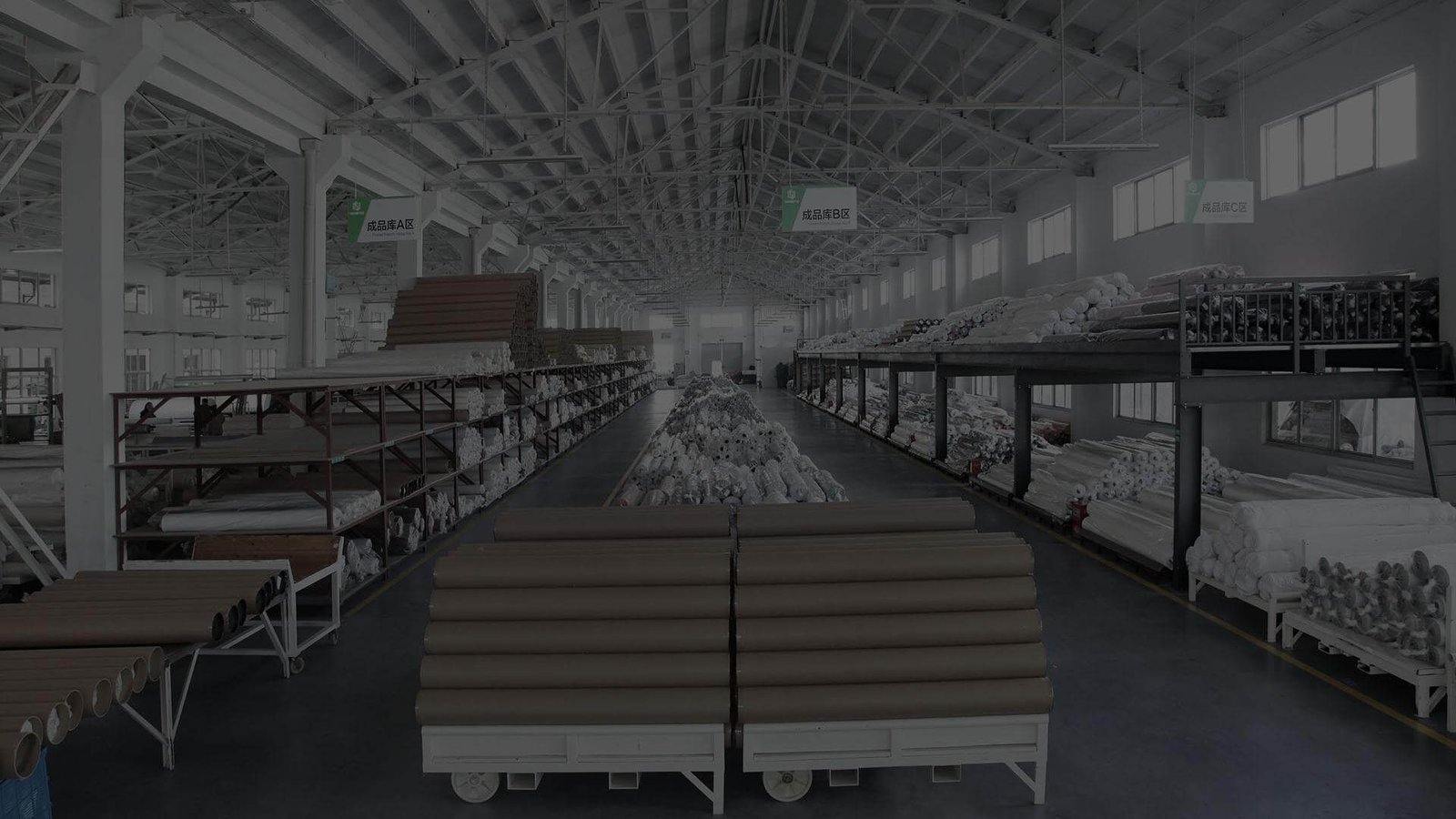
Planning a hotel or apartment fit-out? Send us your room count, window sizes, and fabric specification, and we'll talk through batch planning, spare stock, and the documentation to request for your market. If a roller shade isn't the right fit for part of your project, we'll tell you what we'd suggest instead. Discuss bulk fit-out requirements for your property, or see how we work with project and contract buyers and what our factory looks like.
Want to see what this textile flame-propagation test covers and where it applies? Open this for the standard's scope. ↩
Curious what the UK standard says about curtains and window blinds in non-domestic buildings? Open this for the standard's scope. ↩
Want to understand how ΔE is actually calculated between two colors? Open this for the CIE definition. ↩
Ready to Source Direct?
Ready to Talk About Your Project?
Send us your product specifications, target market, and estimated volume. Our export team responds within 1 business day.