Recycled aluminum in window shade track is usually strong enough. The real problem is inconsistent chemistry. In 2018, a roller shade shipment to Germany was flagged because purchased aluminum profile tested at 0.5% lead, against a REACH threshold of 0.1%. A low quote can hide exactly this kind of risk.
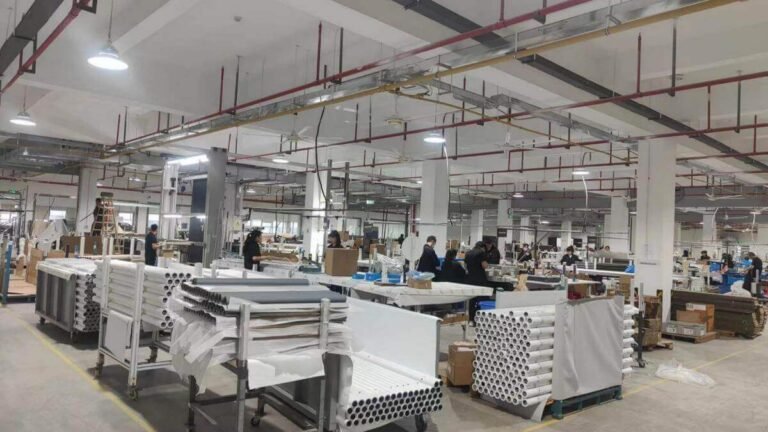
I'm the production director at Shadesmart, which is part of Xiamen Goodwood Industry Co., Ltd. The company was founded in 2008 and has nearly 20 years of window covering manufacturing and export experience. I started in this industry in 2006 at a small roller shade factory in Suzhou, and one of the jobs I did there was aluminum tube processing. Today our 16-person QC team inspects 100% of finished products before they leave the factory. But the 2018 incident taught me that finished-product inspection alone would not have caught this problem. The risk was in the raw material.
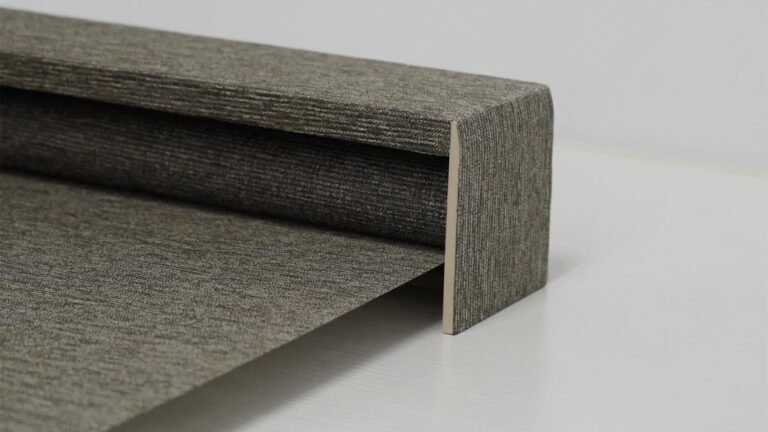
A quick note on terms: in this article "shades" means the roller-type products we manufacture, though many buyers use "blinds" as a general sourcing term for the whole category. "Track" here refers to the aluminum hardware in and around the shade: tubes, bottom rails, guide rails and cassettes.
Why does aluminum source matter more than the track design?
In my experience, roughly 80% of the quality of aluminum window shade parts is determined by where the aluminum ingot comes from. Profile design, extrusion skill and finishing all matter, but they cannot fix a bad starting material.
Aluminum hardware is everywhere in a shade: the roller tube, the bottom rail, the guide channels, the cassette. Buyers tend to compare fabric and motor specifications line by line and treat the aluminum as a commodity. It is the part factories are most tempted to cut corners on, because the difference is invisible once the part is anodized or painted. Two bottom rails can look identical on a sample table and come from completely different ingots.
That is why I always tell new buyers to ask about the ingot first and the profile drawing second.
What are the three grades of aluminum used in window shade hardware?
Aluminum supply for window shade hardware falls into three practical tiers, based on ingot source, dimensional tolerance and surface treatment. Grade A uses primary 6063-T5 aluminum, Grade B uses primary 6061, and Grade C uses recycled aluminum. The tiers below reflect how the Chinese aluminum profile supply market is generally structured, from what I have seen in nearly two decades in this industry.
| Grade | Ingot Source | Wall Thickness Tolerance | Surface Treatment | Typical Use |
|---|---|---|---|---|
| A | Primary aluminum 6063-T5 | ±0.1mm | Anodizing ≥10μm | Export to higher-end Western markets |
| B | Primary aluminum 6061 | ±0.2mm | Anodizing 6–10μm | Export to general markets |
| C | Recycled aluminum | ±0.3–0.5mm | Spray paint or electrophoretic coating | Low-price domestic market |
Notice that the surface treatment changes along with the ingot: anodizing thickness drops from ≥10μm to 6–10μm, and Grade C moves to paint or electrophoretic coating.
I'm describing supplier tiers here as an industry reference. It is not a claim about which grade goes into any specific product, and a buyer should always ask a supplier to state the grade in writing for each part.
Why does recycled aluminum fail REACH if it is strong enough?
Recycled aluminum usually has enough strength for a window shade. What it lacks is a stable, controlled chemical composition. That is a compliance problem before it is a mechanical problem, and I want to be fair about this: not every recycled aluminum part is dangerous, and for some domestic low-price applications the trade-off is acceptable to the buyer.
The 6063 alloy is defined by tight composition limits1, with silicon at 0.2–0.6% and magnesium at 0.45–0.9%, and with other impurities kept strictly controlled. Primary ingot lets a smelter hit those numbers batch after batch. Recycled scrap comes from mixed sources, and each source brings its own trace elements, so the mix changes from one batch to the next.
For export to the European Union, this matters because of REACH, the EU regulation covering the registration, evaluation, authorization and restriction of chemical substances. REACH includes a list of substances of very high concern (SVHCs)2, and an article containing one of them above 0.1% by weight can trigger information and notification obligations3. In my experience, a shipment can also be stopped at the border. Recycled aluminum with elevated heavy metal impurities, such as lead4, can put a shipment above that 0.1% line.
I'm explaining REACH here as background for buyers. Please treat it as context for why material control matters, not as a statement about any product's certification status.
What happened when a shipment to Germany was held over lead content?
In 2018, a batch of our roller shades bound for Germany was flagged because the outsourced aluminum profile contained 0.5% lead, five times the 0.1% REACH threshold3. The cost was roughly RMB 120,000 in direct losses, and the damage to the customer relationship was harder to put a number on.
The uncomfortable part was how it happened. We had relied on the profile supplier's quality report, and it did not prevent the problem from reaching us.
What we changed afterward has become standard procedure:
- We stopped relying on supplier quality reports alone. Supplier paperwork is now treated as a claim to verify, not as evidence.
- We test aluminum chemical composition ourselves. Aluminum suppliers are tested on their chemical composition every quarter.
- Aluminum is checked at incoming inspection. Our IQC stage covers aluminum tubes and profiles for dimensions and chemical composition, with sampling on every incoming batch.
I want to be clear that quarterly supplier testing is our own internal practice. It is not an industry requirement, which is exactly why I think buyers should ask about it.
How can you tell if your China supplier's window blind track is recycled aluminum?
You usually cannot tell by looking at the part or the quote, so you have to ask specific questions and require specific answers in writing. A supplier who is confident in their material will answer these without hesitation. A vague answer is information too.
| Question to Ask | What a Solid Answer Looks Like | Warning Sign |
|---|---|---|
| What is the ingot source and alloy for tubes, bottom rails and guide rails? | A named alloy and temper (for example primary 6063-T5), stated per part | "High-quality aluminum" with no alloy |
| How often do you test chemical composition, and who does it? | A defined frequency, done on incoming material by your own team | "Our supplier provides the report" |
| What is your wall thickness tolerance? | A number, such as ±0.1mm or ±0.2mm | No tolerance stated, or ±0.5mm |
| What is the surface treatment and thickness? | Anodizing thickness in microns, or a named coating process | Only "powder coated" or "painted" |
| Can I see a composition test record for a recent batch? | A recent record you can review | Refusal or a very old report |
Wall thickness is a useful second signal. In our own five-year complaint data, bottom rail bending accounted for 15% of returns and complaints. Two causes stood out: inadequate transit protection, and wall thickness under 1.5mm on rails longer than 2,200mm, which sag under their own weight. A thin wall does not prove recycled aluminum, but a supplier who cuts wall thickness to win on price is often making similar trade-offs elsewhere in the material.
If you are sourcing from China and comparing quotes that differ by a wide margin, ask why before you ask for a discount. Price gaps in aluminum hardware usually trace back to ingot source, tolerance and finish, and those are the areas where the risk hides.
For a broader checklist on evaluating a supplier before you send a deposit, see our guide to 10 Questions to Vet a Window Shade Supplier in China.
Sourcing shades for the EU or UK? If you want to know how incoming aluminum is checked before it becomes tubes, rails and cassettes, read about our compliance and quality approach, or ask our team how incoming aluminum inspection would fit your import requirements. If you are still comparing factories, our factory-direct sourcing page explains how we work with overseas buyers.
Frequently Asked Questions
Is recycled aluminum allowed in window blind hardware sold in the EU?
REACH does not prohibit recycled aluminum by name. What matters is the finished article: if it contains a Candidate List substance such as lead above 0.1% by weight, EU suppliers must pass on safe-use information and may have notification duties. Recycled material makes this harder to control because its chemistry varies by batch. Check current rules with your compliance advisor.
Is recycled aluminum weaker than primary aluminum for window shade parts?
In most cases it is strong enough for window shade hardware. The issue I see is chemical composition, not strength. Recycled aluminum has an unstable composition and can carry heavy metal impurities that primary 6063 or 6061 ingot does not, which is a compliance risk rather than a mechanical one.
How can I tell if window shade track is made from recycled aluminum?
You usually cannot tell by eye once a part is coated. Ask for the alloy and temper of each part in writing, the wall thickness tolerance, the surface treatment, and a recent composition test record. Tolerances of ±0.3–0.5mm and a painted or electrophoretic finish are typical of the recycled tier.
How often should aluminum suppliers be tested for chemical composition?
I don't know of a universal rule. Our own practice is quarterly composition testing of aluminum suppliers plus sampling at incoming inspection on every batch. Whatever a supplier tells you, ask for a defined frequency and a test record instead of a general assurance.
Why is one supplier's track quote so much lower than others?
Price gaps in aluminum hardware usually trace back to ingot source, wall thickness tolerance and surface finish. Ask which grade of aluminum is quoted for each part, and get the answer in writing, before you negotiate on price.
Explains how the 6063 alloy's composition is defined and controlled. ↩
Shows what the SVHC Candidate List is and which substances are currently on it. ↩
Summarizes the duties that apply when an article contains a Candidate List substance above 0.1% by weight. ↩
Explains what lead's status on the SVHC Candidate List means for articles that contain it. ↩