The listing on the wholesale platform said "factory direct." The sales rep answered technical questions confidently. The sample arrived on time and looked right. Three months later, when a full container came back from a U.S. distributor citing uneven rolling in widths above 1,800mm, the response took two weeks — not because the company didn't care, but because the person who answered emails had to forward the complaint to someone else, who had to contact the actual factory, who had to pull the relevant production supervisor off the floor.
The company wasn't a manufacturer. It was a trading company with a very convincing website.
We're Shadesmart, a roller blinds manufacturer based in Xiamen, China. As a genuine factory, we see this confusion play out regularly on both sides — buyers who don't know they're dealing with a trading company, and buyers who understand the difference but aren't sure how to verify it. This guide covers both.
Roller blinds supplier vs. manufacturer — the core distinction:
A roller blinds supplier sells roller shade products to B2B buyers but may or may not produce them. A roller blinds manufacturer owns the facility where shades are produced — fabric cutting, tube assembly, mechanism installation, and quality inspection all happen under one roof. The difference is accountability: when something fails at scale, a manufacturer fixes it at the source; a supplier relays the problem to someone else.
What's the Actual Difference?
A manufacturer controls every stage of production. When a buyer reports that 300 units from a batch are rolling unevenly, a production manager can pull the batch record, identify which machine cut the tubes that day, check whether the calibration was done correctly, and trace the issue to a specific production variable within hours.
A trading company does not have this capability. When the same defect is reported, the response chain looks like this: sales contact → factory procurement contact → factory account manager → production supervisor. In a best case, this takes five to seven working days to produce a meaningful response. In the meantime, the buyer's client is waiting.
Two structural differences:
ISO 9001 certification is commonly cited by both manufacturers and trading companies — but the scope is what matters. An ISO 9001 audit conducted on a manufacturer covers production processes: machine calibration records, material traceability, in-process defect sampling. An ISO 9001 audit on a trading company covers commercial and administrative processes. The certificate looks identical; what it actually covers is entirely different. When you see an ISO 9001 certificate, ask: "What facility did the auditor physically inspect?"
The second differentiator is inspection infrastructure. A manufacturer can describe four specific QC checkpoints: incoming material inspection (IQC) when raw materials arrive; in-process inspection (IPQC) during production at regular intervals; finished goods inspection (FQC) before packaging; and outgoing quality check (OQC) before shipment. A trading company may have OQC — checking goods before leaving their warehouse — but IPQC is structurally impossible. In-process inspection requires being present at the machine while it runs.
Why the Distinction Affects Your Business
The difference shows up in three real scenarios:
Defect resolution speed: As described above, the manufacturer feedback loop is measured in hours for production-level investigation; the trading company loop is measured in days to weeks. For a distribution business managing project timelines, this gap determines whether a defect gets resolved before or after a client relationship is damaged.
Specification modification: If you want to change a bottom rail weight from 120 g/m to 180 g/m for a market where window openings average 2,000mm — a legitimate request to prevent edge flutter — a manufacturer can evaluate the change, quote it, and implement it on the next production run. A trading company has to take the specification request to a factory that has its own priorities and will quote whatever the factory quotes, plus a margin.
Batch consistency: For a project requiring 500 identical blinds over multiple production runs, a manufacturer maintains dye lot records, fabric batch documentation, and mechanism component traceability. If the project runs over four months and needs replacement units at the end, the manufacturer can source from the original production batch. A trading company cannot guarantee this — they source from available inventory at time of order, which may come from an entirely different factory.
How to Tell the Difference in 3 Verifiable Steps
Step 1 — The Business License Check
In China, all commercial entities register with a primary business type. Manufacturing businesses (制造业/生产企业) register differently from trading companies (贸易公司/商贸公司). The Chinese business license (营业执照) specifies the registered business scope.
Request a copy of the business license and confirm that production or manufacturing is listed as the primary registered business scope. This is a publicly verifiable document and its content cannot easily be falsified.
Step 2 — The Production Floor Live Test
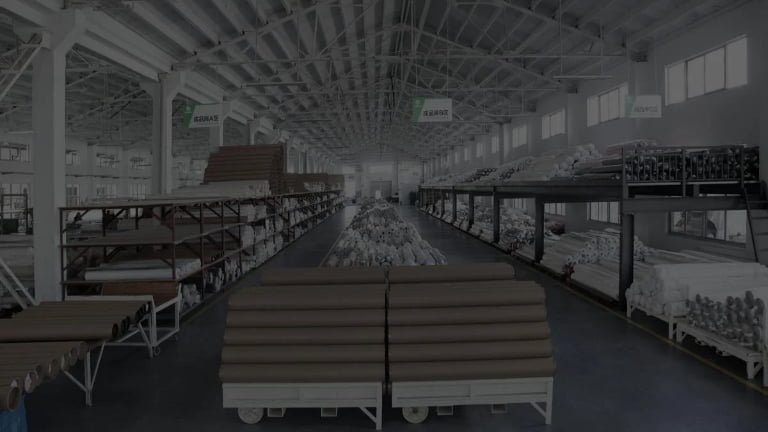
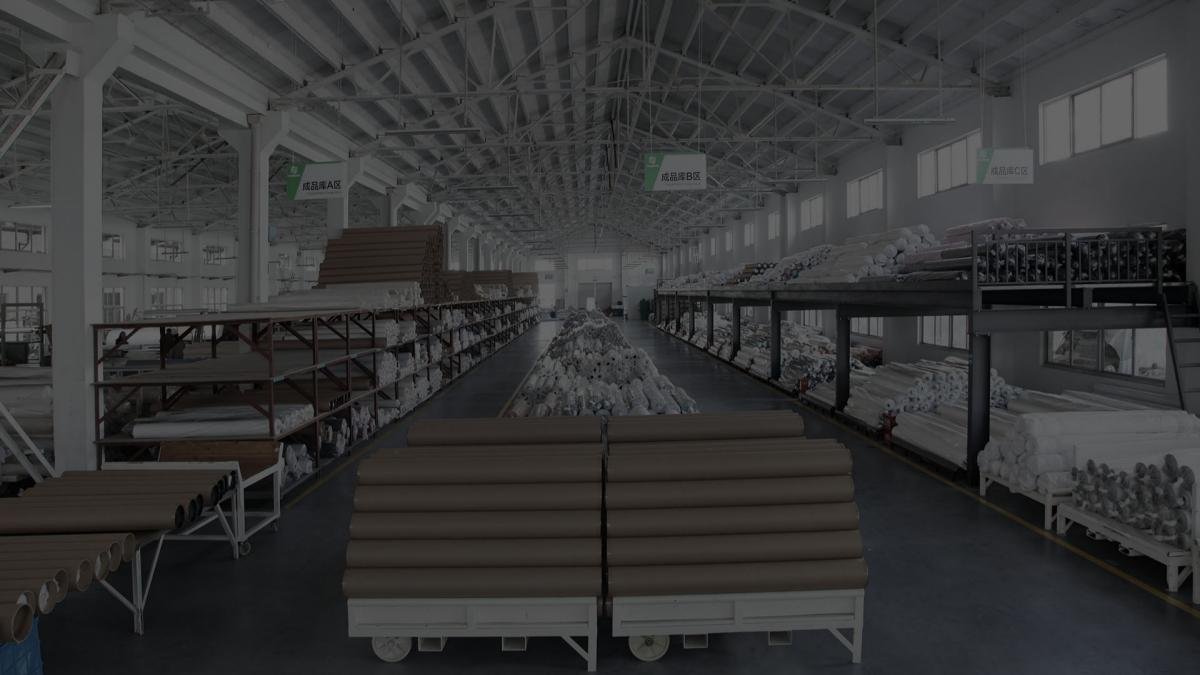
Request a 15-minute live video call walking through the production floor — not a recorded factory tour, not a photo deck. Ask to see the walkthrough in real time, moving from raw material storage through cutting, assembly, and the quality inspection area.
A manufacturer can do this immediately or within 24 hours. A trading company has to arrange access to a factory that doesn't work for them directly, which requires coordination and typically takes several days — or doesn't happen.
During the walk, look for: fabric rolls in raw material inventory (not finished boxes), cutting machines in operation, tube assembly workstations with mechanisms being installed, and a QC station with measurement equipment.
Step 3 — The Specification Question Test
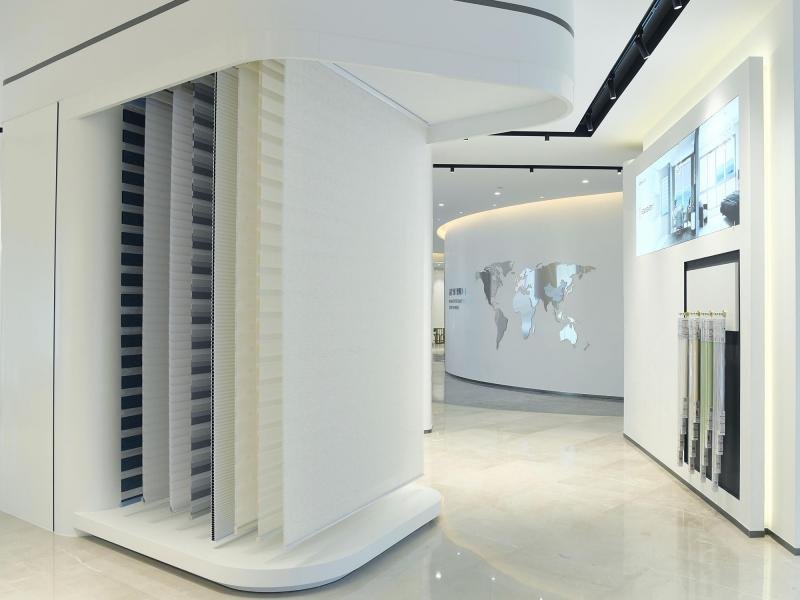
Ask a question that requires specific production knowledge:
- "For an order of 500 blackout roller blinds at 2,200mm width — what tube diameter do you use as standard, and why?"
- "What wall thickness are your 50mm tubes, and who supplies your aluminum extrusions?"
- "If I need a custom fabric at 320 g/m² — what's your lead time from fabric sampling to production start?" A manufacturer answers immediately and specifically — these parameters affect daily production decisions. A trading company responds with "Let me check with our factory and get back to you."
When Buying from a Supplier Actually Makes Sense
Manufacturers are not the right choice in every situation. Here is an honest account of when supplier relationships make more sense:
Small urgent orders: If you need 8 replacement units delivered to a job site in five days, a local distributor with existing inventory will almost always be faster and have lower total logistics cost than a factory with a 20–35 day production lead time. Factories are optimized for scheduled production, not emergency fulfillment.
Market testing with unknown demand: When entering a new product category or geographic market, a distributor relationship allows you to test demand with small, mixed quantities across multiple SKUs without the MOQ commitment that factory-direct sourcing requires. The unit cost premium is the price of demand information before you've established it.
Categories outside your primary supplier's specialty: A manufacturer excellent at roller shades may not be the right source for cellular shades or motorized systems. A distributor can serve as a practical source while you develop direct factory relationships for categories that will grow into meaningful volume.
The decision rule is straightforward: for any category you'll order more than 200 units per SKU per year at consistent specifications, direct factory relationships deliver better economics and quality control. For everything else, distribution flexibility has real value.
What to Require from a Roller Blinds Manufacturer Before Your First Order
Once you've verified a supplier is genuinely a manufacturer, the requirements that protect quality and delivery:
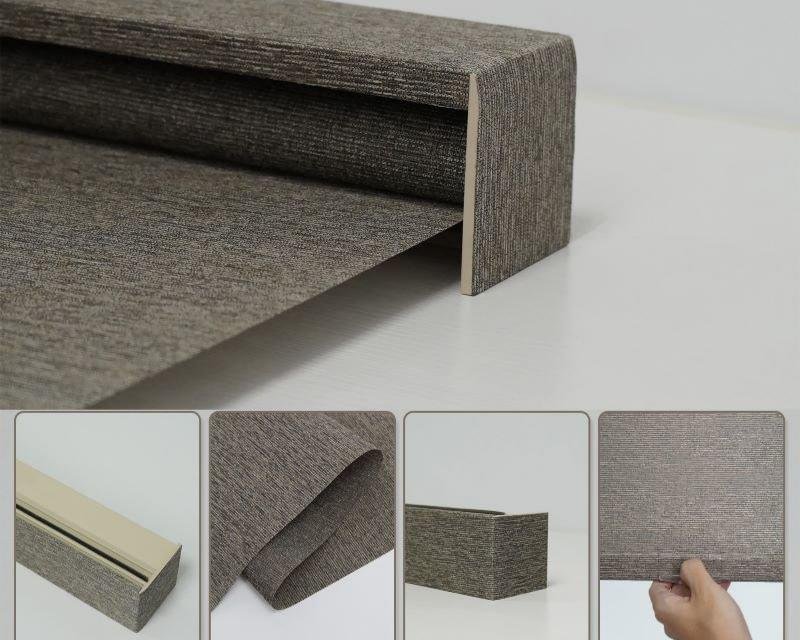
Written specification confirmation: A document stating the tube diameter, wall thickness, fabric weight and supplier, bottom rail weight and material, and mechanism type for your specific order. This becomes the reference standard for production acceptance.
Batch documentation commitment: For any order above 50 units per color, confirm all fabric will come from a single dye lot with a traceable lot number. Request the ΔE tolerance specification — for same-installation applications, ΔE < 2.0 against the approved sample is the minimum acceptable standard.
QC checkpoint coverage: Ask specifically whether your order will receive 100% finished product inspection or statistical sampling. The difference is material — a 10% sampling rate on a 500-unit order means 450 units ship without individual inspection.
Our QC team of 16 inspectors runs four checkpoints on every order. Every unit goes through three full extension cycles before packing. Blackout products are tested under controlled conditions. MOQs start at 1 unit for catalog products and 10 units for OEM customization — and those numbers are real, not a trading company's flexibility offered at factory-adjacent pricing.
Frequently Asked Questions
Q: Is a roller blinds supplier the same as a manufacturer? A: Not necessarily. A supplier may be a manufacturer, trading company, or hybrid. Manufacturers control quality at the source and can modify production parameters directly. Trading companies depend on another factory's cooperation for specification changes or defect investigations — adding days and reducing accountability.
Q: How can I tell if a roller blinds company is really a manufacturer? A: Three checks: verify the Chinese business license lists manufacturing as the primary business type; request a live video walkthrough of the production floor; ask a technical specification question requiring production knowledge. Manufacturers answer immediately and specifically. Trading companies delay or generalize.
Q: Does buying direct from a manufacturer always get me a lower price? A: Usually yes for medium-to-large volumes — typically 15–30% lower than equivalent distributor pricing. For urgent small orders under 20 units or same-week delivery, a local distributor's total cost including speed and convenience may be more competitive than factory-direct pricing.
Q: What certifications prove a company is a real manufacturer? A: ISO 9001 for a manufacturer covers production processes — auditors visit the facility. Ask what facility the auditor physically inspected. ANSI/WCMA A100.1-2018 and NFPA 701 product certifications are more telling: manufacturers cite specific test reports by product line; traders usually provide only marketing-level claims.
Q: What's the minimum order when buying directly from a roller blinds manufacturer? A: Factories with flexible production configurations supply catalog products from 1 unit for testing. OEM customization starts at 10–50 units. A company quoting 1-unit MOQ for full OEM production is almost certainly a trading company — genuine manufacturing MOQ for custom work reflects real setup costs.
Choosing between a supplier and a manufacturer is not a question of which is universally better. It's a question of which model matches your volume, timeline, and quality accountability requirements. The three verification steps above ensure the relationship is what it claims to be — before you find out the hard way.
Need a roller blinds manufacturer that passes all three tests?
Shadesmart (shadesmart.com) — verified manufacturer, four-checkpoint QC system, MOQs from 1 unit. Ready to walk you through our production floor on request.
Request a Factory Video Call → | Get a Sample Order Started →