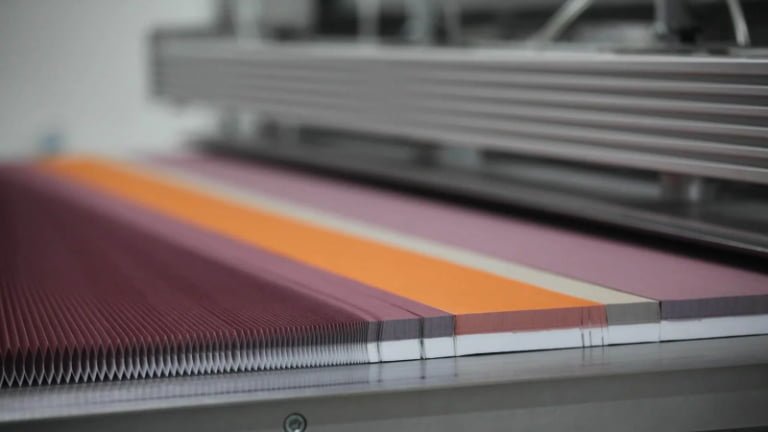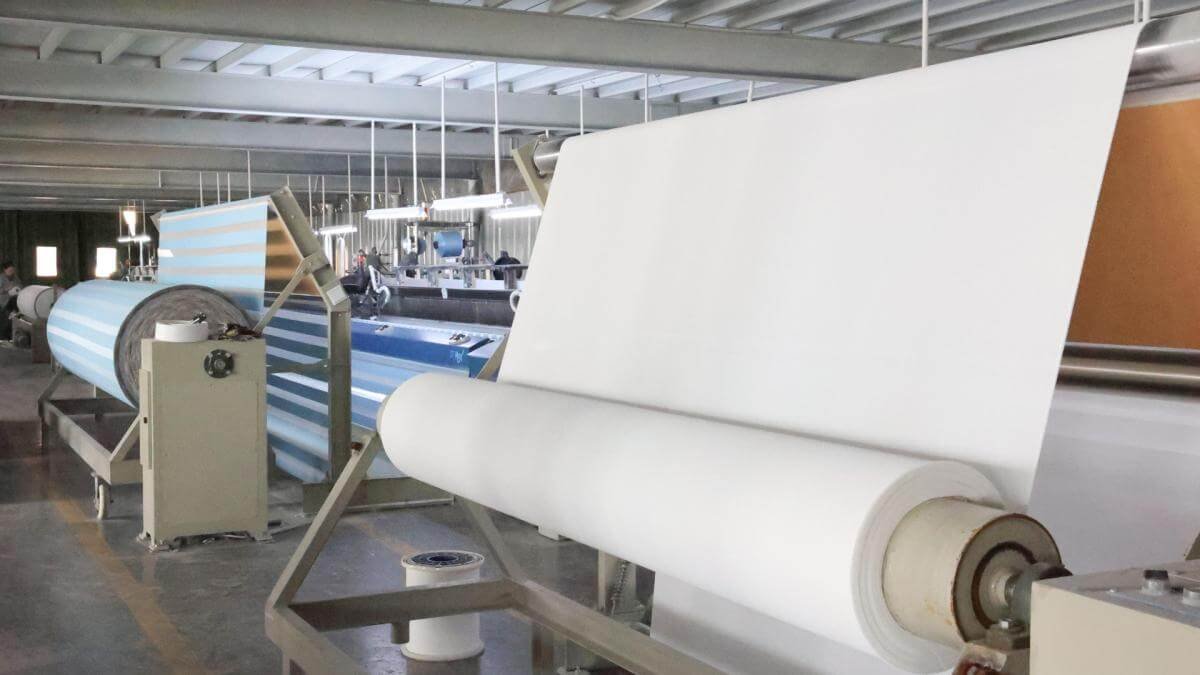
If you're sourcing roller shades for the first time, the hardest part isn't comparing prices — it's figuring out whether the "manufacturer" on the other end of your inquiry actually makes anything, or just relays your order to someone else's production line. We've been on the manufacturing side of this conversation since 2008, operating as Shadesmart under Xiamen Goodwood Industry Co., Ltd., and we've fielded enough vetting questions from wholesale buyers, OEM/ODM brands, and project purchasers to know exactly where buyers get misled. Our production base covers 58,883 square meters, runs 12 dedicated production lines with 93 pieces of specialized equipment, and turns out more than 11 million units a year. This guide walks through what a real factory partner should be able to show you — and what should make you pause.
How do you tell a real roller shade manufacturer from a trading company or assembler?
The single clearest signal is whether a supplier controls its own core components or buys them in and assembles. A vertically integrated manufacturer processes raw materials, produces core parts like tubes and brackets in-house, and assembles finished product under one roof — which means quality consistency, dimensional accuracy, and full batch traceability are within their control. A trading company or pure assembler is dependent on whatever their outside part suppliers deliver that week, which introduces variability you can't audit from a distance.
This distinction matters more than it sounds. If a defect shows up in a shipment — a tube that flexes more than it should, a bottom rail that's slightly light — a vertically integrated manufacturer can trace it back to a specific process step and fix it at the source. A trading company can only escalate the complaint to a third party and hope for a resolution.
| Dimension | Vertically Integrated Manufacturer | External-Sourcing / Assembly Model |
|---|---|---|
| Quality consistency | High — core components self-controlled | Depends on outside supplier stability; more variable |
| Delivery stability | Stronger — production capacity self-scheduled | More exposed to upstream supplier bottlenecks |
| Cost structure | Higher upfront fixed investment, better long-term margins | Lower upfront investment, less pricing flexibility over time |
| Custom development capability | Strong — supports deep ODM/structural innovation | More limited, dependent on outside part makers' cooperation |
| Typical company stage | Mid-to-large manufacturers with scale and capital | Startups or asset-light trading operations |
We operate on the "component supply, finished-product manufacturing" side of that table — raw material processing through final assembly stays in-house, and every batch carries traceability back through the production stages that made it.
How can you verify a Chinese roller blind factory's actual production capacity?
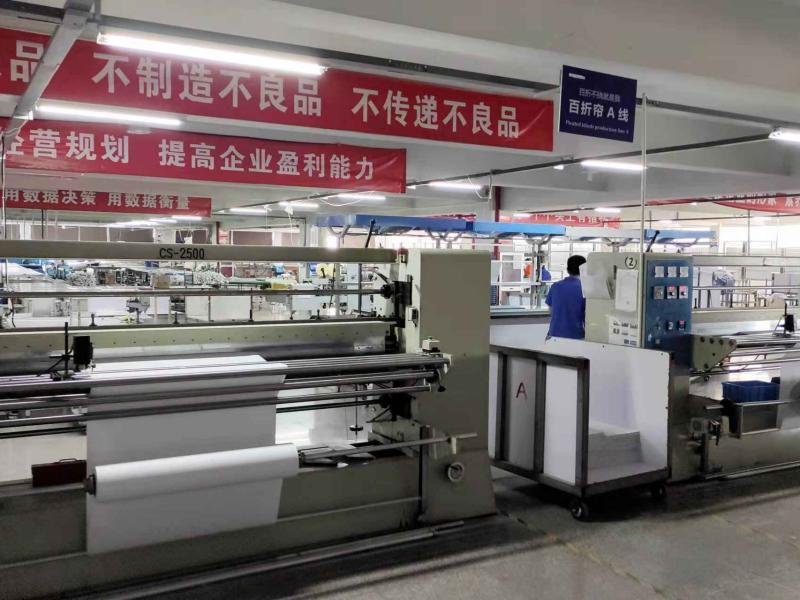
Ask for specifics, not adjectives. "Large-scale production" means nothing on its own. A real manufacturer should be able to tell you square footage of the production base, number of active production lines, how many units of specialized equipment are running, and annual output — and those numbers should be consistent whether you ask on a video call, in a quote email, or on the company's own website.
For reference, here's what that looks like on our end: 58,883 square meters of production facilities, 12 professional production lines, and 93 pieces of specialized equipment, supporting annual output of more than 11 million units. Those four numbers should never contradict each other across different pages of a supplier's site or different conversations with their sales team — if they do, that's worth asking about directly.
A few practical ways to verify capacity from a distance, before you ever book a flight:
- Ask for a live video walkthrough of the production floor, not a pre-recorded promotional video
- Request the factory's export history or existing client categories (without asking for confidential client names)
- Cross-check the numbers a sales rep quotes you against what's published on the company's own site — inconsistency is a red flag
- Ask how the factory would handle a sudden increase in your order volume, and listen for whether the answer references actual line capacity or vague reassurance
We go into more depth on reading production numbers and separating real capacity signals from marketing language in a dedicated piece on evaluating a window blinds factory before you sign a PO — useful if you want the verification checklist in more detail than fits here.
What should you actually expect from MOQ and sampling with a manufacturer?
Low MOQ makes testing a supplier easy, but it doesn't mean large orders get treated as flexible. Our standard products start at a 1-piece minimum order — genuinely useful if you want to test quality before committing to a container. OEM/ODM customization starts at 10 pieces, and new product development or project orders are handled case by case through direct negotiation.
We structure custom work into three tiers, which maps to where most buyers are in their sourcing journey:
| Service Tier | What It Covers |
|---|---|
| Light customization | Size and color adjustments to standard products |
| Sample development | Prototyping and functional validation, new product evaluation |
| Deep customization | Structural development, material optimization, and dedicated design for private-label or large project work |
One honest caveat buyers should hear up front: a 1-piece MOQ means you can test a product — it does not mean a 500-piece order gets same-week turnaround just because the minimum was low. Orders above roughly 500 pieces follow standard production scheduling like any other manufacturing run; a supplier who promises next-day shipping on a bulk order regardless of MOQ policy is making a commitment their production line can't actually keep. Ask any manufacturer directly how they handle scheduling once an order moves past sample-size quantities — the answer tells you a lot about whether their MOQ flexibility is a real policy or a sales pitch.
What does a legitimate QC system look like on the production floor?
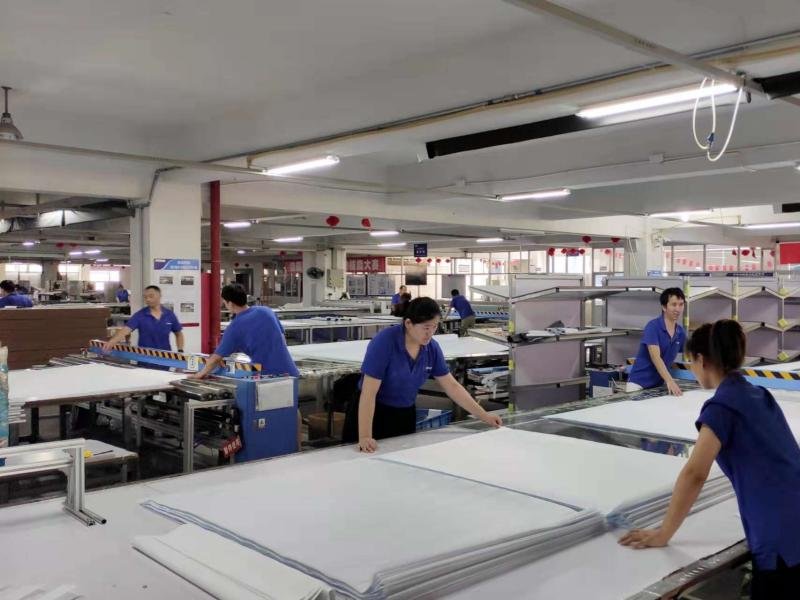
A real quality system checks product at multiple stages, not just once at the end. Our quality team is 16 people working across a four-checkpoint inspection structure, and 100% of finished goods are inspected before they ship — not a sampling percentage, the full run.
| Checkpoint | What's Inspected | Core Checks | Frequency |
|---|---|---|---|
| IQC (Incoming) | Aluminum tubes, fabric, mechanical parts | Dimensions, chemical composition (aluminum), fabric weight, color match | 100% sampling per incoming batch |
| IPQC (In-process) | Cutting precision, hem quality | Width tolerance (±1mm), height tolerance (±2mm), hem flatness | Sampled every 2 hours / per line |
| FQC (Finished goods) | Full product function | Full extension cycle ×3, operating force (≤25N), light-blocking test (for blackout products), appearance | 100% of finished units |
| OQC (Outgoing) | Packaging and shipment | Quantity verification, label accuracy, packaging protection | 100% per batch |
What actually gets sent back to the production floor: cutting width deviations greater than ±2mm (the shade won't fit the window opening or leaves too large a gap), bottom rail bow greater than 2mm per 1,000mm (visible as a bow shape), friction noise during full-extension testing, or light-blocking tests that fail specification.
Here's a number worth knowing: across our own five-year defect and complaint data, cutting dimension deviation accounts for roughly 34% of quality issues — by far the largest single category, ahead of mechanism noise (about 21%) and color mismatch (about 18%). We mention that not to alarm buyers but because it's the exact reason IPQC sampling happens every two hours rather than once per shift — the fix for the single biggest defect category was tightening how often cutting calibration gets checked, not adding a new inspection stage. This kind of data belongs to internal quality tracking and should be confirmed as current before you quote it elsewhere; production data like this shifts as calibration schedules and equipment get updated.
What are the most common mistakes buyers make when choosing a window blinds manufacturer?
A few patterns show up again and again in inquiries we receive, and they're worth naming directly rather than letting buyers find out the hard way.
Choosing tube diameter or motor size based on window dimensions instead of fabric weight. A wider window doesn't automatically need a bigger tube — a heavier blackout fabric on a standard tube can cause visible sagging months after installation, even if the width looked fine on day one. Fabric weight, not window size, should drive the spec conversation.
Assuming a low MOQ means unlimited order flexibility. As covered above, a 1-piece minimum is a testing tool, not a promise that a 2,000-piece order skips the production queue.
Treating "blackout" as a fabric claim rather than an installation outcome. Fabric can be rated near-total light-blocking, but without the right mounting components — side channels, a closed cassette — light still leaks around the edges. If full darkness is the requirement, ask what the complete installation package includes, not just what the fabric is rated at.
Not asking how a supplier handles color batch consistency on large orders. For any order spanning multiple production runs, unmatched dye lots can produce visible color variation between units — a detail that matters far more on a 200-room hotel project than a single residential window.
None of these mistakes are hard to avoid once you know to ask about them — which is really the point of vetting a manufacturer properly before the PO goes out, rather than after the first shipment arrives.
Manufacturer, trading company, or a commercial specialist — which fits your project?
Not every buyer needs the same depth of vetting or the same type of partner. If you're sourcing for a hospitality or commercial project with fire-rating and batch-control requirements specific to that segment, our commercial roller blinds manufacturer guide narrows in on those questions. If your priority right now is figuring out where to find and reach factories in China in the first place — trade shows, B2B directories, or direct outreach — our guide to finding wholesale window shade suppliers in China covers that earlier step. And if you're still weighing what "manufacturer" versus "supplier" even means for your margins, this breakdown is worth a read before you request your first quote.
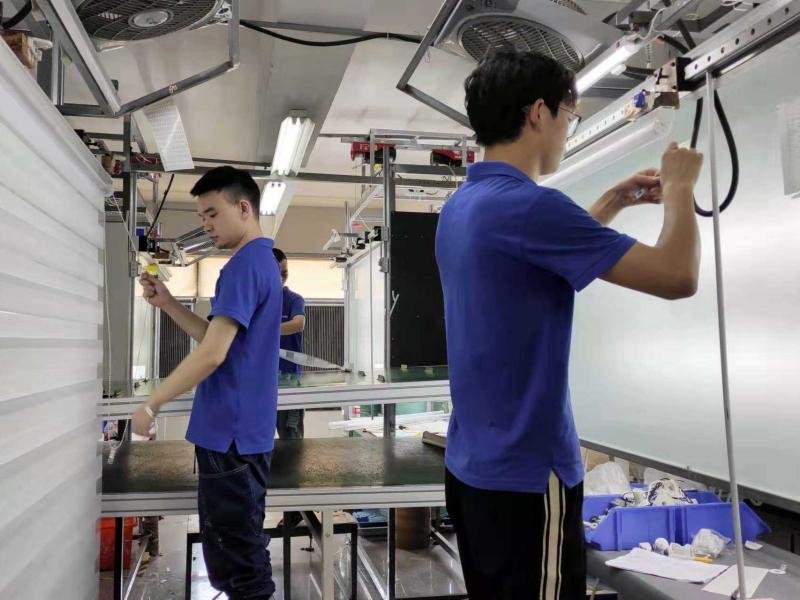
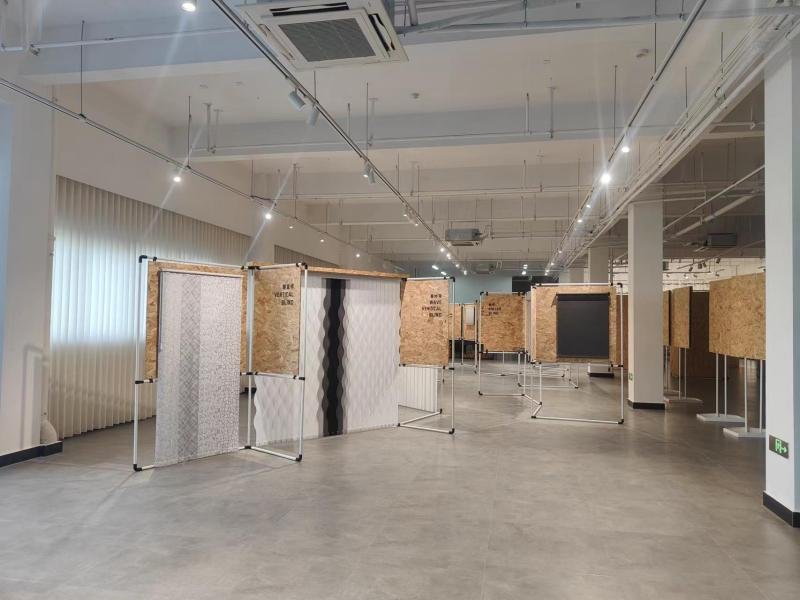
For a closer look at the physical plant behind the numbers in this guide — production lines, equipment, and how a vertically integrated facility is actually laid out — see our factory walkthrough.
Whether you're placing a first sample order or evaluating a long-term supply partner, the questions in this guide are the ones we'd want a buyer to ask us. Check current production capacity for your product mix and start the conversation with specifics, not assumptions.
Frequently Asked Questions
How do I know if a roller shade "manufacturer" is actually a trading company? Ask whether they process raw materials and produce core components — tubes, brackets, mechanisms — in-house, or whether those parts come from outside suppliers they simply assemble. A vertically integrated manufacturer can trace a defect back through their own production stages; a trading company can only pass the question along.
What MOQ should I expect from a legitimate roller shade factory? Standard products commonly start around 1 piece for testing purposes, with OEM/ODM customization typically starting around 10 pieces. Be cautious of any supplier who implies large bulk orders get the same fast turnaround as a single test sample — production scheduling applies once order volume moves past sample-size quantities.
What quality checks should a roller shade go through before it ships? A legitimate QC system inspects at multiple stages: incoming materials (fabric, tubes, hardware), in-process cutting and hemming, finished-product function testing (extension cycles, operating force, light-blocking), and outgoing packaging verification — ideally with 100% inspection at the finished-goods stage rather than spot sampling alone.
Why does tube diameter matter more than window size when choosing a roller shade? Fabric weight, not window width, determines how much load a tube can support without visible mid-span sag over time. A wide window with lightweight fabric may need less structural tube than a narrower window paired with heavy blackout fabric.
Is a "blackout" roller shade always fully light-blocking? Not necessarily. Fabric can be rated near-total opacity, but without complementary mounting components like side channels and a closed cassette housing, light can still pass around the edges of the installation. True blackout performance depends on the full assembly, not fabric rating alone.