To vet a window shade supplier in China, ask ten questions about what they make in-house, how they inspect, what materials go into the aluminum and fabric, how they control batch color, and what orders they refuse. Good suppliers answer with numbers, thresholds, and limits. Weak ones answer with adjectives.
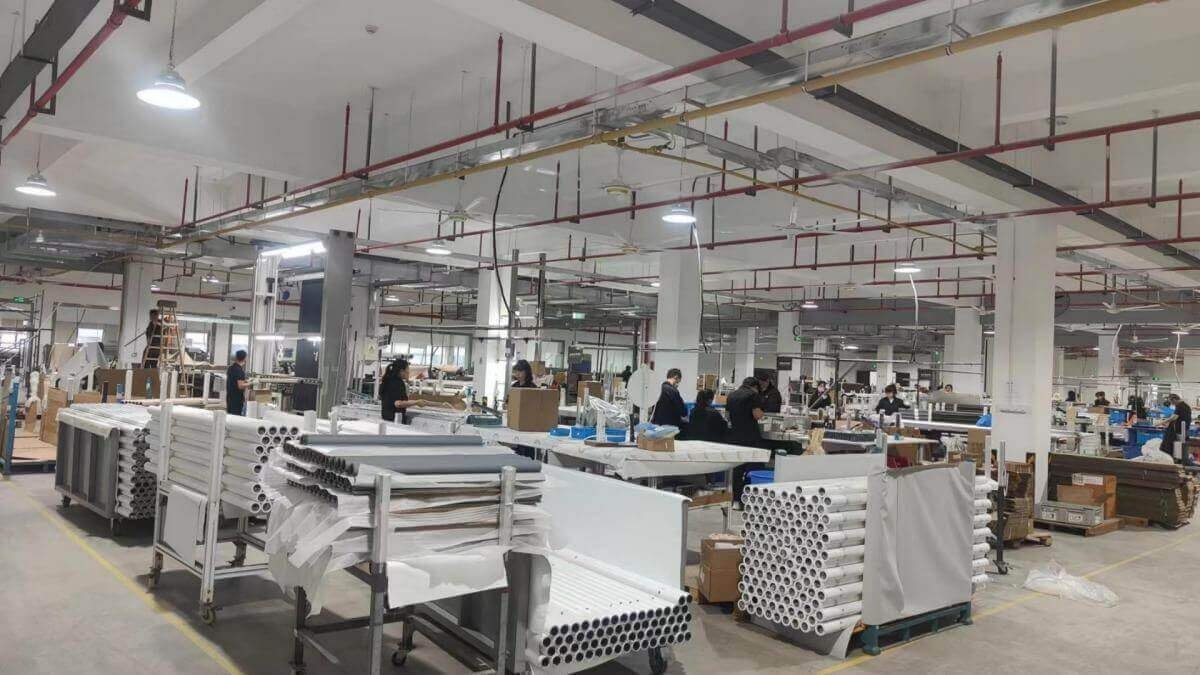
I started in this industry in 2006 at a small roller shade workshop near Suzhou, cutting fabric, machining aluminum tubes, and assembling motors. In 2008 I joined Xiamen Goodwood Industry Co., Ltd., where I now serve as Production Director for Shadesmart. Our plant today covers 58,883 ㎡ with 12 production lines and 93 pieces of specialized equipment, producing over 11 million units a year. I mention the scale not to impress you, but because it means I've seen most of the ways an order can go wrong, and I've paid for a good number of them myself.
A quick note on terms: in sourcing conversations, "window blinds China," "Chinese window shades," and "window shades China" are often used interchangeably. This guide is about roller, cellular, zebra, and sheer shades, including motorized versions. It is not about slat-style venetian blinds, which is a different product with different failure modes.
What is supplier vetting actually protecting you from?
Vetting protects you from three losses: goods that don't match the sample (quality), goods that can't clear customs or a retailer's audit (compliance), and goods that arrive months late (delivery). Each of the ten questions below targets one of these, and each comes with what a good answer sounds like and what should worry you.
Use the questions in order. Questions 1–2 tell you who you're dealing with. Questions 3–4 test their inspection system. Questions 5–7 test materials and engineering. Questions 8–9 test whether the bulk order will match the sample and whether the paperwork holds up. Question 10 tests honesty, which I consider the most revealing of all.
Is this supplier a real manufacturer or a trading company?
A real manufacturer can tell you, part by part, what they make themselves and what they buy in, and will let you verify it. A trading company will say "we control everything" and then go vague when you ask which machine cuts your fabric. Neither model is illegal, but you should know which one you're paying.
Question 1: Which components do you produce in-house, and which do you buy from outside?
Our model is "components made in-house, finished products assembled in-house": raw material processing, core component production, and final assembly all happen under our control. The practical benefit is batch traceability. If a customer reports a problem, we can trace the raw material and process step behind it. An assembler buying tubes, mechanisms, and fabric from five different vendors often cannot. You can read more about how our plant is organized on our window shade manufacturer page and meet the people behind it on the production team page.
Question 2: Can I audit the line that will make my order, on site or by live video?
Ask to see your specific product being made, not a showroom. Pay attention to whether they'll let you choose the day and whether you can see incoming material storage as well as final assembly. A supplier who only offers a scheduled tour of a sample room is telling you something.
| What you ask | Manufacturer-type answer | Trading-type answer |
|---|---|---|
| Which parts do you make yourselves? | Names specific processes (cutting, tube processing, assembly) and can show them | "We have many factories we work with" |
| Can I see my order on the line? | Yes, and explains what you'll see at each station | Redirects to photos or a showroom |
| Who fixes a defect in production? | Names the department and the process | "We'll ask the factory" |
| Can you trace this batch's raw material? | Explains how records link material to finished units | Cannot say |
Can they show you a real inspection process, not just a promise?
A real inspection process has named checkpoints, numerical pass/fail thresholds, and records you can see. "We have strict quality control" is not a process. If a supplier can't tell you what gets measured, how often, and what gets rejected, there probably isn't a system behind the sentence.
Question 3: What are your inspection checkpoints, and can I see a real inspection report?
Here is how our 16-person QC team works, with 100% finished-product inspection before shipment. More detail is on our quality control page.
| Checkpoint | What is inspected | Core checks | Frequency |
|---|---|---|---|
| IQC (incoming) | Aluminum tubes, fabric, mechanisms | Dimensions, aluminum chemical composition, fabric weight, fabric color difference | Sampling on every incoming batch |
| IPQC (in-process) | Cutting accuracy, hemming quality | Width error ±1mm, height error ±2mm, hem flatness | Every 2 hours, per production line |
| FQC (finished product) | Complete function | 3 full-extension cycles, operating force ≤25N, blackout test (blackout products), appearance | 100% of finished units |
| OQC (outbound) | Packing and labeling | Quantity check, size-label accuracy, transit-damage protection | 100% of every shipment |
This is our internal standard practice, not an industry-mandated requirement. The point of showing it is that you can ask any supplier for the equivalent table and compare.
Here is what sends a product back to our workshop: cutting width error beyond ±2mm, a bottom rail bowed more than 2mm per 1,000mm, friction noise during full extension, or, for blackout products, more than 0.5 lux getting through in a 100-lux test chamber.
Question 4: What are your most common defects, and what did you change to fix them?
Suppliers who claim they have almost no defects are either not measuring or not telling you. Here are our own numbers for 2019–2024 returns and complaints, by frequency:
- Cutting size deviation: 34%. Root cause was too-infrequent calibration of the automatic cutting machine. Moving from weekly to per-shift calibration cut this defect category by 62%.
- Mechanism noise: 21%. Split roughly evenly between chain link tolerance and overly high spring pre-tension.
- Color difference: 18%. Every case came from mixing fabric from different production batches.
- Bottom rail bending: 15%. Insufficient transit protection (no rigid inner support) plus rails with walls thinner than 1.5mm over 2,200mm lengths.
- Blackout failure: 12%. Never a fabric problem. All were installation issues, mainly no side channels combined with visible frame gaps.
A good answer to Question 4 has this shape: a ranked list, a root cause for each, and a specific change that reduced it. If you get only reassurance, keep asking.
Where do low-cost suppliers cut corners you can't see?
The cheapest quotes are usually cheaper in three places buyers rarely inspect: the aluminum, the sizing of structural parts, and what "blackout" includes in the price. All three fail late, often 6–12 months after installation, when the supplier is no longer answering quickly.
Question 5: Where does your aluminum come from, and how do you test its composition?
Aluminum quality depends largely on the ingot source. This is how I grade it:
| Grade | Ingot source | Wall thickness tolerance | Surface treatment | Typical use |
|---|---|---|---|---|
| A | Primary aluminum 6063-T5 | ±0.1mm | Anodized ≥10μm | Higher-end export markets |
| B | Primary aluminum 6061 | ±0.2mm | Anodized 6–10μm | General export markets |
| C | Recycled aluminum | ±0.3–0.5mm | Painted / electrophoretic coating | Low-price domestic market |
The problem with recycled aluminum is usually not strength. It's that the chemical composition is unstable, and heavy-metal impurities can push a shipment past the limits set under the EU's REACH chemical regulations1.
I learned this the expensive way. In 2018, a shipment of roller shades bound for Germany was stopped because the externally sourced aluminum profiles contained 0.5% lead against a REACH limit of 0.1%. The direct loss was roughly RMB 120,000, and the cost of repairing the customer relationship was harder to count. What we changed: we now run quarterly chemical composition tests on our aluminum suppliers and no longer rely on their own quality reports. That is standard procedure today.
So ask any supplier: who tests the aluminum, how often, and would they show you a result from a test they didn't get from the profile vendor?
Question 6: How do you choose tube diameter, bottom rail weight, and motor size for my order?
The wrong answer is "by window size." The right answer starts with fabric weight.
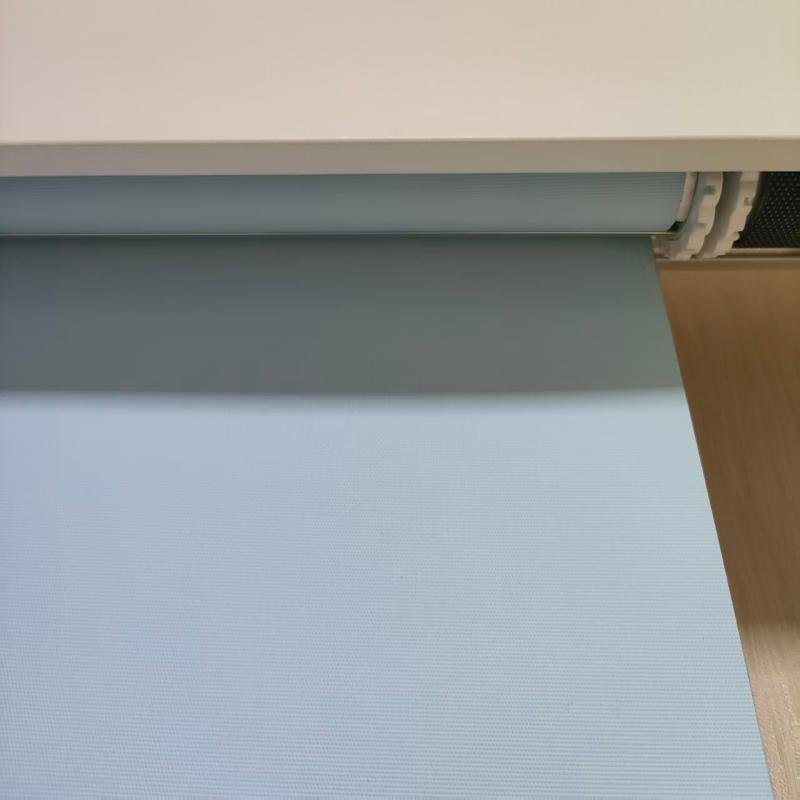
For example, a 38mm tube (1.5mm wall) spanning 1,800mm with 250 g/m² blackout fabric deflects about 4.2mm at mid-span. Below 5mm, the eye can't see it. Above 5mm, the fabric develops waves as it rolls, and the shade looks like a slightly bent banana from the side. Aluminum also creeps under constant load, so a 4mm deflection at install can become 6–7mm a year later. Our internal rule: for widths above 1,800mm we default to a 50mm tube. If a customer asks us to stretch a 38mm tube to 2,000mm to save cost, we'll do it only after telling them in writing and getting their written confirmation. If you want to see how tube choice plays out across our range, start with our roller shades.
Motors follow the same logic. Overload has been the number-one complaint category for our after-sales team, and the cause is almost always selecting the motor by window size instead of by total load. Our rule of thumb is that actual load should not exceed 70% of the motor's rated maximum load. A supplier who can't explain how they calculate load for your specific fabric and width is guessing, and you'll be the one to find out when the motor fails.
Question 7: What exactly is included in the "blackout" line on your quote?
Most roller shades labeled "blackout" are really room-darkening. The fabric can block 99.9% of light, but with no side channels there's a 3–8mm light path along each edge. On a 2,400mm × 2,400mm window, that's about 38 cm² of leak area, very visible in a dark room.
A true blackout setup is three parts: blackout fabric, a cassette housing over the tube, and side channels sealing the edges. Skip one and it isn't blackout. I have seen "we'll add side channels later if the customer complains" too many times, and it's always a bad plan. A good supplier lists these three components separately on the quote.
Will the bulk order match the sample, and can you verify the paperwork?
The sample proves the supplier can make one good shade. It doesn't prove they can make 300 that look the same. And a certificate proves something only if you check what it actually covers.
Question 8: How do you control color between batches on a multi-window or project order?
This is the most avoidable problem in project work. The color difference standard I use is CIE 1976 ΔE2:
| ΔE | What the eye sees | How we handle it |
|---|---|---|
| < 1.0 | Not noticeable | Acceptable within one batch |
| 1.0–2.0 | Noticeable on close inspection | Use with caution across windows in the same room; needs customer confirmation |
| 2.0–3.5 | Visible at normal viewing distance | Refused for windows in the same room; must be disclosed for different rooms |
| > 3.5 | Obvious | Never mix batches in one project |
For any project over 30 panels, we ask for schedule notice in advance, produce all fabric from the same machine and the same dye lot, and order 15% extra fabric for replacements.
Here is why. A hotel needed one replacement panel a month before opening because of a measurement error. The original fabric batch was sold out, and the new batch measured ΔE = 2.8. Nobody noticed until quality inspection, and the resulting claim dispute ran for 8 months. Ask your supplier what happens when you need one more panel after the original fabric is gone.
Question 9: Which test reports and certificates apply to my target market, and how can I verify them?
I won't list certificate numbers in a blog post, and you shouldn't trust any supplier who pastes logos on a website instead of showing documents. What I can say is that we continue to go through the certification and compliance reviews that international markets require. Our compliance standards page explains how we approach this.
What matters is how you check any supplier's paperwork:
- The issuing body: is it a real, named testing or certification organization?
- The certificate number and validity dates: can they be looked up or confirmed with the issuer?
- The scope: does the certificate cover the exact product you're buying, or just a component or a different model?
- The market: the requirements differ between the US, EU, UK, and Australia/New Zealand. A certificate for one market says little about another.
- Wireless or electrical parts: if the shade is motorized, ask what compliance documents exist for the motor and control components specifically.
Get the documents before the deposit. A supplier who says "we'll send them after shipment" has told you what you need to know.
What will a supplier refuse to make, and what does "1-piece MOQ" really mean?
The most trustworthy suppliers say no sometimes. A supplier who accepts every order, every width, and every material is not flexible; they are not thinking about the failure that will happen 8 months later.
Question 10: Which orders do you turn down, and what is your minimum order quantity really?
Here are things we refuse or restrict, and why:
- Zebra shades wider than 2,800mm. Above 3,000mm, stripe alignment drifts visibly within 3–6 months as daily use moves the fabric slightly. The better answer is two independent shades installed side by side. We decline single 3,000mm+ zebra orders unless the customer signs a confirmation that they understand the limit and accept the current precision. If you're weighing zebra shades for a wide opening, see our zebra shades before you specify.
- Motorized linen or bamboo shades. Linen can shrink 2–4% a year lengthwise, and in a hot summer a 3,000mm drop can shorten by 60–120mm. On a motorized shade, the lower limit fails in the first summer. This is a material problem, not a motor problem. We don't build motorized linen shades, and we'll decline even if the customer insists.
- Undersized structural parts to hit a price. See Question 6.
Our stated minimums are 1 piece for standard products and 10 pieces for OEM customization, with negotiable terms for new product development and project orders. That 1-piece policy exists so you can test before committing. It does not mean large orders have no minimums or scheduling. Orders over 500 pieces need to follow production scheduling and cannot be expected to ship the next day. A supplier promising both a 1-piece MOQ and next-day shipment on a 5,000-piece order is promising something no factory can deliver. The full ordering policy is laid out on our wholesale window shades page.
What should you verify before wiring the first payment?
Before you send money, do five things: match the company name to the bank account, order a sample, verify the documents from Question 9, get a written spec confirmation, and confirm what the quote includes. None of these is expensive. All of them are cheaper than a failed shipment.
| # | Question | A good answer sounds like | A warning sign sounds like |
|---|---|---|---|
| 1 | What do you make in-house? | Names processes; can show them | "Everything," with no specifics |
| 2 | Can I audit my order's line? | Yes, and explains what you'll see | Only a showroom or photos |
| 3 | What are your inspection checkpoints? | Named stages with thresholds and records | "Strict QC" with no numbers |
| 4 | What defects do you see most? | Ranked list with causes and fixes | "Almost none" |
| 5 | Where does your aluminum come from? | Grade, source, and who tests composition | Cannot say, or relies on vendor reports |
| 6 | How do you size tubes and motors? | By fabric weight and total load | "By window size" |
| 7 | What's in the "blackout" quote? | Fabric, cassette, and side channels listed separately | One line item called "blackout fabric" |
| 8 | How do you control batch color? | Same dye lot, ΔE thresholds, +15% fabric | "Color will be the same" |
| 9 | Which certificates apply, and can I verify them? | Documents, issuer, scope, validity | Logos only; "later" |
| 10 | What do you refuse to make? | Specific limits with physical reasons | "We can make anything" |
Pre-payment actions worth doing regardless of who you're buying from:
- Match the business license name to the bank account. If the payee is a different company or a personal account, stop and ask why.
- Order a sample first. A 1-piece order is a low-cost test of the supplier's work and their communication.
- Get the specs in writing, including tube diameter, bottom rail weight, and what's included in "blackout," so that any later dispute has a reference.
- Ask for a proforma invoice that lists what you're actually buying.
- Get the certificates and test reports first, and verify them with the issuer as described above.
If a supplier is uncomfortable with any of these, that discomfort is the answer to your vetting question.
Take the checklist with you. Download the Factory Vetting Checklist (PDF): all ten questions with "good answer" and "warning sign" columns, ready to send to any supplier you're evaluating.
Want to test us the same way? Request a 1-piece sample before you commit. Standard products start at 1 piece, so you can judge the workmanship yourself before placing a larger order.
Frequently asked questions about vetting window shade suppliers in China
How can I tell if a window shades China supplier is a real factory?
Ask which processes they run themselves (cutting, tube processing, assembly) and ask to see your order on the line by video or on site. Real factories answer with specific stations and records. Trading companies tend to answer with photos, showrooms, or "we work with many factories."
What documents should I ask for before paying a Chinese window shade supplier?
Ask for a proforma invoice listing exactly what you're buying, and make sure the payee name matches the business license. Also ask for the test reports and certificates relevant to your target market, and verify the issuer, scope, and validity dates before any deposit is sent.
How do I audit a window shade factory in China?
Ask to see your specific product being made, not a sample room. Choose the day yourself if you can, and ask to see incoming material storage as well as final assembly. If an on-site visit isn't practical, a live video walk-through of your order's line is a reasonable substitute.
How do I read a factory's quality inspection report?
Look for named checkpoints (incoming, in-process, finished product, outbound), numerical pass/fail thresholds such as width tolerance in millimeters, and a way to tie the report to your batch. A report with only "passed" and no measurements is a warning sign.
Is a 1-piece minimum order realistic when buying window shades from China?
Yes for standard products: a 1-piece minimum lets you test quality before committing. It doesn't mean large orders ship instantly. At Shadesmart, orders over 500 pieces follow production scheduling and cannot be expected to ship the next day.