Most buyers who contact us about zebra blinds have already seen them somewhere — a hotel room, a showroom, a well-photographed apartment on Instagram — and want to understand what they actually are before committing to a product line or a large project order.
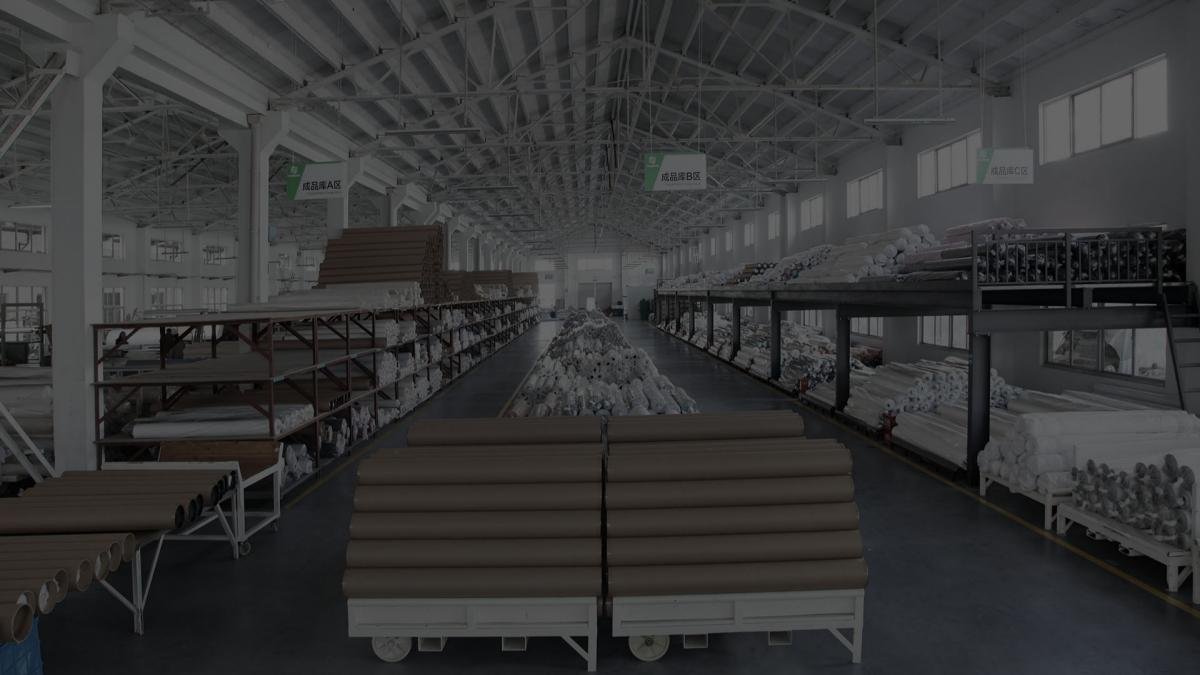
We're Shadesmart, a window shade manufacturer based in Xiamen, China. We've been producing window shades since 2008, and our 58,883㎡ facility ships over 11 million units annually to distributors, hospitality groups, and wholesale buyers across the US, Canada, and beyond. Zebra blinds are one of our highest-volume product categories, which means we've seen every question, every quality issue, and every sourcing mistake that comes with them.
This is our attempt to answer the question properly.
What a Zebra Blind Actually Is
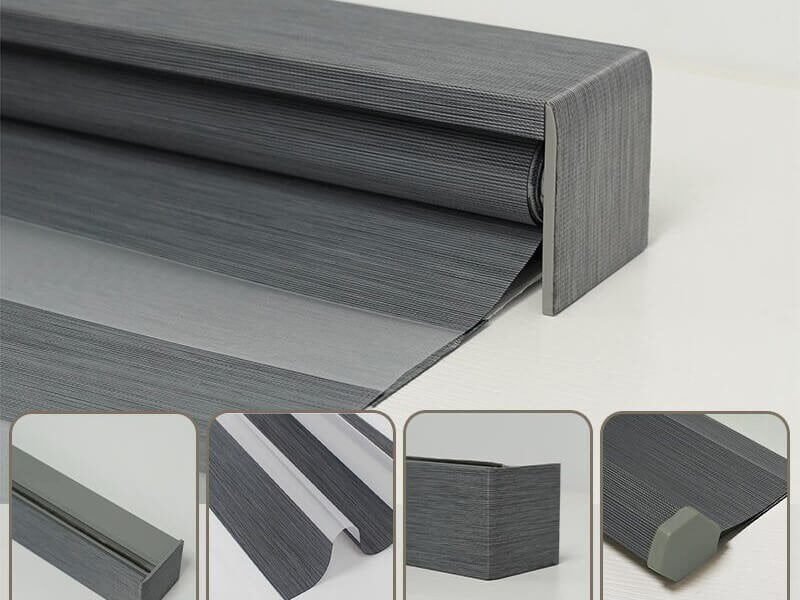
A zebra blind — also called a day-night blind, dual-layer shade, or vision blind depending on the market — is built from a single piece of fabric woven with alternating horizontal stripes: one opaque, one sheer. The fabric wraps around an aluminum tube and hangs in two layers. When the two layers align so opaque stripes face opaque stripes, the blind blocks light. When offset so opaque lines up with sheer, filtered light comes through.
That's the whole mechanism. One piece of fabric, two positions, infinite gradation between them.
What makes it genuinely different from a standard roller blind is not the light-blocking capability — a blackout roller blind does that better — but the ability to control light and privacy simultaneously. At 3pm in a west-facing office, you can reduce glare to zero while still seeing the street below. In a hotel room, a guest can have soft natural light without being visible from the corridor. A standard roller blind forces a binary choice: open or closed. A zebra blind doesn't.
How the Mechanism Works
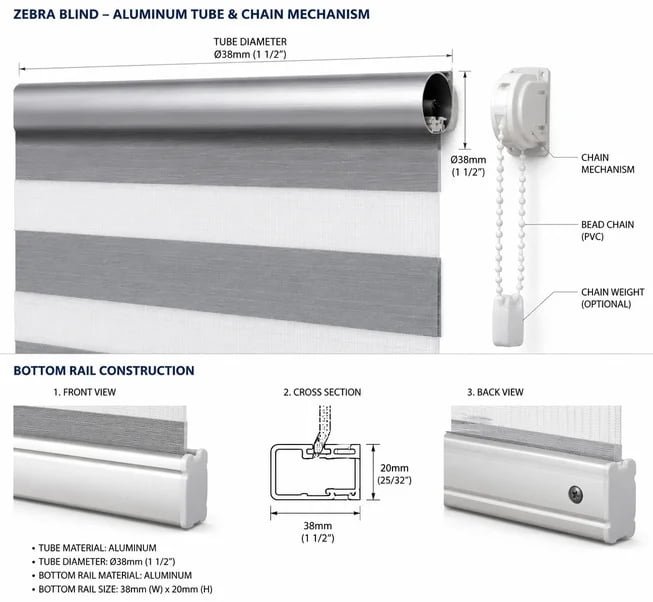
The fabric attaches at both the front and back layer to the same aluminum tube. When the chain is pulled, both layers move together. The relative offset between them — which determines how the stripes align — is what you're actually controlling.
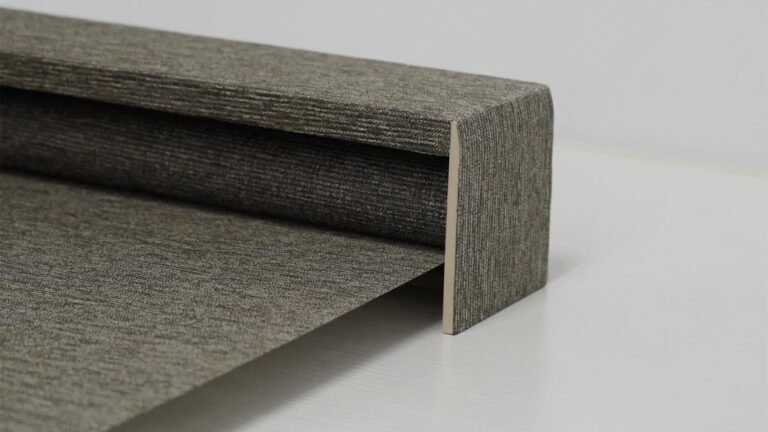
Our standard residential tubes are 38mm diameter. For commercial applications, wider windows, or motorized versions, we use 45mm. The tube wall thickness matters more than most buyers realise: an undersized tube deflects under fabric weight on wider blinds and creates uneven rolling that compounds with every cycle. We specify minimum wall thickness based on fabric weight and blind width, not by default.
The bottom rail is where many lower-cost zebra blinds fail first. If it's too light, the fabric loses tension over time and the stripes drift out of alignment — they no longer meet cleanly when closed, and light bleeds through unevenly. We calibrate bottom rail weight to fabric weight per meter as a production specification. It's not something that appears in a product photograph, but it determines how the blind performs after twelve months of daily use.
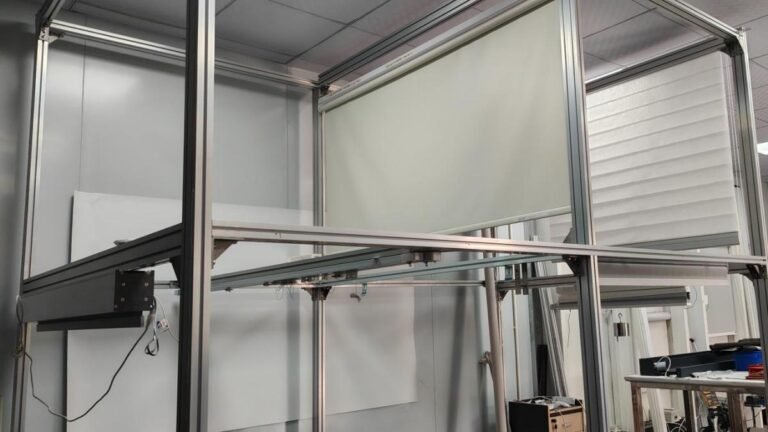
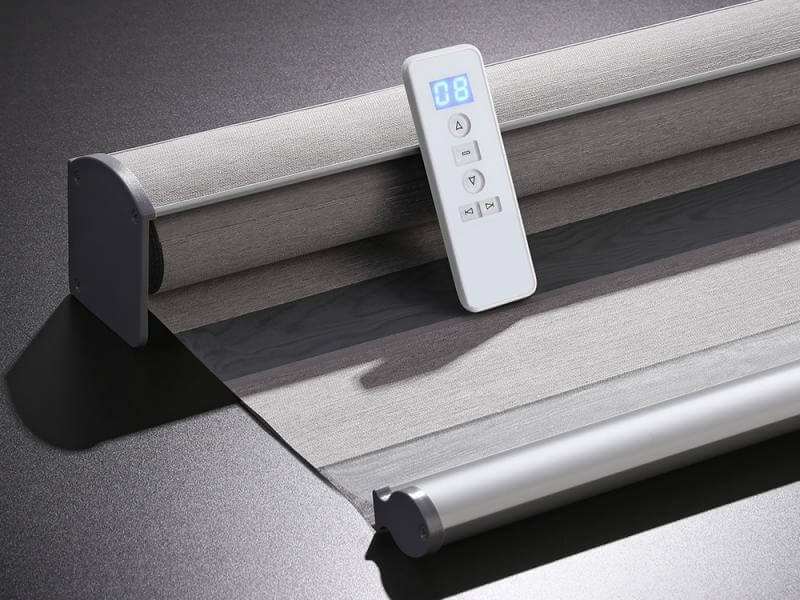
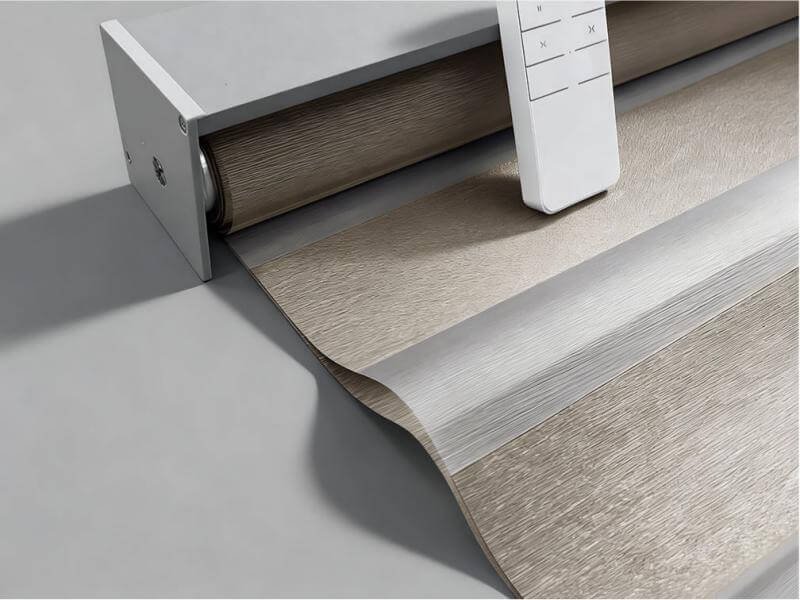
For motorized versions, a DC tubular motor sits inside the aluminum tube. Our motorized zebra blinds run at under 35dB — measurably quieter than a standard ceiling fan — which matters for hotel rooms and residential bedrooms where mechanical noise is a genuine user experience issue.
Where Zebra Blinds Outperform — and Where They Don't
We sell a lot of roller blinds, cellular shades, and motorized systems alongside zebra blinds. We're not trying to sell you a product category you don't need. Here's the honest comparison.
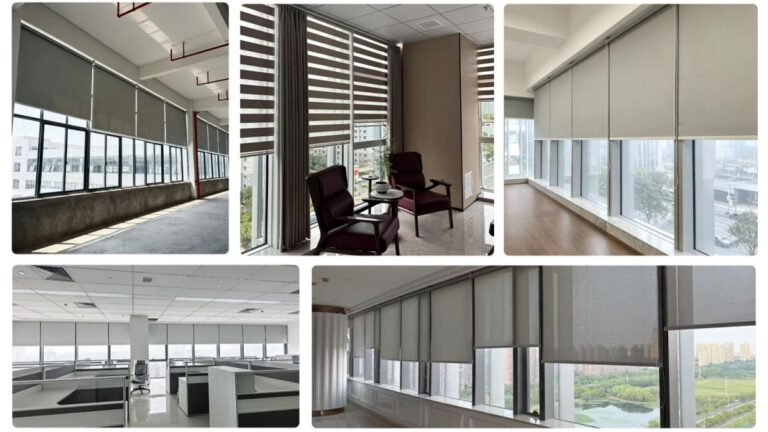
Zebra blinds make the most sense when the application requires light filtering and outside view at the same time. Hotel rooms. Living rooms with afternoon sun. Open-plan offices with west-facing glazing. Apartments where residents want privacy without a dark interior during the day.
They are not the right choice when you need genuine blackout performance. The stripe alignment, even at its most closed position, cannot achieve 0% light transmission. For hotel rooms in markets where guests expect complete darkness, or home theaters, or medical facilities, a blackout roller blind with a side channel or cassette system is the correct specification.
They're also not the easiest product to clean. The dual-layer fabric structure collects dust in the space between layers, and cleaning requires more care than a single-layer roller blind. For high-traffic commercial installations in dusty environments, that's worth factoring in.
Fabric Specifications That Actually Matter
Our standard residential zebra fabric runs 180–220 g/m². Below 160 g/m², the opaque stripes begin to lose opacity as the fabric stretches under its own weight over time — a failure mode that doesn't show up on delivery, but becomes visible within a year of installation.
For commercial applications with sustained UV exposure — south-facing facades in particular — we recommend 230–250 g/m². The weight difference is not dramatic, but the UV resistance and dimensional stability at higher weights are meaningfully better.
Stripe width is a specification most first-time buyers don't think to ask about. Our standard is 75mm alternating stripes. Wider stripes at 100mm produce a more dramatic visual transition and have become increasingly popular in contemporary interior projects in North America. Narrower stripes at 50mm give finer gradation of light control but a busier visual pattern at close range. This is worth specifying explicitly — the default varies between manufacturers.
 For US and Canadian commercial projects, confirm your certification requirements before ordering. OEKO-TEX Standard 100 is our baseline for all fabric. Fire-rated options are available to NFPA 701 and California TB 117-2013 — both supported by original test reports from SGS and Intertek.
What Wholesale Sourcing Looks Like From Our End
Standard catalog products ship in 10 days from order confirmation. Minimum order is 1 piece for standard items. OEM customization — private label, custom fabric color, custom packaging — starts at 10 pieces per SKU with a 15 day lead time including pre-production sample approval.
What we need from you to provide an accurate first quote without back-and-forth: width range, fabric color and weight preference, control side (left or right), bottom rail finish, and whether the order is manual or motorized. If you have certifications that apply to your market, name them in the inquiry — it determines which fabric batch we quote from and avoids a revision cycle after you've received pricing.
We run 12 production lines across our facility, with 16 dedicated QC inspectors doing in-process and 100% final inspection on all orders. For wholesale buyers placing repeat orders, this means color consistency and dimensional accuracy are managed at the production level — not caught at final packaging and fixed by sorting.
The Short Version
Zebra blinds do one thing better than any other window shade type: they let you control light and maintain an outside view at the same time. That capability justifies their price premium in the right application. In the wrong application — where genuine blackout or easy cleaning is the priority — they are the wrong choice.
If you know the right application and want to discuss sourcing, lead times, or samples, we're ready to talk.
Published by Shadesmart | Window shade manufacturer, Xiamen China | shadesmart.com