Wholesale window shades are window covering products — including roller shades, zebra blinds, cellular shades, and motorized variants — purchased directly from a manufacturer or first-tier distributor in volume quantities, at a price point that allows for downstream markup by retailers, contractors, or brand resellers. For B2B buyers sourcing from China, "factory-direct" means bypassing trading companies and dealing with the actual production facility — eliminating one or more margin layers between the factory gate and your landed cost.
This guide is written for distributors, OEM brand owners, e-commerce sellers, and procurement teams who are actively evaluating Chinese window shade suppliers. It covers the structural differences between supplier types, what factory-scale data actually signals about supply reliability, how to assess quality before a bulk commitment, and what MOQ terms mean in practice.
What "Wholesale Window Shades" Means for B2B Buyers
Retail vs. Wholesale vs. Factory-Direct — Three Different Price Points
The same roller shade moves through three distinct pricing layers before it reaches a residential consumer in North America. At retail, a blackout roller shade might sell for $80–$150 per unit through a home improvement chain. A wholesale distributor buying that product in volume pays perhaps 40–55% of that retail figure. A buyer sourcing factory-direct from China — dealing with the manufacturer rather than a US-based importer — is typically working at a further 20–35% below the wholesale tier, depending on order volume, product complexity, and whether any private-label customization is involved.
That spread is not simply a profit transfer. It reflects what each layer actually does: domestic distributors carry inventory, handle compliance documentation, provide customer service in English, and absorb currency risk. Factory-direct sourcing shifts those responsibilities to the buyer in exchange for the cost advantage.
Which Product Categories Fall Under "Window Shades"
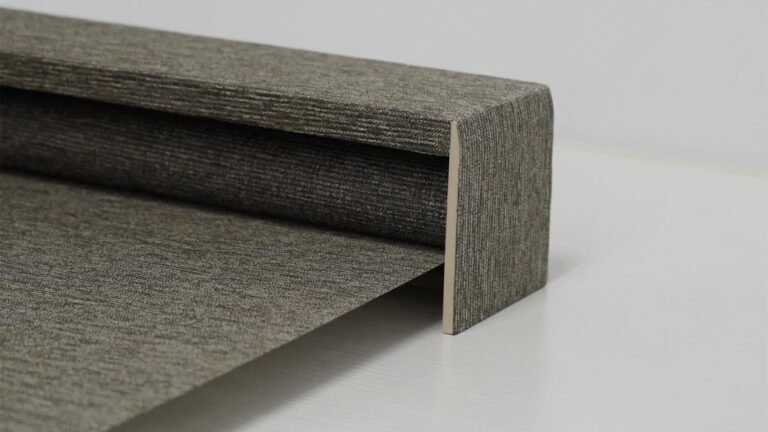
In B2B sourcing terminology, "window shades" most commonly refers to the Shades sub-category of window coverings — products based on continuous fabric that rolls, folds, or stacks, as distinct from slat-based blinds or rigid shutters. The core product types within this category include:
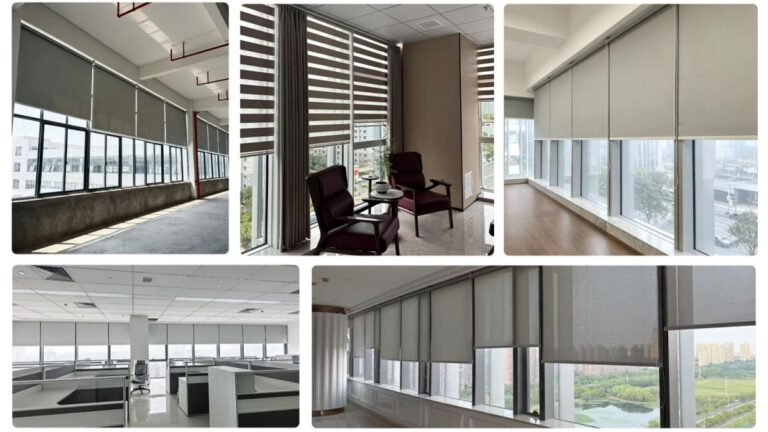
- Roller shades (blackout, light-filtering, and solar screen fabric options) — the highest-volume category globally
- Zebra / dual roller shades (alternating sheer and solid fabric bands for stepless light control)
- Cellular / honeycomb shades (hexagonal air-pocket structure, primarily specified for thermal insulation)
- Sheer shades (soft fabric vanes between two layers of sheer fabric)
- Motorized versions of all of the above — increasingly the default specification in new construction and hospitality projects
For buyers whose product interest spans roller shade manufacturers, motorized blinds, or cellular shades, each category has distinct structural requirements, fabric weight ranges, and quality benchmarks that differ enough to merit separate supplier qualification.
Three Supplier Types — and Why the Distinction Matters
When sourcing wholesale window shades from China, the entity you are dealing with falls into one of three categories. The distinction determines your actual factory access, your product customization ceiling, and your supply reliability in a high-volume or ongoing-replenishment scenario.
Trading Companies
A trading company buys finished goods from one or multiple factories and resells them to overseas buyers. They typically have a broader catalog than any single factory, fast sample turnaround, and polished English communication. The trade-off is that you are not speaking to the production source: customization requests go through a third-party relay, QC authority sits with the factory rather than with your direct counterpart, and cost is structurally higher because the trading margin is embedded.
Assembly Operations
These are smaller facilities that source pre-fabricated components — aluminum tubes, fabric rolls, control mechanisms — and perform final assembly. They may describe themselves as "factories," and technically they are, but their production scale is limited. An assembly operation running two or three lines with 30–50 employees has a hard ceiling on weekly output and limited leverage over input material quality, because they are a small buyer of components rather than a volume customer of their upstream suppliers.
Self-Owned Manufacturing Facilities
A vertically integrated manufacturer controls its own production lines, employs its own QC team, and holds inventory of core inputs. Verification signals include: facility size in square meters, number of dedicated production lines, annual unit output, and QC team headcount. These numbers can be requested directly and cross-referenced against factory audit reports or video verification.
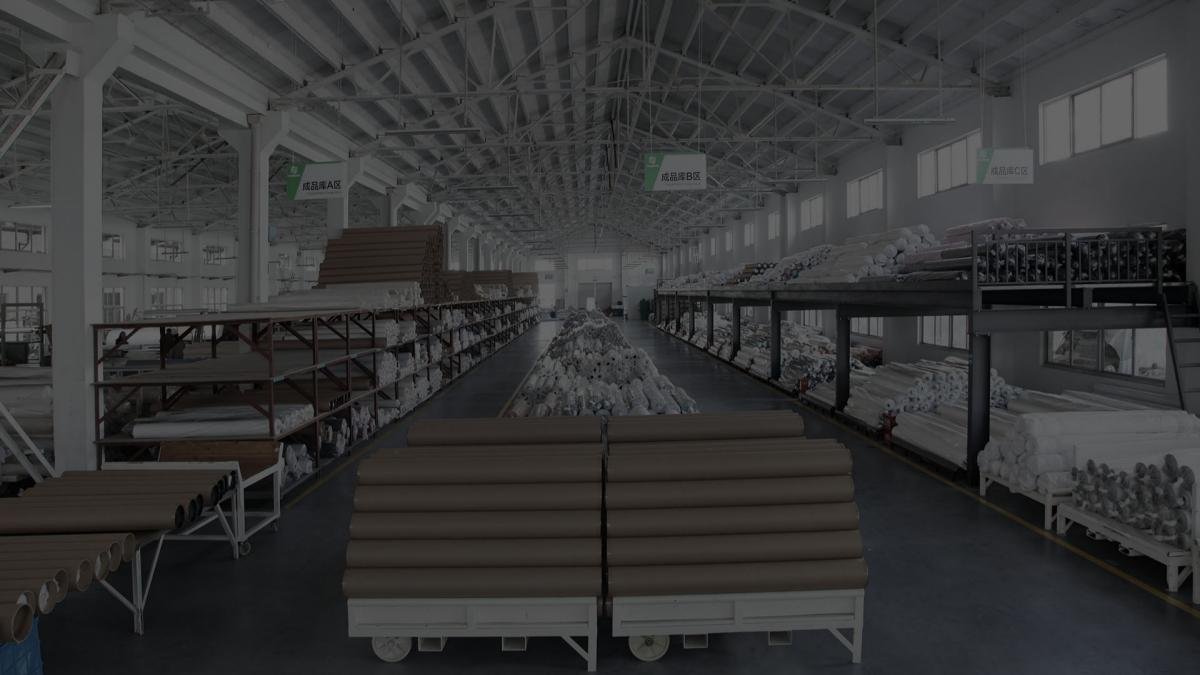
Shadesmart operates a 58,883 m² self-owned factory in Xiamen, Fujian, with 12 dedicated production lines, 93 pieces of production equipment, and an output capacity of over 11 million units per year. That scale is relevant to a wholesale buyer for a specific reason: a factory running at 11M+ annual units is not going to deprioritize your 2,000-unit order because a larger client walked in — the production capacity absorbs both without conflict scheduling.
What Factory Scale Actually Tells You About Supply Reliability
Factory size alone is not a quality signal — it is a supply stability signal. The quality argument runs through engineering parameters.
 📸 Image: Close-up macro shot of roller shade aluminum tubes in 38mm and 50mm diameters, laid side by side on a flat surface, ruler visible, showing wall thickness differential.
Consider the aluminum tube at the core of every roller shade. A factory that produces at volume specifies tubes by diameter and wall thickness together — not just diameter. A 38mm tube with a 1.5mm wall carries loads up to 200 g/m² fabric across a 1,800mm width without visible sag. The same 38mm tube with a 1.2mm wall (a common cost-reduction shortcut in lower-tier supply) begins to deflect perceptibly at the same load. That 0.3mm wall difference is invisible to a buyer reviewing a product photo; it shows up 12 months after installation when the shade develops a visible bow at its center point.
A manufacturer running 12 dedicated lines and 11M+ units per year has sourced aluminum at enough volume to specify — and enforce — 6063-T5 primary aluminum at ±0.1mm wall thickness tolerance. A smaller assembly operation buying components at lower volumes accepts what the aluminum trader ships, because they lack the purchase leverage to mandate material specs.
The same logic applies to fabric. Zebra blind solid bands at 220–280 g/m² hold their structure and color through years of use; the same product built with 150–180 g/m² fabric fades and loses band alignment within 18–36 months. Fabric weight is a parameter buyers can and should request in writing before placing a bulk order.
How to Verify Quality Before You Place a Bulk Order
The Four QC Checkpoints That Matter
A well-structured manufacturing QC system runs four distinct checkpoints, each catching a different failure class.
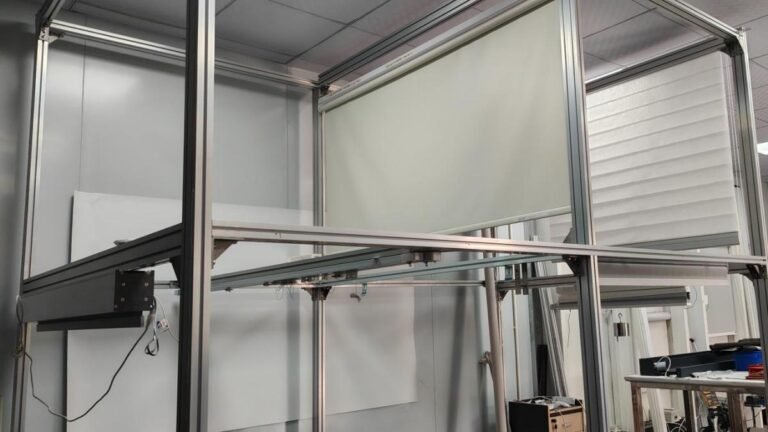
Incoming Quality Control (IQC) intercepts defective raw materials before they enter production — aluminum tube dimensions, fabric weight, and color are measured at receipt. In-Process Quality Control (IPQC) runs on the production floor, sampling cut widths and fold precision every two hours per production line; the tolerance standard for finished width is ±1mm, and height ±2mm. Final Quality Control (FQC) tests every completed unit: three full extension cycles, operating force (must be ≤25N per EN 13120 Class 1), and blackout performance for light-blocking products. Outgoing Quality Control (OQC) verifies packaging integrity and label accuracy before the pallet leaves the warehouse.
A 100% finished-product inspection at FQC — not sampling — is the difference between a 0.3% field defect rate and a 2–3% rate. Shadesmart's 16-person dedicated QC team runs 100% finished-product inspection at FQC. When requesting QC documentation from any supplier, ask specifically whether FQC is 100% inspection or AQL sampling, and at what AQL level.
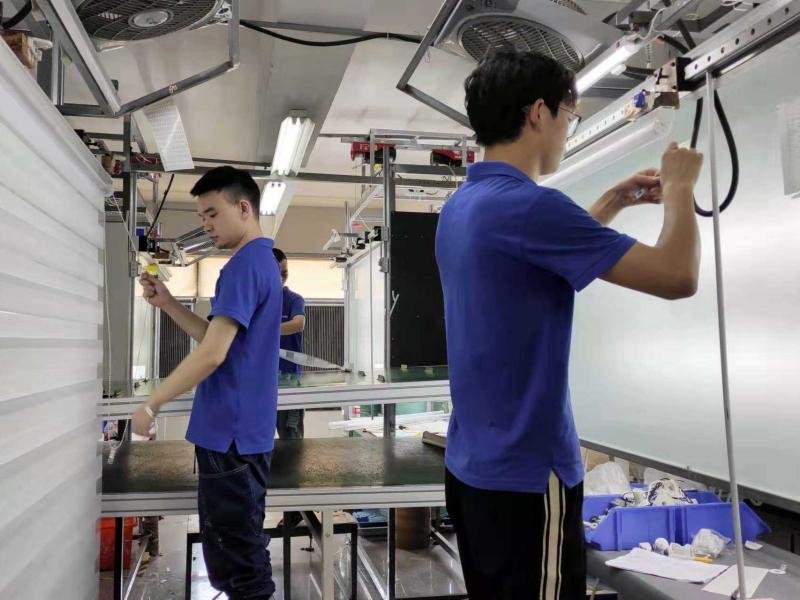 📸 Image: QC team member measuring a finished roller shade with digital calipers at the FQC station, measurement displayed on calliper screen, neutral factory background.
Color Consistency Across Batches
For wholesale buyers placing recurring replenishment orders, color consistency between batches is the quality issue most likely to generate downstream complaints from retailers and end customers. The industry standard measurement is ΔE (delta-E) under CIE 1976 — a numerical distance between two color measurements taken under standardized lighting.
The practical thresholds: a ΔE below 1.0 is imperceptible to the human eye under any viewing condition. A ΔE of 1.0–2.0 is detectable only under close inspection. A ΔE of 2.0–3.5 is visible to a normal observer at a conversational distance — this is the level at which two shades installed in the same room from different production batches will draw a complaint. A ΔE above 3.5 is an obvious mismatch and is not acceptable within the same project.
Controlling for ΔE across production batches requires that all fabric for a given project or replenishment run comes from the same dye lot. For engineering orders exceeding 30 units, a manufacturer should be able to confirm that production is scheduled from a single dye batch, with a 15% fabric overage reserved for breakage replacement.
Compliance and Certification
Two compliance frameworks are non-negotiable for wholesale buyers targeting North America and Europe.
In the US, ANSI/WCMA A100.1-2022 has eliminated free-hanging operating cords from all custom window coverings. Any roller shade or zebra blind shipped into the US residential market must use cordless operation, motorized drive, or a short cord with a cord connector that prevents free-hanging loops. This is not a brand preference — it is an enforceable industry standard driven by child safety data. Buyers sourcing from China for US distribution need to confirm that cord configuration on all products complies with ANSI/WCMA A100.1-2022 before the order is placed, not after.
For buyers targeting Europe, REACH Regulation EC 1907/2006 restricts substances of very high concern (SVHCs) in all products placed on the EU market. As of the most recent SVHC candidate list update, 235 substances are restricted. The aluminum components in roller shades are a specific compliance point: REACH limits lead content in aluminum to below 0.1% by weight. This threshold is violated by some recycled-aluminum profiles, which is why sourcing from a manufacturer that mandates primary aluminum (6063-T5 specification) and conducts periodic third-party chemical analysis of its aluminum supplier base matters to EU-bound buyers.
For specific certification documentation relevant to your target market — whether NFPA 701 for fire retardancy, GREENGUARD for indoor air quality, or ANSI/WCMA compliance letters — contact Shadesmart directly with your market and application, and the relevant documentation will be provided as part of the RFQ process.
MOQ: What the Numbers Mean in Practice
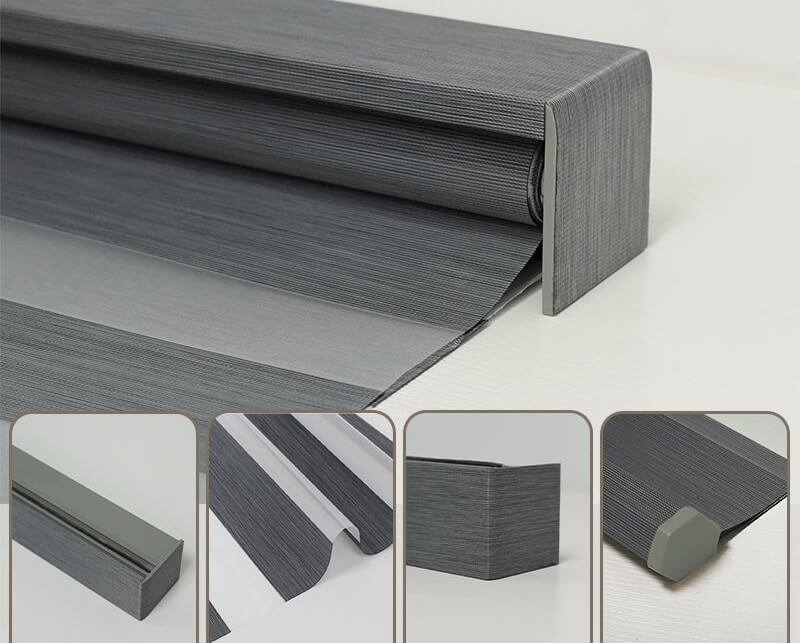 📸 Image: Single packaged roller shade with a mock private-label brand sticker on the box, clean white background, suggesting OEM capability without revealing client branding.
Low MOQ figures from Chinese factories are often misread as unlimited small-batch flexibility. They are not. They are a threshold below which a factory will still accept an order — not a promise that any quantity can be fulfilled on demand at any time.
Shadesmart's published MOQ is 1 piece for standard products, and 10 pieces for OEM custom orders. Those figures are accurate and enforceable. What they mean structurally: a buyer can place a single-unit test order to evaluate dimensions, fabric quality, color accuracy, and packaging before committing to volume. That test function is the intended use of a 1-piece MOQ.
For orders above 500 units, production is scheduled against line capacity. A 500-unit OEM run cannot be inserted into the production schedule on 72 hours' notice — it requires a planned window. Standard lead time for production runs is 25–35 days for standard products, 35–45 days for OEM orders. Those timelines are backed by 12 dedicated lines running 11M+ units per year — they are not padded estimates designed to be renegotiated. The capacity exists; the scheduling lead time is a real constraint.
The practical takeaway for wholesale buyers: use the low MOQ to qualify the supplier and the product. Then plan bulk orders on a lead time schedule that matches actual production cycles.
Dual-Platform Sourcing: B2B Bulk vs. Small-Batch DTC
Shadesmart operates two purpose-built platforms for different buyer profiles.
Shadesmart.com is a B2B professional platform designed for wholesalers, distributors, OEM brand owners, and project-volume buyers. The emphasis is on technical documentation, certification support, project-level solutions, and long-term production partnerships. This is the right entry point for buyers placing recurring wholesale orders, developing private-label product lines, or specifying window shades for commercial projects.
ShadesmartUSA.com is a DTC factory-direct storefront designed for households, interior designers, and small retailers who need factory-direct pricing and fast replenishment without B2B volume commitments. If you are an e-commerce seller testing a new SKU, a small retailer looking for 10–20 units of a specific blackout roller shade, or a designer sourcing samples for a residential project, this platform removes the minimum-order barrier while maintaining the same product quality.
Both platforms ship from the same 58,883 m² facility and pass through the same 16-person QC team. The difference is inquiry process, pricing tier, and order size — not product origin or inspection standard.
Frequently Asked Questions
Q: What is the minimum order quantity for wholesale window shades from a Chinese factory? A: MOQ varies by supplier type. At Shadesmart, standard products start at 1 piece — this is designed for test orders and product qualification. OEM custom orders (private-label branding on existing products) start at 10 pieces. Full ODM development projects (new product from concept to production) are negotiated based on project scope.
Q: How do I verify whether I'm dealing with a real factory or a trading company? A: Request three specific data points: the factory's physical address and total facility size in square meters, the number of dedicated production lines, and the annual unit output. Cross-reference against a third-party audit or video verification walkthrough. Trading companies typically cannot provide consistent production-line and output data because they source from multiple unrelated factories.
Q: What certifications should I ask about when sourcing window shades from China? A: The certifications that matter depend on your target market. For US residential: ANSI/WCMA A100.1-2022 cord safety compliance. For US hospitality and commercial: NFPA 701 fire-retardant compliance. For Europe: REACH SVHC chemical compliance and EN 13120 mechanical performance. Contact your supplier with your specific market and application — a manufacturer with genuine export experience will have documentation ready for each relevant standard.
Q: What is the typical lead time for wholesale roller shades from a Chinese manufacturer? A: For standard products, 25–35 days from order confirmation to shipment. For OEM custom orders with private-label branding, 35–45 days. These timelines assume that order confirmation and deposit are received promptly and that no custom fabric or component development is required.
Q: How does factory-direct pricing compare to buying through a distributor or trading company? A: Factory-direct pricing typically sits 20–35% below the US or European wholesale tier, depending on order volume and product complexity. The cost difference reflects the removal of the importer or trading company margin layer. The trade-off is that the buyer takes on responsibility for compliance documentation, logistics coordination, and quality verification — all of which a domestic distributor would otherwise handle.
Q: What product types are included in "wholesale window shades"? A: The category covers roller shades (blackout, light-filtering, solar screen), zebra / dual-roller shades, cellular / honeycomb shades, and sheer shades — plus motorized versions of all four types. Slat-based venetian blinds, plantation shutters, and window film are separate product categories with different manufacturing requirements.
Q: What should I check to ensure color consistency across large wholesale orders? A: Request that your manufacturer commits in writing to producing all fabric for a given project or replenishment run from a single dye lot. Ask for ΔE measurement data from their incoming fabric inspection. The practical threshold: ΔE below 1.0 is imperceptible; ΔE above 2.0 is visible to the naked eye in the same room. For engineering projects over 30 units, ask the factory to hold 15% overage from the same dye batch for breakage replacement.
Ready to compare factory-direct pricing on roller shades, zebra blinds, or cellular shades? Share your product requirements and target market — we'll provide a tailored wholesale quote and the relevant compliance documentation for your destination market.