
Full article
The fastest way to tell a window blinds manufacturer from a trading company is to ask production questions only a factory can answer: which steps happen in-house, what gets sent back to the line, who fixes root causes, which specs can actually change, and what your MOQ really means. These are the five questions I would ask.
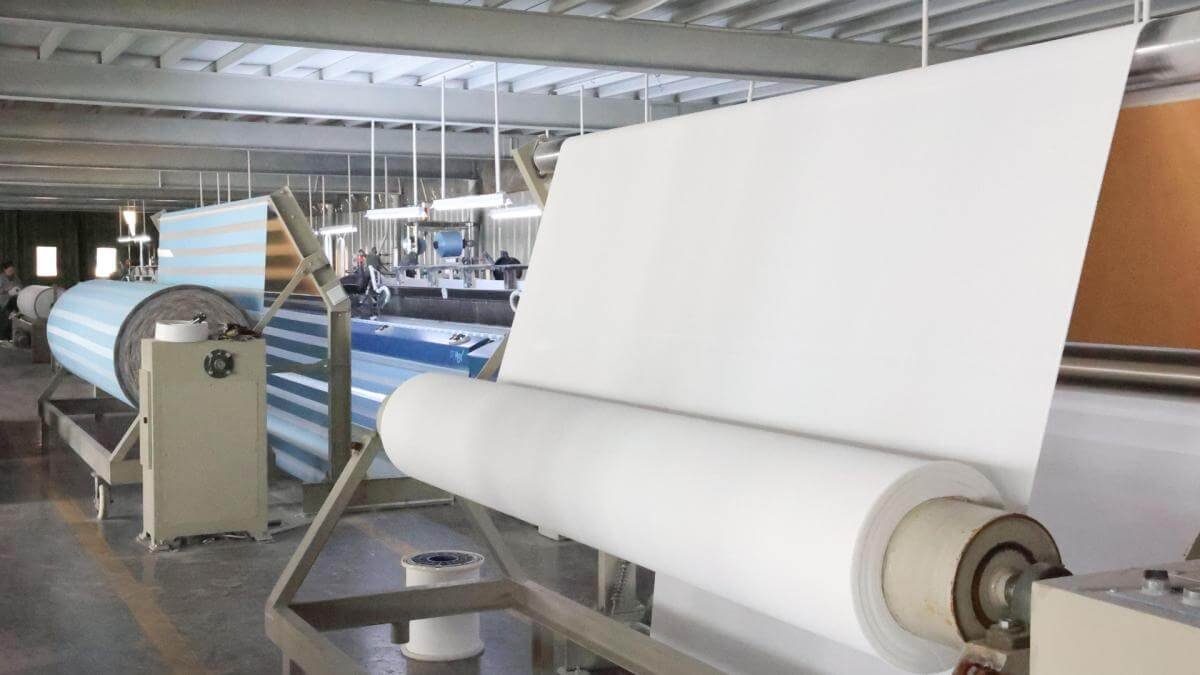
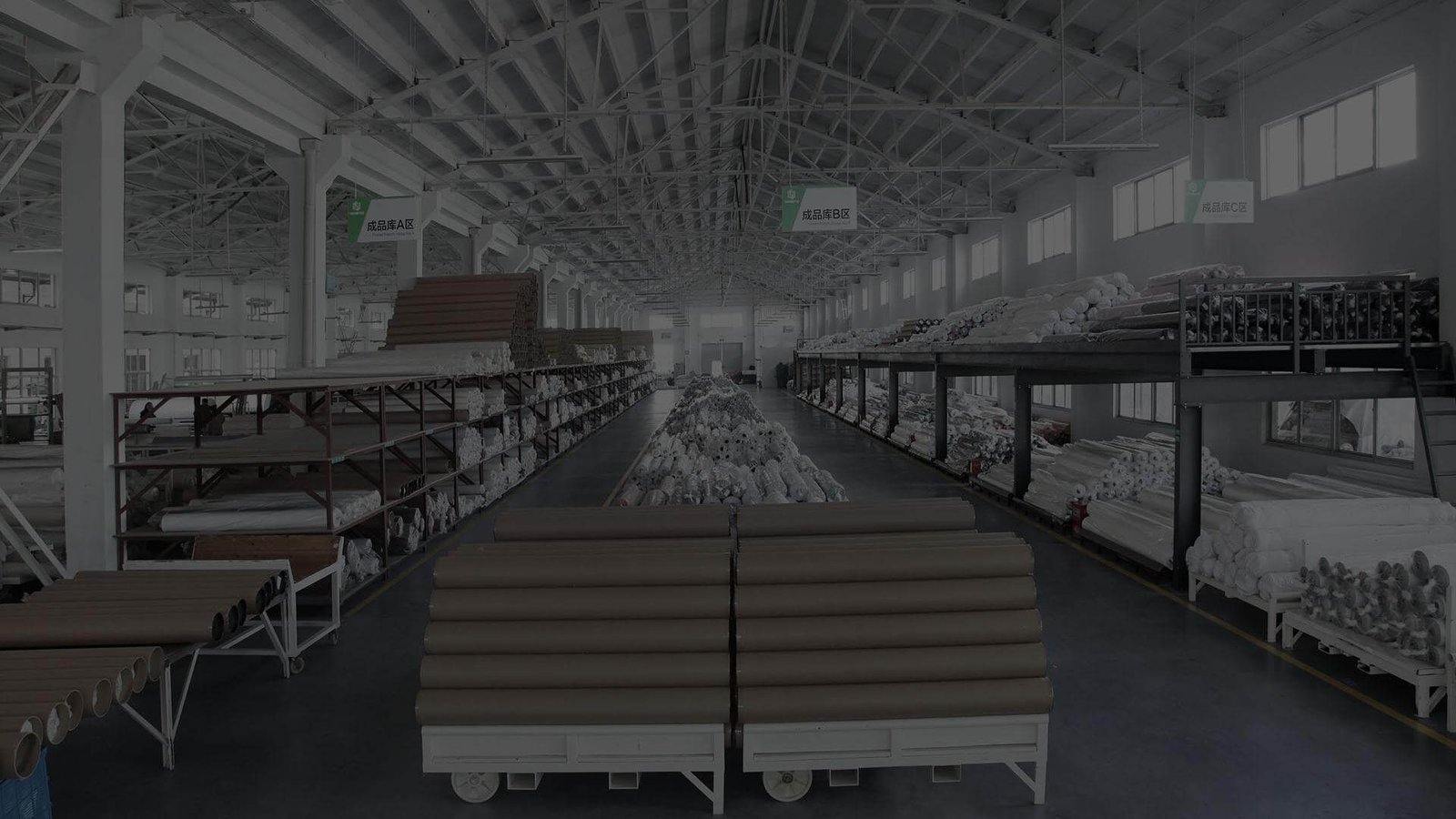
I'm the production director at Shadesmart, part of Xiamen Goodwood Industry Co., Ltd. The company was founded in 2008, and today we run a 58,883 ㎡ production base with 12 dedicated production lines and more than 11 million units of annual output. I started on a factory floor in 2006, cutting fabric and assembling motors, so I know how quickly a sample room can look identical to a real production line from the outside.
A quick note on terms: in this article I'll say "shades" for roller, cellular, zebra and sheer products, though many buyers call them all "blinds" in general sourcing conversations. Both words mean the same product category here.
What is the real difference between a window blinds manufacturer and a trading company?
A manufacturer controls the production process and is accountable for it. A trading company controls the customer relationship and buys production from someone else. Neither is automatically dishonest, but they carry different risks and offer different value.
| Manufacturer (vertically integrated) | Trading company | |
|---|---|---|
| Who makes the product | Own factory, own lines | Outside factories, often several |
| Component supply | Core parts made or controlled in-house | Bought from whichever supplier fits the order |
| Quality problems | Root cause traced inside one system | Passed back to a third-party factory |
| Spec changes | Can adjust structure, materials, tolerances | Usually limited to what the factory already offers |
| Strength | Consistency, traceability, customization depth | Product variety, small mixed orders, convenience |
Our model is "components made in-house, finished products built in-house." That means raw material processing, core component production and final assembly all sit under one roof, with every batch traceable. That's why the five questions below focus on production, not on sales materials.
Question 1: "Which production steps happen in your own factory?"
A real manufacturer can name each step, say where it happens, and show you the machines. A trading company will answer in general terms, such as "we have cooperating factories."
Ask for specifics: who cuts the fabric, who machines the tubes and bottom rails, who assembles the mechanisms and who packs. Then ask to see it on a live video walkthrough.
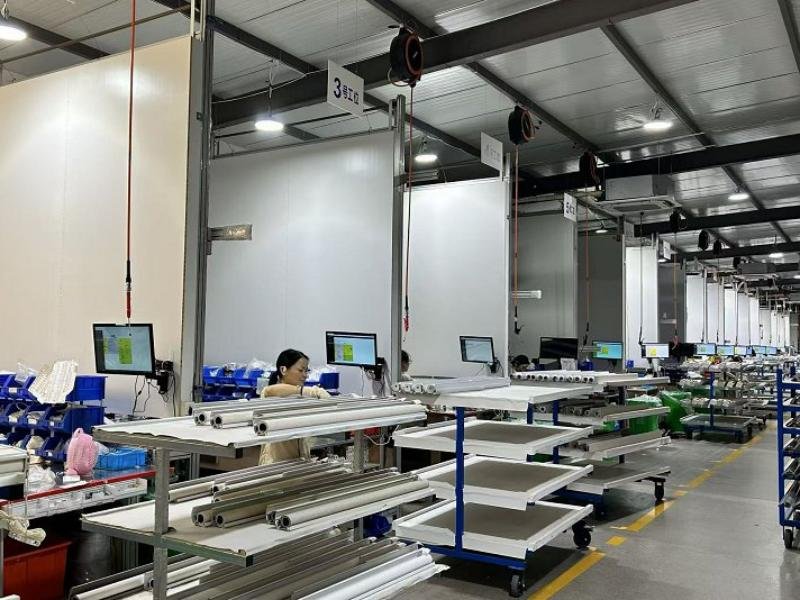
For us, the answer is concrete: 12 production lines and 93 specialized machines running across a 58,883 ㎡ base, covering the chain from raw material processing to finished assembly. When a buyer asks us to prove it, we can point to a line, a machine and a person.
One warning sign: a supplier who says "we're a factory" but can't tell you which products are made at which site. Some do have partner factories. That's fine if they say so. The problem starts when they don't.
Question 2: "How do you inspect, and what gets sent back to the line?"
Inspection records are the hardest thing for a middleman to fake. A trading company usually sees product on the day before shipment. A factory sees why a batch was sent back.
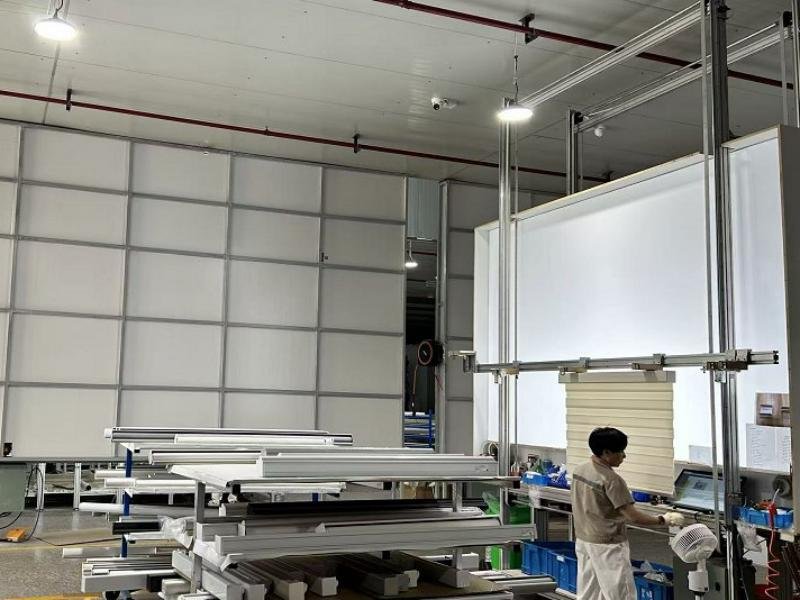
Don't ask "Do you have QC?" Everyone says yes. Ask what specifically gets rejected and at what threshold. Our QC runs as four checkpoints across a dedicated 16-person QC team (more on how this works in our quality control overview):
| Checkpoint | What is checked | Frequency |
|---|---|---|
| IQC (incoming) | Dimensions, aluminum chemical composition, fabric weight, fabric color difference | Every incoming batch is sampled |
| IPQC (in-process) | Cut width (±1 mm), cut height (±2 mm), hem flatness | Every 2 hours, per line |
| FQC (finished goods) | Full-travel cycles ×3, operating force (≤25 N), blackout test where applicable, appearance | 100% of finished products |
| OQC (outbound) | Quantity, size labels, transit packaging | Every shipment, 100% |
Here are the actual triggers that send product back to the line in our factory:
- Cut width error beyond ±2 mm
- Bottom rail bow beyond 2 mm per 1,000 mm
- Friction noise during full-travel operation
- For blackout products, light leakage above 0.5 lux in a dark chamber under 100 lux of test light
If a supplier can't give you numbers like these, they either don't have a real inspection system or they don't own it. These are our internal standards, not an industry mandate, and I'm sharing them so you know what specificity looks like.
Question 3: "When something goes wrong, who fixes the root cause?"
When a defect appears, a manufacturer changes a process. A trading company usually changes a supplier, or negotiates a credit. Ask for a real example of a problem and what changed afterward.
Here are two of ours.
Cutting accuracy. In our 2019–2024 complaint and return data, cut-size deviation was the largest single category at 34%. The cause was not the operators. It was calibration frequency on our automatic cutting machines. We moved from weekly calibration to calibration every shift, and size-related problems dropped by 62%. A trading company typically couldn't make that fix, because the cutting machine isn't theirs.
Aluminum sourcing. In 2018, a shipment of roller shades bound for Germany was stopped because externally sourced aluminum profile contained lead at 0.5%, well above the 0.1% threshold that REACH applies to substances of very high concern1. The loss was roughly RMB 120,000, not counting the damage to the customer relationship. That was a hard lesson in trusting a supplier's quality report. Since then, we test aluminum suppliers' chemical composition every quarter ourselves, and it's a standing part of our process.
That is the pattern to look for: a specific failure, a specific change and a process that still exists today. Vague answers like "we take quality very seriously" tell you nothing.
Question 4: "Can you adjust specs, not just logos?"
A manufacturer can change structure, materials and tolerances. A trading company can usually change the logo, the packaging and the color from a fixed catalog. The question that separates them is whether the supplier can say no, and explain why.
We work in three tiers:
- Light customization: dimensions, colors and other standardized adjustments
- Sample development: prototyping, functional verification, new product evaluation
- Deep customization: structural development, material optimization and exclusive design for brands and large projects (see our OEM/ODM and private label solutions)
Our 17-person R&D team launches 20+ new products a year, and that is what makes tier three possible.
The best test of real engineering control is a case where we refuse an order. A 38 mm tube can technically be pushed to 2,000 mm wide to cut cost, but we'll do it only if the customer confirms in writing that they understand the deflection trade-off. For zebra shades, we don't recommend single-piece widths above 2,800 mm, and we decline 3,000 mm+ single-piece orders unless the customer signs an acknowledgment of the stripe-alignment limits. The better solution is two shades side by side. A supplier that says yes to everything probably isn't the one who has to live with the result.
Question 5: "What does your MOQ actually mean?"
A 1-piece MOQ means you can test the product. It does not mean unlimited volume on short notice. A manufacturer should explain both sides, because MOQ is tied directly to how production gets scheduled.
Our policy is simple:
- Standard products: from 1 piece, for market testing and small trial orders
- OEM custom orders: from 10 pieces
- New product development and project orders: negotiated
The boundary matters just as much. Orders above 500 pieces go through normal production scheduling. We can't promise next-day shipment on a large order, because squeezing in a rush job disrupts every other order on the line. If a supplier promises both tiny MOQs and instant delivery on any quantity, that promise should make you cautious.
Ask also how your order will be scheduled and who owns that schedule. Someone who controls the production line can tell you. Someone relaying orders to a third party can only pass along the factory's reply. If you're comparing suppliers for repeat stock, our wholesale program explains how these tiers apply in practice.
Is a trading company always the wrong choice?
No. A trading company can be the right choice when you need many product categories in one shipment, very small mixed orders, or someone to manage several factories for you. Pretending otherwise wouldn't be honest.
A trading company may fit if:
- You need a broad catalog from multiple factories in one consolidated order
- Your volumes are small and varied, and you value convenience over control
- You don't need custom structure or deep technical support
A manufacturer is usually the better fit if:
- You need consistent quality across repeat orders
- You want traceability back to materials and production batches
- You plan custom development, private label or project-scale supply
- You want someone who can diagnose a problem at its source
The question isn't "factory good, trader bad." It's whether the supplier is honest about what they are, and whether what they are matches what you need.
Frequently asked questions
How can I tell if a window blinds supplier is a real manufacturer?
Ask which production steps happen in their own factory, what their inspection thresholds are, and what process they changed after a real quality failure. A manufacturer answers with specific machines, numbers and examples. A trading company tends to answer with general claims.
Is it safe to buy window shades from a trading company?
It can be, if the company is transparent that it sources from outside factories and your needs match that model, such as small mixed orders or multi-category consolidation. The risk is highest when a trading company presents itself as a factory, because quality problems and spec changes then depend on a third party you never meet.
Does a 1-piece MOQ mean I can order any quantity at any speed?
No. A 1-piece MOQ lets you test a standard product with minimal inventory risk. Larger orders, especially above 500 pieces, follow normal production scheduling and can't be rushed to next-day shipment.
Can a window shade manufacturer customize more than logo and packaging?
A vertically integrated manufacturer can adjust dimensions, colors, structure and materials, depending on the project. It should also tell you when a requested spec is a bad idea, such as single-piece zebra shades beyond 2,800 mm wide, and explain why.
Ready to test these five questions on us? See how our plant is organized on the window shade manufacturer page, then check current production capacity for your product mix before you commit to a sample order. If you're comparing several suppliers, you're welcome to bring this list with you.
For the full buyer's framework, including how to verify capacity and structure an audit, read our complete roller shade manufacturers guide for B2B buyers.
Learn more about how REACH treats substances of very high concern in finished articles. ↩
Ready to Source Direct?
Ready to Talk About Your Project?
Send us your product specifications, target market, and estimated volume. Our export team responds within 1 business day.