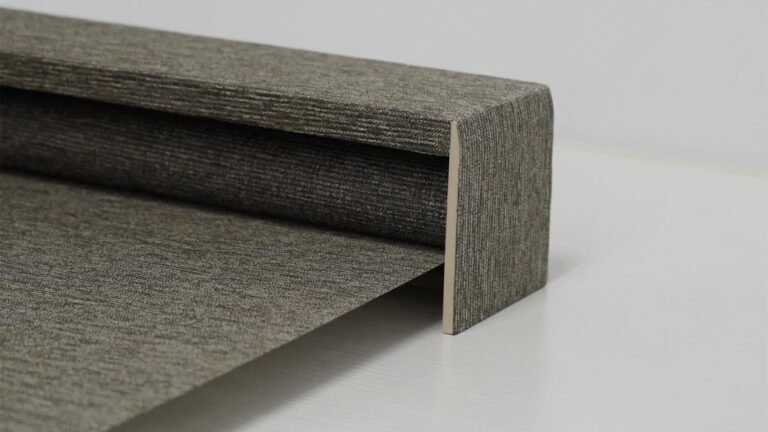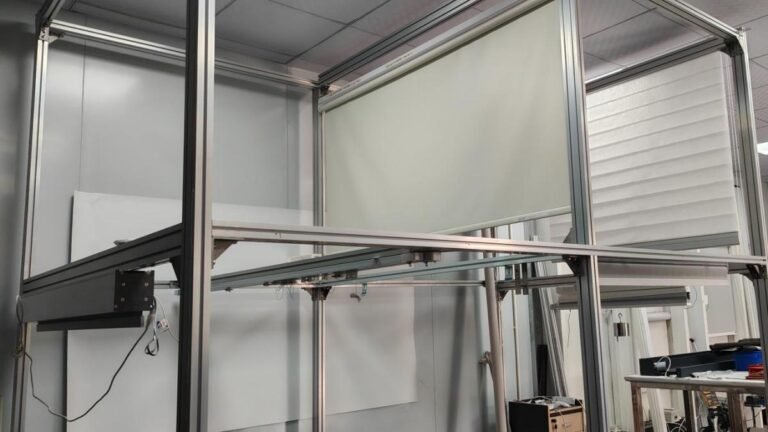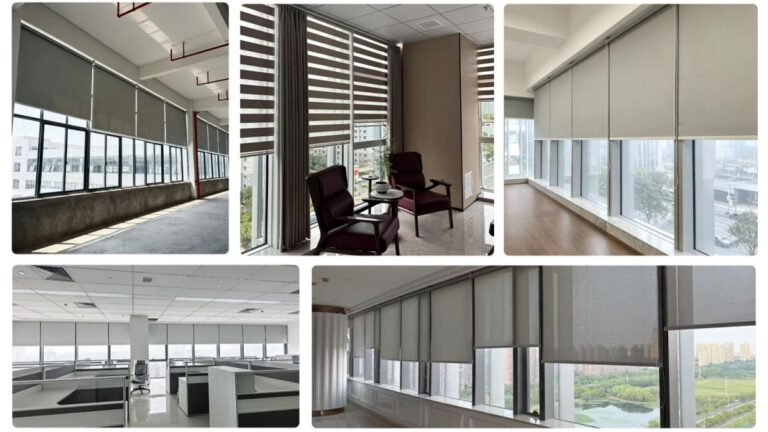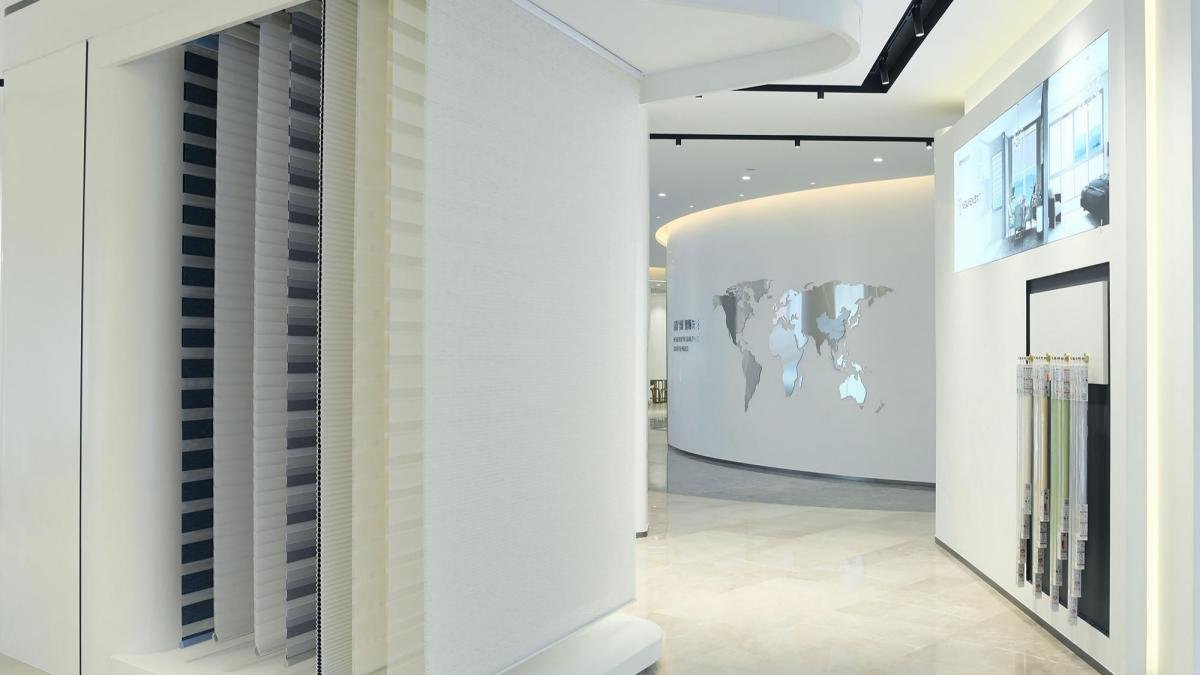
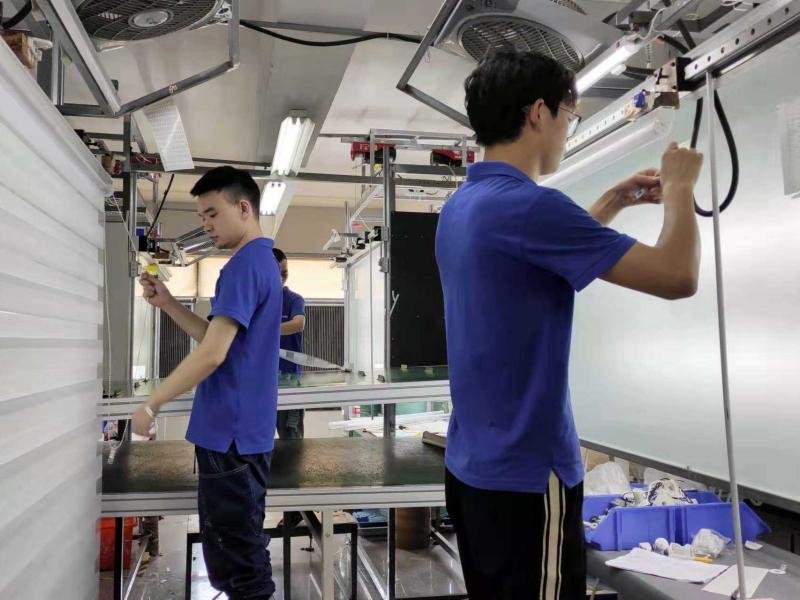
A factory's production capacity is not one number. It is floor area, line count, equipment, annual output and the slowest step in the chain, read together. When you compare wholesale suppliers, ask what each figure counts and what limits it. Here is our own set: a production base of 58,883 ㎡, 12 production lines, 93 machines, annual output of more than 11 million pieces, and a 16-person QC team inspecting 100% of finished goods. Below, I explain what those numbers prove, and what they can't. If you want the full factory overview first, it's on our window shade manufacturer page.
A quick note on terms. This guide covers shades (roller, cellular, zebra and sheer, in manual and motorized versions), which some buyers call "blinds" in general sourcing conversations. When I describe what we make, I'll say shades.
What does "production capacity" actually mean when a supplier quotes it?
Production capacity is the volume of sellable product a factory can ship on a repeatable schedule, not the volume its equipment could theoretically produce. Floor area, lines, machines and annual output each describe a different part of that, and no single one answers your real question: can this supplier keep my SKUs in stock in October?
I started in this industry in 2006, on a shop floor in Suzhou, cutting fabric and processing aluminum tubes before I ever saw a spec sheet. I've read a lot of capacity claims from both sides of the table. The ones that fail buyers usually fail in the same way: a big number with no unit and no explanation of what limits it.
| Metric | What it can show | What it can't show | What to ask |
|---|---|---|---|
| Floor area (ours: 58,883 ㎡) | Physical room for material flow, storage and assembly | How much of the space is production vs. warehouse or office; whether it's one site or several | What share is production floor? How many sites, and what does each do? |
| Production lines (ours: 12) | Parallel capacity | Which products each line runs; whether lines are dedicated or shared | Which lines run which product families? Can one line switch to another product? |
| Equipment (ours: 93 machines) | Investment in cutting, assembly and testing capability | Whether the machines are the bottleneck or a downstream step is | Which step limits output at peak? |
| Annual output (ours: 11 million+ pieces) | Scale of operation over a year | What a "piece" is, product mix, and seasonal peaks | What counts as one piece? What's the product mix behind the total? |
Any supplier, including us, should be ready to answer these follow-ups in writing. Our figures cover multiple sites, not one building, so the annual output figure only means something once you know the product mix and the definition of a piece.
The number matters less than what sits behind it. We run on a "components in-house, finished goods in-house" model: raw material processing, core component production and final assembly all happen inside our own system. For a wholesaler, that matters because fewer hand-offs between separate companies mean fewer places for a schedule to slip. It doesn't remove every dependency, as the third section explains.
Why isn't line count enough to tell you a factory can keep shipping?
Line count tells you how many lines exist. It doesn't tell you how many good units come off them. Real capacity is the output that passes inspection, and that depends on how a factory catches errors early enough to fix them without stopping the line.
Here is how our inspection actually runs (the full process is on our quality control page). We use four checkpoints:
- IQC (incoming material): aluminum tubes, fabric and mechanism parts are checked on arrival for dimensions, fabric weight and color, and aluminum chemistry.
- IPQC (in-process): we sample cutting accuracy and hem quality every two hours on every line. Width tolerance is ±1 mm.
- FQC (finished product): 100% of finished shades go through three full extension cycles, an operating-force check, and a blackout light test on blackout products.
- OQC (outbound): quantity, label accuracy and packaging protection are verified on every shipment.
A shade goes back to the workshop if the cut width is off by more than ±2 mm, if the bottom rail bows more than 2 mm per meter, or if the mechanism makes friction noise during a full pull.
The most useful thing I can show you is a failure pattern. Over five years of return and complaint data (2019–2024), cutting size deviation was 34% of all issues, the single largest category. The root cause was not the cutting machines. It was how often we recalibrated them. When we moved the cutting baseline calibration from weekly to every shift, that problem category dropped by 62%. These figures are from our internal production and customer service records, not from an industry study.
Why does this matter for capacity? As a hypothetical example, a line that produces 1,000 shades a day with a 5% rework rate is really a 950-shade line, and the rework consumes labor and time that never appear on the capacity sheet. When you evaluate a supplier, ask about rework and return rates by category, not only how many lines they run.
One boundary: this four-checkpoint routine is our internal standard. It isn't a mandatory industry requirement, and other good factories may organize inspection differently. What matters is that a supplier can describe theirs with this level of specificity.
Where do the real bottlenecks hide before an order reaches the production line?
The real bottlenecks are often upstream: fabric supply, smart-module availability, and the seasonal calendar. A factory with excess line capacity can still ship late if the materials aren't there.
Even with core parts made in-house, fabric and motorized components reach any shade factory through the supply market. Here is what fabric sourcing lead time looks like in China's main fabric-producing regions (Fujian and Zhejiang):
| Fabric type | In stock | Reorder | Custom color / spec |
|---|---|---|---|
| Standard roller fabric (100–250 g/m²) | 3–5 days | 10–15 days | 20–30 days |
| Blackout coated fabric | 5–7 days | 15–20 days | 25–35 days |
| Zebra fabric (standard stripe) | 5–10 days | 20–30 days | 35–45 days |
| Cellular fabric | 7–14 days | 25–35 days | 40–50 days |
| Project-specific colors / patterns | N/A | N/A | 45–60 days |
This table shows raw material lead time only: how long fabric takes to arrive. It is not the delivery time for a finished order. We don't use fabric lead time to imply an order-to-delivery number, and you should be cautious of any supplier who does.
Timing matters as much as duration. Q3 (July to September) is when fabric prices swing most, because holiday stocking in Western markets pushes up yarn demand while polyester feedstock prices follow oil. Our rule is to complete annual purchasing plans in Q1 and Q2. If a supplier hasn't secured its material plan before peak season, its stated capacity is only a hope.
Smart modules taught us a harder lesson. During the 2022–2023 chip shortage, smart-module lead times stretched from 7 days to 45–60 days, and orders for motorized shades slipped across the industry. We were among the affected. Since then we keep a 60-day safety stock of smart modules and maintain supply capability on two separate module platforms, so a shortage on one doesn't stop everything. It's now a standing part of our purchasing routine.
If you buy motorized shades, ask any supplier how long its module stock lasts if resupply stops. That question exposes more than the size of the production hall.
How should a wholesaler test a capacity claim before placing an order?
Test a capacity claim by asking questions a sales brochure can't answer for you: what the number counts, how each product family is scheduled, and what happens at peak. A capable supplier answers in specifics. An evasive one answers in adjectives.
| Question | A good answer sounds like | Warning sign |
|---|---|---|
| What does one "piece" in your annual output mean? | A clear unit definition, ideally split by finished shades and components | "Pieces" with no definition |
| Which lines run my product family? | Named product families, and whether lines are dedicated or shared | "All lines can make everything" |
| Which components do you make yourself? | A specific list, plus what you buy in | Vague "we control the whole chain" |
| How many inspection points, and how often? | Named checkpoints, sampling frequency, and what triggers rework | "We have strict QC" |
| How do you plan for Q3 material pricing? | A description of when purchasing is fixed | No answer, or "we buy as needed" |
| For motorized shades, how much module stock do you hold? | A stated buffer and a second-source plan | "No problem with supply" |
| How does a large repeat order get scheduled? | A description of how it enters the production calendar | Promises of immediate turnaround |
The last row deserves honesty about our own policy. Our standard products start at 1 piece, and OEM customization starts at 10 pieces. That means you can test us cheaply. It doesn't mean any quantity ships tomorrow. Orders above 500 pieces are produced on a planned schedule and cannot be expected to ship the next day. Extra rush orders inserted into a running schedule disrupt every other customer's order, and I won't promise what the schedule can't deliver.
That's also why capacity figures, ours included, are a starting point for a conversation, not a delivery commitment. The useful step is to send your product mix and expected volumes, and ask the supplier to show you where they fit in the calendar. Our wholesale partnership terms explain the MOQ tiers, the three customization levels and how to open a trade account.
Shadesmart, part of Xiamen Goodwood Industry Co., Ltd., has manufactured and exported window shades since 2008. After nearly 20 years, the lesson I'd pass on is simple: the supplier who explains its limits precisely is usually the one who can be trusted at volume.
Ready to check capacity against your own product mix?
Send us your shade types, expected volumes and target ship windows, and we'll tell you where they fit in our production calendar and where they don't. Check current production capacity for your product mix, or go straight to opening a trade account.
Frequently Asked Questions
How can I tell if a wholesale blinds supplier's production capacity is real?
Ask what each number counts. Floor area, line count, equipment and annual output describe different things, and none proves reliable supply alone. Ask for the unit definition behind annual output, which product families each line runs, which components are made in-house, and how inspection is sampled. A supplier that answers in specifics is usually more credible than one that answers in adjectives.
Does a factory's annual output mean I can get any quantity shipped quickly?
No. Annual output describes scale over a year, not what ships tomorrow. At Shadesmart, standard products start at 1 piece and OEM customization at 10 pieces, but orders above 500 pieces are produced on a planned schedule and can't be expected to ship the next day.
How long does fabric take to arrive, and is that my delivery time?
Fabric lead time is not delivery time. In China's main fabric-producing regions, standard roller fabric in stock takes about 3–5 days, while project-specific colors or patterns can take 45–60 days. That's raw material lead time only, and it should never be read as the order-to-delivery time for finished shades.
Why do motorized shade orders slip when there's a chip shortage?
Smart modules are a separate supply chain from fabric and tubes. During the 2022–2023 shortage, module lead times stretched from 7 days to 45–60 days across the industry. We now keep a 60-day safety stock of smart modules and maintain two separate module platforms. When you compare suppliers, ask how long their module stock lasts if resupply stops.