In 2018, a shipment we sent to a German retailer was detained at Hamburg customs. The issue wasn't documentation, labeling, or quality in the conventional sense — the product looked right, operated correctly, and matched the sample specification. The problem was lead content in the aluminum headrails: 0.5% by weight, against a REACH regulatory maximum of 0.1%.
We had relied on a component supplier's self-certification of compliance. The component supplier had relied on their own, unverified assessment of the recycled scrap aluminum they were using.
The financial cost was direct: approximately ¥120,000 in detained goods, third-party testing, and remediation. The indirect cost — a German client relationship that took eight months to fully repair — was harder to quantify and longer to resolve.
The lesson wasn't "don't source from China." It was "don't source without a vetting framework." We are Shadesmart, a window shade manufacturer based in Xiamen, and this guide is built on that experience.
What does sourcing window shades from China mean in practice?
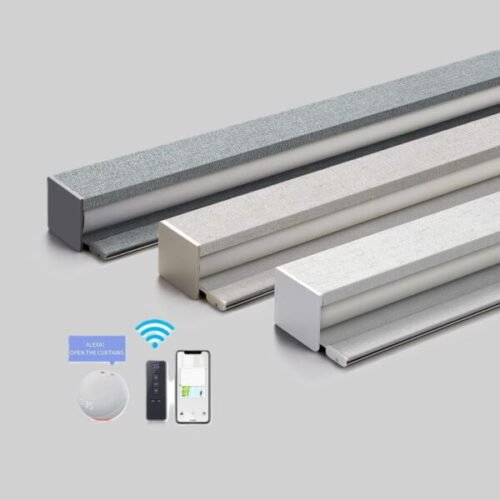
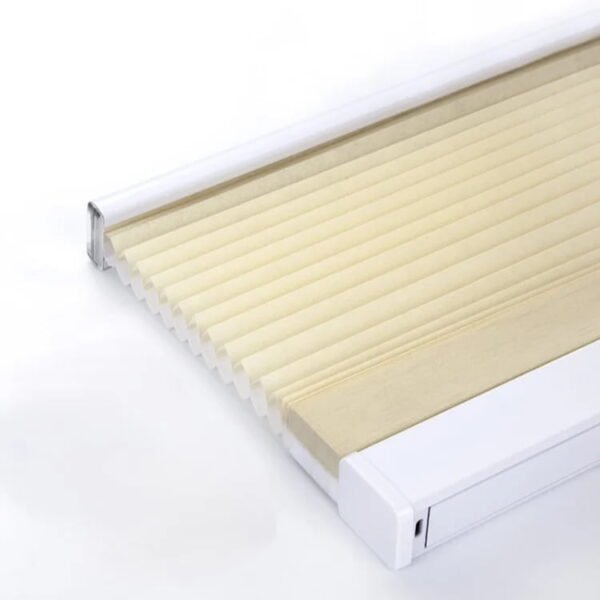
Sourcing window shades from China means purchasing roller shades, zebra blinds, honeycomb shades, or motorized systems directly from Chinese manufacturers or trading companies. China produces the majority of global window shade output, driven by a vertically integrated supply chain for polyester fabric, aluminum extrusions, and operating mechanisms. The primary risks involve chemical compliance in components, color batch consistency across orders, and lead time management around Chinese New Year and Q3 demand peaks.
Why China Dominates Window Shade Manufacturing
The structural reasons are durable, not contingent on any single cost advantage:
Fabric supply chain depth: China's domestic production of polyester-based window covering fabrics — plain weave, blackout-coated, mesh, honeycomb bonded — eliminates the import lead time and currency risk that fabric procurement involves in most other manufacturing regions. From raw yarn to finished fabric, the supply chain exists within a 500km radius of most major window covering production hubs.
Aluminum extrusion capacity: The tubes, bottom rails, and headrails that form the structural skeleton of roller blinds are produced domestically from domestically sourced aluminum. This supply chain integration allows rapid custom extrusion runs and tighter control over material specifications than most competing regions offer.
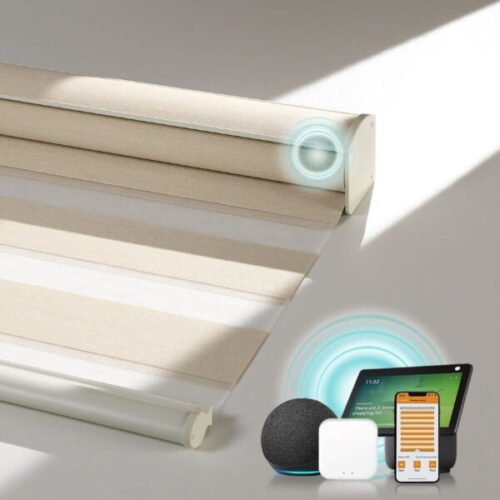
Mechanism manufacturing: The spring mechanisms, chain drives, tubular DC motors, and smart control modules used in window coverings are largely produced in China's Pearl and Yangtze River Delta manufacturing zones. Buying window shades from a Chinese factory often means buying a product whose entire component chain was managed within a few hundred kilometers.
The cost advantages from this integration are real and persistent. The risks require systematic management — which is the rest of this guide.
The Chemical Compliance Problem Nobody Talks About Before Shipping
The Hamburg shipment we opened this guide with is not a cautionary tale about an unusual event. Chemical compliance failures in imported consumer goods are among the most common causes of cargo detention in Europe and North America.
For window shades, the highest-risk compliance area is aluminum components under REACH Regulation (EC) No 1907/2006.
REACH restricts 197 Substances of Very High Concern (SVHC) in products placed on the EU market. For aluminum window shade hardware — tubes, bottom rails, side tracks — the critical restriction is lead content at ≤ 0.1% by weight.
Primary aluminum (alloy 6063-T5 with documented ingot sourcing) reliably meets this threshold. Recycled aluminum — used extensively in cost-competitive window shade manufacturing — has inherently variable composition. Scrap aluminum streams include automotive and industrial aluminum with significantly higher heavy metal contamination. Without independent chemical testing, the lead content of recycled aluminum components is unknown.
The compliance verification rule that eliminates this risk: request a third-party laboratory test report for aluminum components specifically against REACH SVHC requirements. The report should come from an accredited testing laboratory (SGS, Intertek, Bureau Veritas, or equivalent), not from the component supplier or window shade factory's own quality declaration.
A genuine manufacturer can produce this. A trading company typically offers a supplier-issued declaration of conformity — which is exactly the documentation we relied on in the Hamburg case.
For products destined for the U.S. and EU markets that include electronic components (motors, control modules, smart home receivers), RoHS Directive 2011/65/EU additionally restricts lead, mercury, cadmium, hexavalent chromium, and four additional substances. Motorized window shade buyers should request both REACH and RoHS compliance documentation.

Fabric Quality — What the Specs Don't Tell You
The fabric specification in a purchase order typically states: color name or code, fabric type (blackout, solar, sheer), and sometimes weight in g/m². What it rarely specifies — and what significantly affects product performance and longevity — is material composition and thermal behavior.
Shrinkage by material type (annual longitudinal shrinkage under normal installation conditions):
| Fabric Type | Annual Shrinkage | Notes |
|---|---|---|
| 100% polyester | 0.1–0.3% | Standard for roller and zebra blinds |
| PVC-coated polyester | 0.3–0.8% | Common for blackout; higher at direct sun exposure |
| Linen or linen-blend | 2.0–4.0% | Not suitable for motorized systems |
| Bamboo/natural reed | 1.5–3.0% | Not suitable for motorized systems |
For a 3,000mm drop roller blind in a south-facing window using PVC-coated polyester, annual shrinkage of 0.6% amounts to 18mm over the first year. For a manual blind, this is a minor cosmetic issue. For a motorized blind with electronic lower limit settings, an 18mm height change means the lower limit is wrong from the second year onward — the blind won't reach the window base, and the motor cycles to an incorrect stop position.
We do not produce linen or natural-fiber fabric motorized systems. If a client requests this combination, we explain why it doesn't work rather than produce a product we know will fail.
For project-level color consistency, the relevant specification is dye lot management. All fabric for projects involving more than 30 units should come from a single identified dye lot, with a 15% overage in that batch for replacements. The ΔE tolerance between the approved sample and production fabric should be specified as ΔE < 2.0. We maintain batch documentation for 18 months post-delivery on standard product lines, enabling accurate replacement sourcing within the original batch window.
The 5-Step China Supplier Vetting Framework
Step 1 — Factory vs. Trading Company Verification
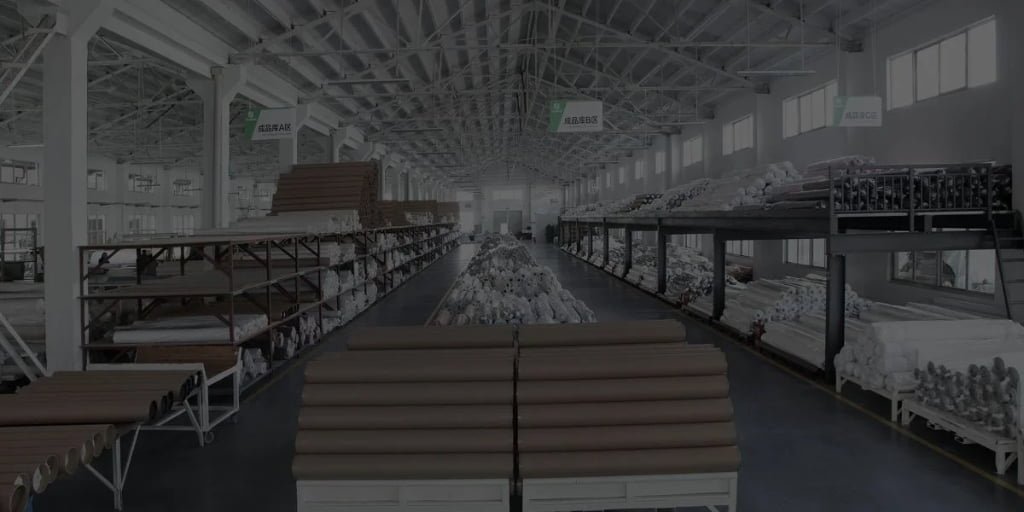
Request the Chinese business license (营业执照) and confirm manufacturing is listed as the primary registered business type. Follow with a live video walkthrough of the production floor — cutting machines running, assembly stations active, QC area visible.
The verification question: "Can we do a 15-minute video call where you walk me through the production floor live — from raw material storage to cutting, assembly, and inspection, right now?" A manufacturer says yes immediately. A trading company needs to arrange access to someone else's facility.
Step 2 — Chemical Compliance Documentation
For aluminum components: request third-party laboratory REACH SVHC test reports from the most recent production batch.
For motorized products: request RoHS compliance reports for electronic components.
For fabrics: request OEKO-TEX Standard 100 certificates. Confirm the certification class — Class I for products near infants, Class II for standard adult residential applications.
Reject supplier-generated self-declarations as the sole documentation for any of these requirements. Self-declaration is not third-party verification.
We conduct independent third-party chemical testing on all aluminum component batches quarterly, maintaining laboratory reports from accredited third parties rather than relying on component supplier declarations.
Step 3 — Fabric Batch Consistency Protocol
For any project or reorder program above 30 units per color, request:
- Confirmation of single dye lot sourcing with dye lot reference number
- ΔE specification against approved sample (require ΔE < 2.0 for same-room applications)
- 15% overage buffer included in the same batch Confirm whether the factory maintains batch documentation that would allow future replacement orders to match the original dye lot.
Step 4 — Sample Order: What to Evaluate
Request samples to your exact production specification — not showroom samples. Specify the exact fabric weight, tube diameter, bottom rail weight, and mechanism type you intend to order.
Evaluate: dimensional accuracy (width ±1mm, height ±2mm); bottom rail straightness (bow < 2mm per 1,000mm); mechanism smoothness over three full extension cycles; color against the approved reference under daylight-equivalent light.
Step 5 — Trial Production Order
The first paid production order should be 30–50% of planned ongoing volume. Evaluate: dimensional consistency across units (not just a single sample), packaging integrity on arrival, documentation accuracy (packing list matches actual quantity and specification), and communication responsiveness during production.
Timing Your China Sourcing: Seasonal Windows That Affect Price and Lead Time
The Q3 pricing surge: Window shade fabrics are largely polyester-based. Polyester is a petroleum derivative — the upstream raw materials are PTA (purified terephthalic acid) and MEG (monoethylene glycol), both produced from oil. PTA and MEG prices trade as commodity futures, and their correlation with crude oil price movements transmits to fabric pricing within 8–12 weeks.
Every Q3 (July–September), European and North American holiday-season demand drives up production volume. This demand surge pushes competing claims on polyester fiber capacity, raising fabric prices 8–18% above Q1–Q2 levels. For annual purchasing programs, Q1 and Q2 contract pricing is consistently better than Q3 spot pricing.
Chinese New Year production gap: Chinese factories shut down for approximately 10–15 days in late January to mid-February. Orders placed in January requiring production during this period get deferred to post-holiday queues. For buyers with February or early March delivery commitments, production orders placed in November or December are the reliable path to on-time delivery.
Practical planning calendar:
- November–December: Place Q1 delivery orders before Chinese New Year gap
- January–June: Best window for annual contract pricing
- July–September: Elevated pricing; avoid spot purchasing if possible
-
October: Pre-holiday surge; factory capacity under pressure, lead times extend
What China Sourcing Can't Easily Solve
These are the real limitations that most buying guides skip.
Small urgent orders: Chinese factories are optimized for scheduled production, not emergency fulfillment. An order under 50 units with a 10-day delivery requirement will almost always cost more to source from China — expedited freight costs often exceed the unit cost savings over domestic distribution. For urgent small orders, domestic distributors with existing inventory are a better total cost decision.
Certification gaps for new markets: Some manufacturers have not obtained specific market certifications (NFPA 701 for U.S. hospitality, CE marking for EU motorized products) because their primary customers don't require them. If a certification is essential for your distribution channel and the factory doesn't hold it, the acquisition process typically takes 3–6 months. Budget this time before committing.
Proximity for quality inspection: For buyers requiring in-person receiving inspection, the logistics of China travel and inspection create fixed costs that don't scale linearly with order size. At small order volumes, third-party inspection services are often more cost-efficient than direct buyer visits.
Frequently Asked Questions
Q: Is it safe to source window shades from China? A: Yes, with systematic vetting. The main risks — chemical compliance failures, batch color inconsistency, and lead time surprises — are all manageable. The key steps are independent third-party chemical testing for aluminum components, written ΔE batch tolerance specifications, and production scheduling that accounts for Chinese New Year and Q3 demand peaks.
Q: What chemical compliance issues affect window shades from China? A: REACH Regulation (EC) No 1907/2006 restricts lead and other heavy metals in aluminum components to ≤ 0.1% by weight. Recycled aluminum, common in lower-tier manufacturing, often exceeds this. Always request third-party laboratory test reports for aluminum components — not supplier-generated compliance declarations.
Q: What's the minimum lead time for window shades from China? A: Standard production 20–35 days, plus 15–35 days ocean freight to U.S./Europe: 35–70 days door-to-door. Add 2–3 weeks for orders near Chinese New Year (January–February). For urgent orders under 100 units, domestic distribution is typically faster and more cost-effective.
Q: What certifications should a Chinese window shade manufacturer hold? A: EU market: REACH compliance documentation and CE marking for motorized products; OEKO-TEX Standard 100 Class II for fabric safety. U.S. market: ANSI/WCMA A100.1-2018 for cordless safety; NFPA 701 for commercial/hospitality applications. Request current certificates with traceable issuer reference numbers.
Q: When is the best time to place orders for window shades from China? A: Q1–Q2 (January–June) for annual contract pricing — typically 8–18% better than Q3 spot. Place pre-Chinese New Year orders in November–December to avoid the production gap. Q3 spot purchases carry the highest pricing risk.
China window shade sourcing is among the most cost-competitive options globally — when executed with the right verification framework. The Hamburg shipment, the batch color mismatch at the hotel, the spring calibration failures that compound over three years: these failures follow a pattern. They happen when buyers skip one of the five verification steps or rely on supplier declarations instead of independent evidence.
The five-step framework in this guide doesn't add cost to China sourcing. It replaces the cost of learning the same lessons through failure.
Sourcing window shades from China with a manufacturer that has these controls built into its standard process?
Shadesmart (shadesmart.com) — Xiamen-based window shade manufacturer with third-party chemical testing, 18-month batch documentation, and 100% finished product inspection. Serving B2B buyers in North America, Europe, and Australia.
Request Samples With Full Specification → | Ask About Compliance Documentation →