
Full article
When comparing zebra blinds wholesale suppliers, ask for the minimum order quantity for your exact configuration, a schedule with named milestones, and a stripe alignment tolerance for each width you plan to sell. At Shadesmart, standard products start at one piece and regular OEM customization starts at 10 pieces.
Orders above 500 pieces require a scheduled production slot, which rules out next-day dispatch. If you’re taking a new zebra shade range from sample to stock, use the trial order to approve the product. Then use the bulk quote to confirm when the order can ship and how the finished shades will be inspected.
What should you ask zebra blinds wholesale suppliers about minimum orders?
Ask the supplier to state the minimum order quantity (MOQ) for your quoted configuration and explain how it is counted. A minimum can apply to the whole purchase order, each SKU, or a particular fabric or packaging option. That determines how many sizes and colors you can carry in your first shipment.
At Shadesmart, standard products start at 1 piece and regular OEM custom orders start at 10 pieces. We quote new product development and project orders according to scope. For a first order, send the width and drop, fabric code and color, control option, hardware finish, and packaging requirements. Ask the sales team to show how the minimum applies to that mix. Our guide to one-piece wholesale MOQ explains how the sample, OEM, and bulk-order stages work.
Use the one-piece order to check the fabric, hardware finish, operation, and packaging on a complete shade. A narrow showroom sample gives you a first look at the fabric and finish. If your range includes wider sizes, a sample closer to the widest SKU gives you a better basis for evaluating stripe alignment across the span.
| Order stage | What to confirm in writing |
|---|---|
| Sample | The exact configuration you will receive and which parts match the intended production order |
| First bulk order | The minimum by SKU or configuration, the approved specifications, and the production window for the full mix |
| Reorder | The minimum for replenishment, the availability of the approved fabric and packaging, and the next production window |
If you plan to carry several widths in two colors, send the quantity for each combination. Ask whether two widths using the same fabric can be combined toward the quoted minimum. The answer gives you the actual purchase commitment for the range you intend to stock.
What does a wholesale zebra shade lead time include?
A usable lead-time quote identifies the event that starts the clock, the milestone that ends it, and any approvals or materials that can move the date. Ask for the fabric-ready date, the production and inspection window, the expected dispatch date, and the estimated warehouse arrival if your supplier is quoting that leg.
For standard catalog fabric, ask whether enough of the approved material can be allocated to the full order. For a custom color or stripe specification, ask when the swatch needs to be approved and when the usable fabric is expected. If the first shipment and a later top-up need to look alike, ask what fabric lot information can be retained for the reorder.
| Milestone | What to ask the supplier to confirm |
|---|---|
| Specification approval | Which sample, measurements, artwork, or packaging details must be signed off |
| Material readiness | When the approved fabric and components are expected to be ready for the full order |
| Production and inspection | When the order can enter production and when it should complete inspection and packing |
| Dispatch or handoff | The expected date, the handoff location, and who arranges the next leg |
| Warehouse arrival | The transit estimate and who will arrange clearance and final delivery within the agreed shipping scope |
When you compare quotes, put the same milestone next to each date. A factory-ready date tells you when the order is expected to be available for collection. A warehouse arrival estimate helps you plan receiving. For an imported order quoted under Incoterms® 20201, record the chosen rule and the named port or place. Ask which date the supplier is quoting and who is providing the transit estimate.
For a seasonal launch, work back from the date your warehouse needs to receive stock and include time for incoming inspection. Ask the supplier to quote the latest sample approval date and the production slot that supports your plan. If some SKUs are needed earlier, request dates by SKU group so you can assess whether a split shipment would help.
What stripe alignment tolerance should you specify by width?
Specify the maximum allowable stripe offset for each finished shade width you plan to order. Agree on the band edge, the reference line, and the position of the shade during inspection. For side-by-side units, add a separate visual requirement for how the bands should line up across the installation.
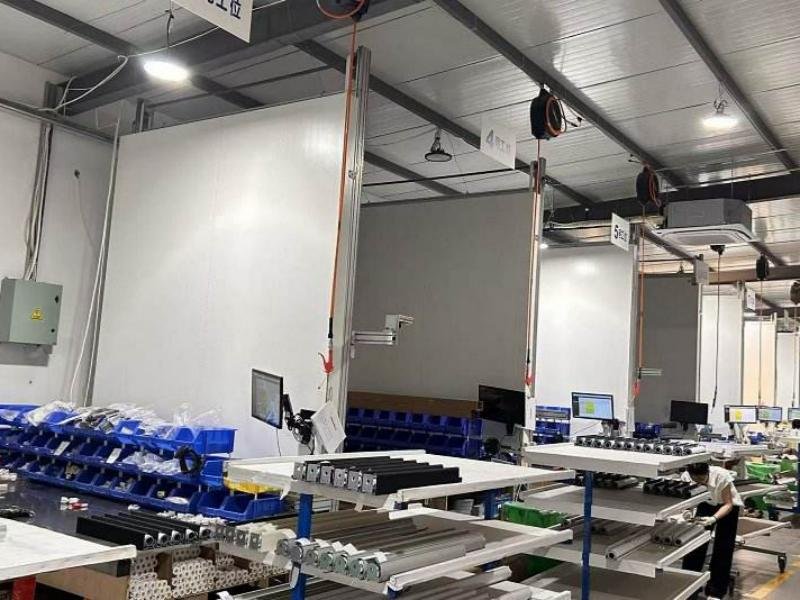
Zebra shades control light by moving two layers of alternating sheer and opaque bands past one another. At the factory, we pay particular attention to fabric tension across the width. Uneven tension during weaving can contribute to a visible shift in the band line. That makes inspection at a representative width especially useful for the wider sizes in your range.
The table shows comparison figures from our internal production reference. Use them to start a specification discussion and confirm the acceptance limit for the selected fabric, width, and inspection method on your purchase order.
| Width band | Higher-grade reference | Internal comparison reference | Lower-grade comparison |
|---|---|---|---|
| Up to 1,800 mm | ±0.5 mm | ±1.5 mm | ±3 mm |
| 1,801–2,500 mm | ±1.0 mm | ±2.5 mm | ±5 mm |
| Over 2,500 mm | ±1.5 mm | ±4.0 mm | Rated unacceptable in the reference, with no numeric threshold stated |
Take a 2,000 mm shade. Suppose one quote offers ±1.0 mm and another offers ±2.5 mm, both measured from the same reference under the same conditions. An offset of +1.4 mm exceeds the first tolerance and falls within the second. For that comparison to hold, both suppliers need to measure the same band feature at the same shade position and apply the same definition of width. Ask whether each figure describes an offset from a reference line or the total spread between readings.
Spell out the visual result you need. A band edge may need to stay level across one shade. The front and rear bands may need to overlap evenly at a specified position. Adjacent shades may need to match across a bank of windows. Each has its own measurement or visual check. If the fabric itself needs evaluation, the ASTM D3882 test method for bow and skew2 covers woven and knitted fabrics. For the assembled shade, put the agreed acceptance procedure on the purchase order.
For single shades wider than 2,800 mm, we recommend reviewing a two-shade layout. Two narrower units reduce the span that each individual band has to cover. Check the center gap and the appearance of the two units together before you approve that configuration.
How do you verify stripe alignment before approving a bulk order?
Approve an assembled sample at a representative width, then agree on how the factory and your receiving team will check the production batch. Use a level setup, record the inspection position, photograph the reference points, and write the tolerance into the purchase order. Both teams can then apply the same acceptance criteria.
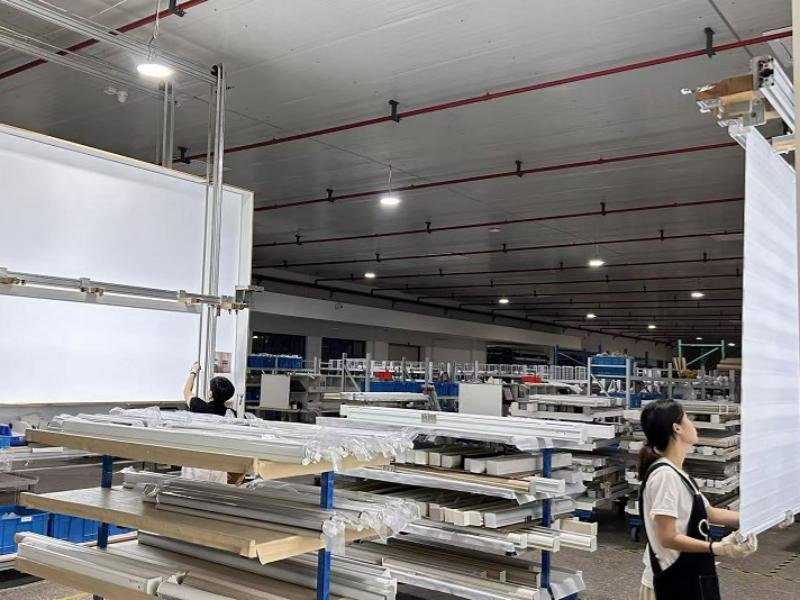
At Shadesmart, we check stripe alignment during assembly and inspect every finished shade before shipment. If your purchase order calls for recorded measurements on particular sizes, or for several units to be checked side by side, specify that coverage and the records you expect with the shipment.
- Identify the unit. Record the SKU, finished width, fabric code, and sample approval reference.
- Set up the shade. Use the installation instructions for the quoted model. Check that the headrail sits level and the mounting brackets are aligned3. Agree on how far to extend the shade and which band position to inspect.
- Measure the agreed feature. Identify the band edge and reference line. Take readings at the agreed points across the width and record the largest absolute offset. Include a photo of the setup and a close-up of a reading.
- Operate the shade and repeat the check. Move it through its normal travel, return it to the agreed position, and record any change that affects the acceptance criteria.
- Apply the same method to the first production batch. Agree on which widths and fabric lots should appear in the inspection records. Document what happens if a reading exceeds the limit, such as reinspection or holding the affected units for review.
For reorders, keep the approved sample reference, the fabric code, and the original inspection conditions together. If a fabric lot or component changes, ask which parts of the approval will be checked again. Your receiving team can then evaluate replenishment stock against the same criteria used for the first shipment.
What else should wholesale buyers confirm before ordering?
Before issuing a purchase order, confirm how the MOQ applies to each configuration, which shipment milestone the supplier is quoting, and how the widest shade in your range will be inspected. Keep the approved sample reference and acceptance criteria with the order so the same requirements can be used for replenishment.
Can I order one zebra shade before committing to a bulk purchase?
Yes. At Shadesmart, the minimum for standard catalog products is one piece. Choose a configuration that represents the range you plan to sell. If stripe alignment on a wider SKU is the main concern, select a sample close to that width.
When does the lead time for a custom zebra shade order start?
Ask the supplier to name the start event on the quote. It may be order confirmation, sample approval, or another agreed milestone. Confirm the date for fabric readiness, the estimated dispatch date, and the estimated arrival date if the quote covers delivery.
What stripe alignment tolerance should I ask for on a 2,000 mm zebra shade?
Our internal production reference lists ±1.0 mm as the higher-grade figure in the width band that includes 2,000 mm. Ask the supplier to confirm what it can quote for your fabric and configuration, and put the measurement method and agreed limit on the order.
How can I compare stripe alignment across two suppliers?
Ask both suppliers to measure the same feature on an assembled shade of the same width. Specify the shade position, reference line, and measurement points. Request photos or readings taken using that setup so the two quoted tolerances describe the same check.
Request a wholesale zebra shade quote. Send us your SKU count, quantities by width, preferred fabrics or colors, packaging requirements, and target receiving date. Include any widths or side-by-side layouts that need a stripe alignment check so we can discuss the MOQ, production window, and acceptance criteria for your order.
Ready to Source Direct?
Ready to Talk About Your Project?
Send us your product specifications, target market, and estimated volume. Our export team responds within 1 business day.