Note: in sourcing conversations, "window blinds" is often used as a general umbrella term. In this article, we're speaking specifically about our own product lines — roller, cellular, zebra, and sheer shades, manual and motorized — not hard-slat Venetian blinds.
Before you sign a PO with any window blinds factory, you should be able to verify two things: that the production capacity they're quoting you actually exists, and that there's a real quality control system standing between a defective unit and your shipping container. Most factories will tell you both are true. Fewer can show you how.
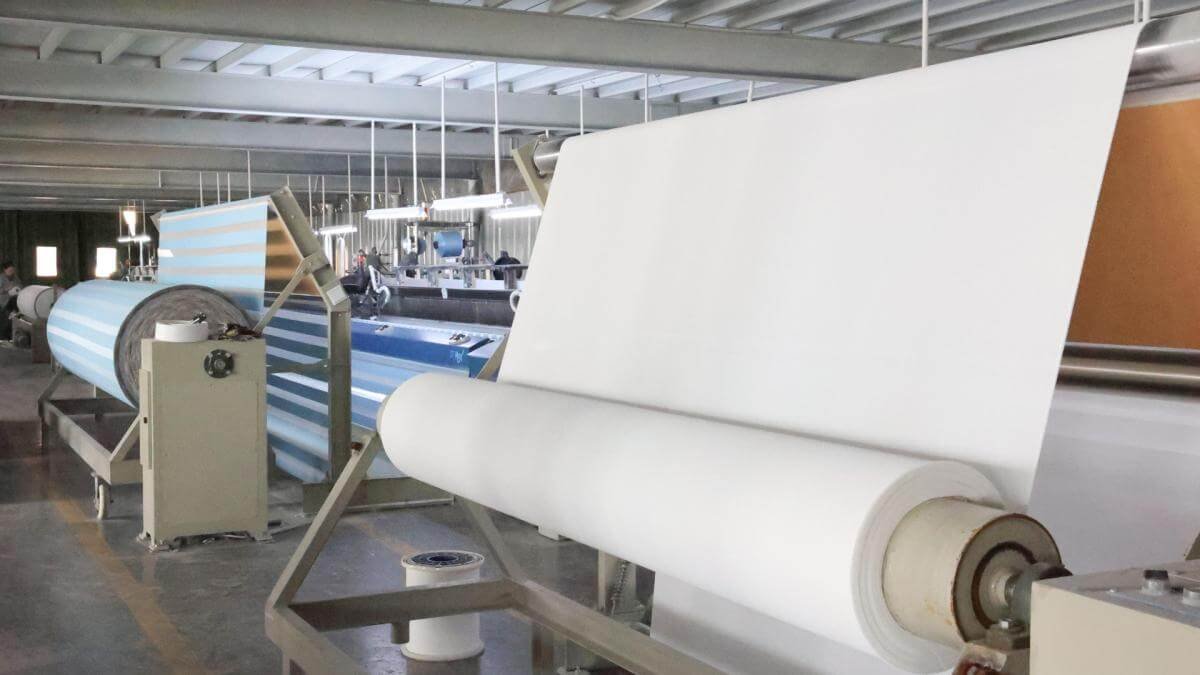
We run 58,883 ㎡ of production space across 12 dedicated production lines with 93 pieces of specialized equipment, producing more than 11 million units per year, and every finished unit passes through a 16-person dedicated QC team before it ships. We're not writing this to ask you to take our word for those numbers — we're writing it so you know exactly what to ask any factory, including us, before you commit.
How do you tell if a "window blinds factory" is actually a factory, not a trading company?
The fastest way to tell is to ask how the parts are made, not just how the finished product looks. A real manufacturer can walk you through where the aluminum tube is extruded, where the fabric is cut, and where the motor housing is assembled — all on their own floor. A trading company will describe the finished product in detail but get vague the moment you ask about upstream components.
In our own operation, we run what we call a "components in-house, finished goods in-house" model — raw material processing, core component production, and final assembly all happen under one roof, rather than being outsourced to a network of smaller subcontractors and reassembled under our label. This isn't unique to us; it's the manufacturing model that tends to hold up best on quality consistency and delivery reliability across the window coverings industry, because there's no external supplier bottleneck sitting between a delay and your ship date.
A few questions that separate a real factory from an assembly operation:
- Can they name their own production line count, or only give you a round number?
- Do they offer a video walkthrough of raw material intake, not just the finished-goods warehouse?
- When you ask about a component (say, the roller tube or the bottom rail), do they know which of their own lines makes it — or do they need to "check with a supplier"?
What capacity numbers should you actually ask a factory to verify — and how?
A production capacity number is only useful if the factory can show you how it's built, not just state it. Ask for the breakdown: how many lines, how many machines, what the annual output figure is based on, and whether they're willing to let you see it on video or in person.
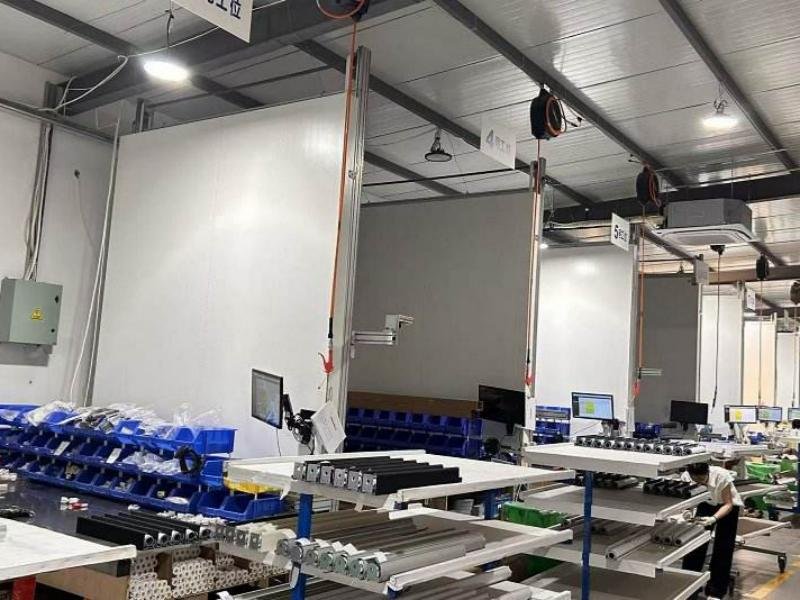
This matters more than it sounds like it should. A factory quoting "12 production lines" and a factory quoting "12 production lines" can mean very different things — one might mean 12 fully independent lines each capable of running a different order simultaneously, the other might mean 12 workstations within a single line. When we talk about our own 12 dedicated production lines and 93 specialized equipment units, we mean line-level independence: multiple orders, multiple product types, running in parallel without one bottlenecking the other.
Here's what a verifiable capacity profile should look like in practice — this is ours, as a reference point for what you should be asking any factory to show you:
| Metric | Shadesmart |
|---|---|
| Production facility footprint | 58,883 ㎡ |
| Dedicated production lines | 12 |
| Specialized equipment units | 93 |
| Annual output | 11M+ units |
| Founded | 2008 |
The verification methods that actually work:
- Live video walkthrough. Ask to see the floor in real time, not a pre-recorded promotional video. A factory with nothing to hide will typically accommodate this within a reasonable window.
- Third-party inspection report. An independent inspection agency verifying line count, equipment condition, and worker headcount removes the "trust me" element entirely.
- Order history cross-reference. Ask for a reference from an existing customer in a similar product category — not necessarily a named case study (we don't publish specific client names or details without their agreement), but a category-level reference you can independently reach out to.
If a factory resists all three, that's more informative than any number they quote you.
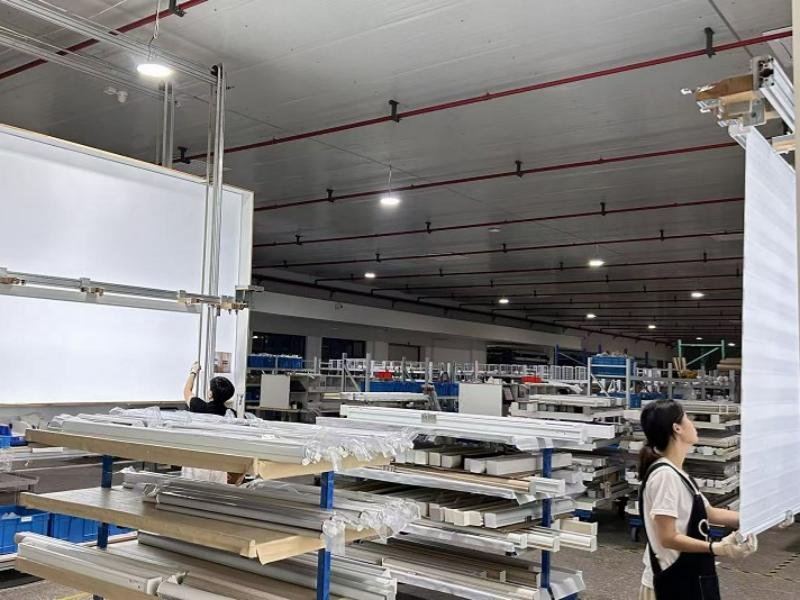
What does a real quality control system look like inside a window blinds factory?
A real QC system checks the product at four separate points — incoming materials, mid-process, finished goods, and outbound shipment — not just once at the end of the line. If a factory describes quality control as "we check it before it ships," that's one checkpoint doing the job of four.
Our own QC structure runs on a 16-person dedicated quality team, and it's built around four checkpoints, each with its own inspection criteria and frequency:
| Checkpoint | What's inspected | Core inspection items | Frequency |
|---|---|---|---|
| IQC (Incoming) | Aluminum tubes, fabric, mechanical components | Dimensions, chemical composition (aluminum), fabric weight, color consistency | 100% batch sampling on every incoming shipment |
| IPQC (In-process) | Cutting precision, hem quality | Width tolerance (±1mm), height tolerance (±2mm), hem flatness | Sampled every 2 hours / per production line |
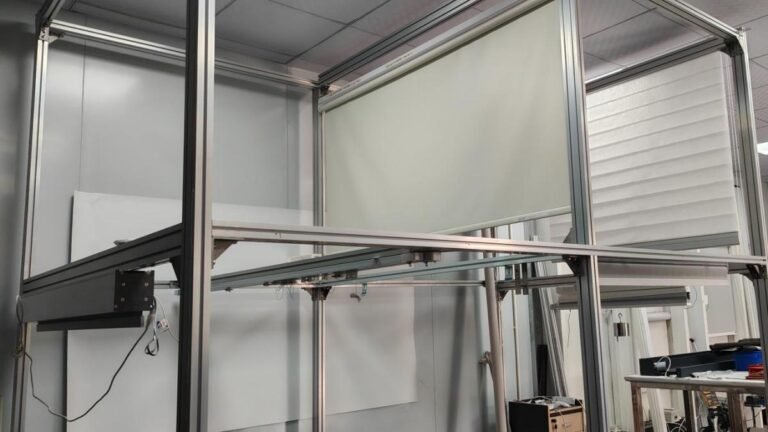
| FQC (Finished goods) | Full functional test | 3x full extension cycle, operating force (≤25N), light-blocking test (for blackout products), visual inspection | 100% of finished units |
| OQC (Outbound) | Packaging and shipment | Quantity verification, label accuracy, packaging protection | 100% of every outbound batch |
A question worth asking any factory directly: "What's your finished-goods inspection rate — 100%, or a sample?" Ours is 100% at the FQC stage, meaning every single unit that ships has been through a full extension cycle test and a visual inspection, not a statistical sample of the batch.
What happens when a product fails inspection — and why that matters for your PO?
A product gets sent back to the production floor when it fails a specific, measurable threshold — not a subjective judgment call. In our own operation, that means a cutting width deviation greater than ±2mm, bottom rail bow exceeding 2mm per 1,000mm of length, friction noise during the full extension cycle, or a light-blocking test failure on blackout products (tested in a 100-lux dark chamber, with light transmission required at or below 0.5 lux for blackout-rated products).
We'll be direct about something most factories won't tell you: our own five-year internal defect data showed cutting dimension deviation as the single largest category of quality issues we tracked. What changed it was tightening the calibration schedule on our automatic cutting equipment from a weekly cycle to a per-shift cycle — a specific, deliberate process change, not a vague commitment to "improve quality."
This is the part worth asking about directly when you're evaluating any factory: not whether they have quality standards, but what specifically happens when a unit fails one. Does it get reworked? Scrapped? Shipped anyway with a note? A factory that can tell you their exact rejection thresholds — in millimeters, in lux, in Newtons of operating force — is a factory that's actually measuring, not just claiming.
Before you sign a PO, it's worth asking the factory to walk you through what happened the last time a batch failed inspection at any of these four checkpoints, and what changed afterward. If they can't give you a specific example, that's worth noting.
Frequently Asked Questions
How long does it take to verify a window blinds factory before placing an order? It depends on the verification method — a live video walkthrough can typically be arranged within a short window of your request, while a third-party on-site inspection report takes longer to schedule and complete. We'd recommend asking the factory directly what verification options they can accommodate and on what timeline, rather than assuming a standard turnaround.
What's the difference between a window blinds manufacturer and a trading company? A manufacturer produces core components — tubes, fabric, mechanisms — on its own production lines and can show you each stage of that process. A trading company sources finished or semi-finished products from third-party factories and resells or relabels them, which means quality consistency depends on a supplier relationship you can't directly inspect.
Does Shadesmart hold third-party quality certifications? We maintain an internal quality system — including 100% finished-goods inspection across a four-checkpoint process — designed to meet the compliance expectations of international markets. For specific certification documentation relevant to your target market, we'd recommend confirming directly with our team before finalizing a PO.
What happens if a batch fails inspection after I've already placed an order? A batch that fails a checkpoint — for example, a cutting width deviation beyond our tolerance — is sent back to the production floor rather than shipped. This is built into our FQC and OQC process rather than being a case-by-case exception.
Can I request a factory video tour before signing a PO? Yes. We'd rather a buyer see the floor before committing than take a capacity number on faith. Reach out to arrange a walkthrough of the production lines and QC checkpoints relevant to your product.
If you're weighing a factory on production capacity, quality control depth, or both, we'd rather you ask us these exact questions than take a spec sheet at face value. See our full production capacity and QC documentation to check the numbers yourself, or explore our quality control standards in more detail, or reach out directly to arrange a video walkthrough of the floor.