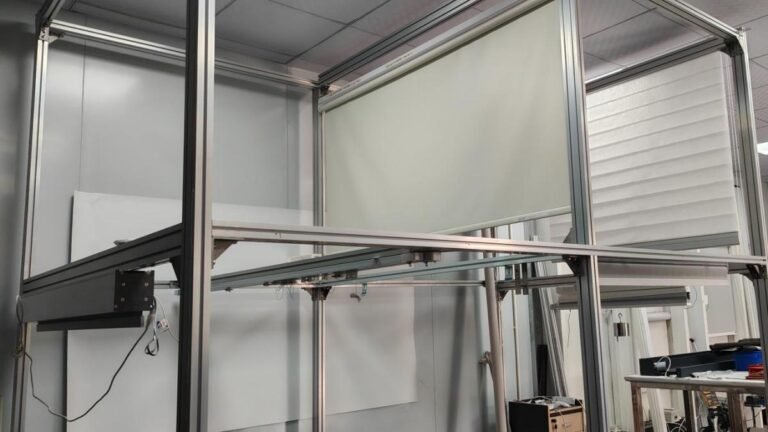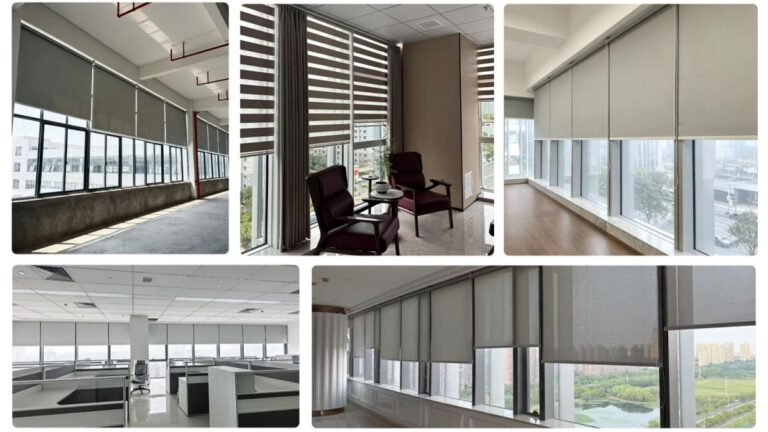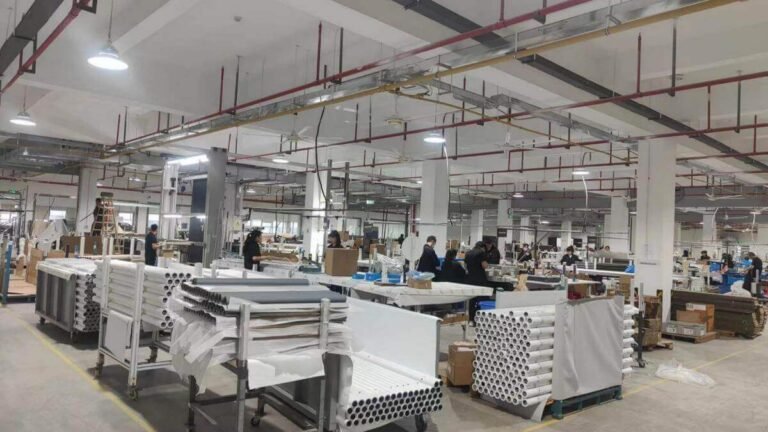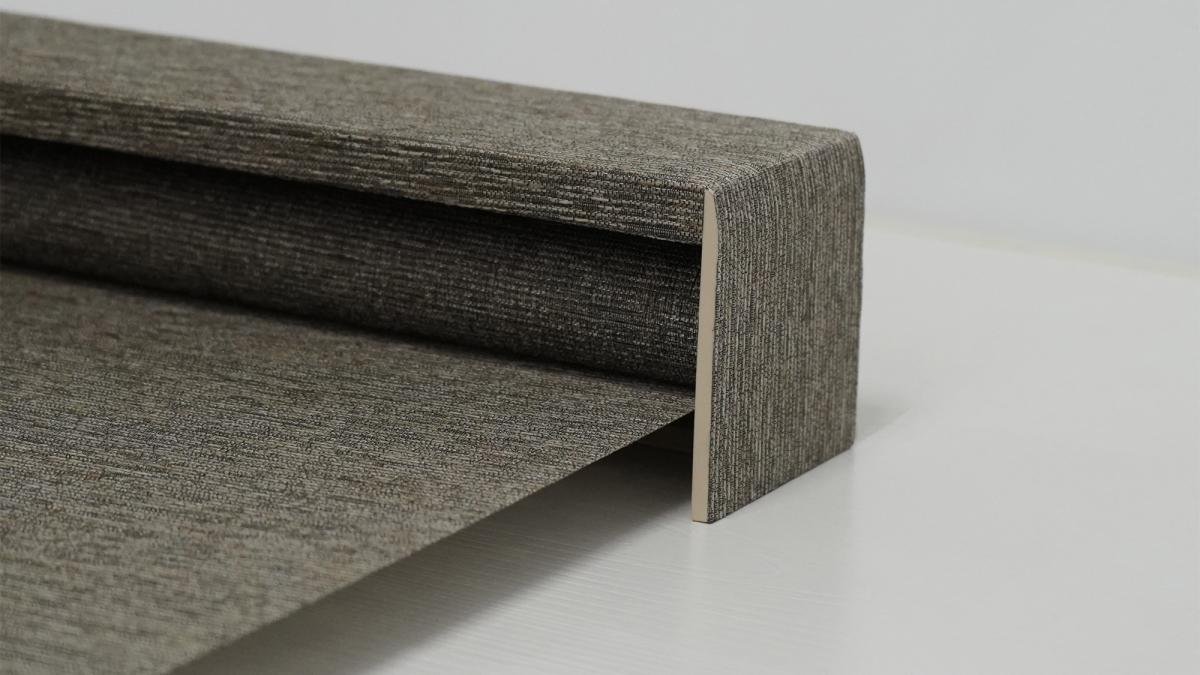
A roller blind manufacturer makes and assembles the product in its own factory, while a supplier is any company that sells it to you, whether or not it makes anything. Both call themselves "suppliers," which is why the difference is easy to miss. Shadesmart is made by Xiamen Goodwood Industry Co., Ltd., founded in 2008, with nearly 20 years of window covering manufacturing and export experience. We run a 58,883㎡ production base with 12 production lines, 93 machines, and annual output above 11 million units. I'm our production director, and I started on a factory floor in 2006. Below is where the difference shows up in your margin.
A note on terms: in North America, "blinds" is often used for all window coverings. When I describe what we make, I'll say "shades" (roller shades and their motorized variants), because that's our actual product line.
What is the real difference between a roller blind supplier and a manufacturer?
A manufacturer controls production, quality checks, and specifications in its own facility. A supplier is a broader category that includes factories, trading companies, and distributors. The useful question is not what someone calls themselves. It is who decides the specification and who is accountable when something goes wrong.
The table below describes the general industry picture. It is not a claim about any one company.
| Factor | Vertically integrated manufacturer | Sourcing-and-assembly supplier |
|---|---|---|
| Quality consistency | High; core processes under one roof | Depends on outside vendors; more variation |
| Delivery stability | Production scheduled in-house | Exposed to other factories' capacity limits |
| Cost structure | Heavy upfront investment; stronger long-run unit economics | Light upfront investment; less room to adjust costs later |
| Customization | Strong; can support structural and ODM development | Limited by what partner factories will do |
| Typical stage | Mid-to-large manufacturers with scale and capital | Startups and asset-light trading operations |
Nothing here says suppliers are bad. Many good businesses operate on the right-hand side. But the two models carry different risks, and those risks reach you as cost.
Where does your margin actually leak when there's a layer between you and the factory?
Margin leaks in three places: the added layer's markup, specification decisions made without you, and the cost of returns. Of the three, returns are the one buyers underestimate, because they show up months after the purchase order.
I'm not going to quote prices here. Your quote comparison shows the markup, and it depends on your volume and product mix. The other two leaks are more useful to explain.
Specification decisions. When a specification is quietly changed to hit a price, someone has to own the consequence. Here is our internal practice, not an industry requirement. For roller shades wider than 1,800mm, our production default is a 50mm tube. Some customers ask us to use a 38mm tube at 2,000mm to save cost. We will do it, but we tell the customer in writing and require written confirmation, and the record stays on file. The reason is physical: a 38mm tube at 1,800mm with a 250 g/m² blackout fabric already deflects about 4.2mm at midspan. Once deflection passes 5mm, the fabric develops visible waves. A buyer who never sees that conversation only finds out when the end customer complains.
Return costs. Over 2019–2024, cutting-size deviation accounted for 34% of all our returns and complaints, the largest single cause. The root cause was infrequent calibration of our automatic cutting machines. When we moved from weekly to every-shift calibration, that category of problem dropped by 62%. A trading layer can't make that kind of change, because it doesn't own the cutting machine. It can only pass your complaint back up the chain, and the fix takes longer to reach you.
The point is not that manufacturers never have defects. We do, and I've just shown you the numbers. The point is that when the factory is the party you talk to, the feedback loop from complaint to fix is shorter.
What can a vertically integrated roller shade factory control that a sourcing supplier can't?
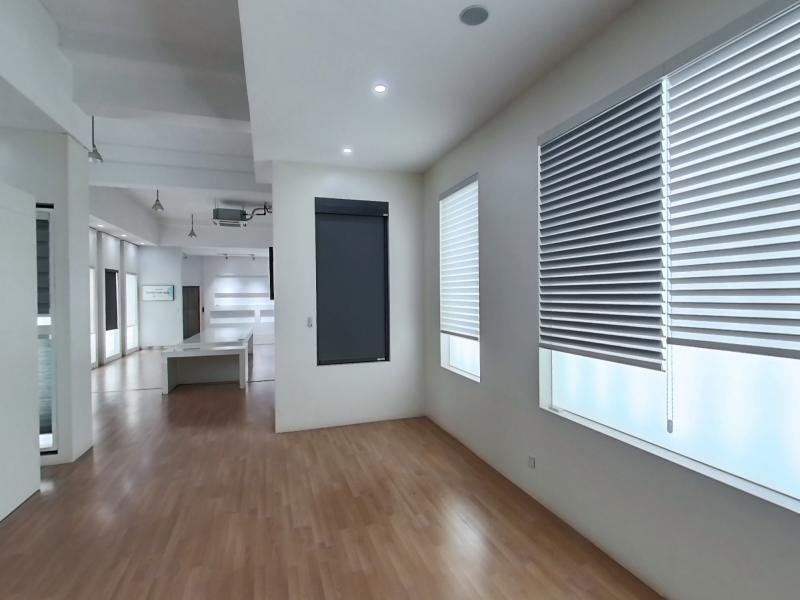
A vertically integrated factory controls incoming material checks, in-process measurement, finished-product testing, and outbound packing under one quality system. A sourcing supplier can only inspect what arrives from other factories. In our case, that system is 16 dedicated QC staff and 100% finished-product inspection before shipment. You can see how the team is organized on our quality control page.
Here are our four inspection points:
| Checkpoint | What is inspected | Core checks | Frequency |
|---|---|---|---|
| IQC (incoming) | Aluminum tubes, fabric, mechanisms | Dimensions, aluminum chemical composition, fabric weight, fabric color difference | Sampled on every incoming batch |
| IPQC (in-process) | Cutting accuracy, hem quality | Width ±1mm, height ±2mm, hem flatness | Every 2 hours, per production line |
| FQC (finished product) | Working function | 3 full extension cycles, operating force ≤ 25N, blackout test (blackout products), appearance | 100% of finished products |
| OQC (outbound) | Packing and labeling | Quantity, label accuracy, packaging protection | 100% of every shipment |
A shade goes back to the workshop if its cut width is off by more than ±2mm, if the bottom rail bows more than 2mm per 1,000mm, or if it makes friction noise during a full extension. Those are internal thresholds we set ourselves.
One limit on the phrase "vertical integration": it does not mean we produce every raw material ourselves. Fabric and aluminum are sourced from outside, and we say so plainly. Our control comes from checking what arrives, monitoring the process, and assembling the finished shade in-house. For example, we run chemical composition checks on incoming aluminum rather than relying on a supplier's own report. If a company tells you it makes everything from raw ingredients, ask it to show you.
When does working with a supplier actually make more sense than a factory?
A supplier is often the better fit when you need small mixed orders across many product types, want one vendor for unrelated categories, or don't have the volume to justify a direct factory relationship. Buying direct from a factory is not automatically better for every buyer.
I'd rather say this now than have you find out after the deposit.
Our 1-piece minimum is real, but it has an edge. Standard products start at 1 piece, and OEM customization starts at 10 pieces. That makes testing and sampling easy. It does not mean bulk orders have no lead-time rules. Orders above 500 pieces are produced on a planned schedule, and we can't promise next-day shipment on them. A rush insert into a loaded schedule would disrupt every other customer's order, and I won't promise something the production floor can't deliver. The full ordering structure is on our wholesale partnership page.
A factory also builds only what it builds. If your catalog needs many different product types under one PO, a well-run supplier that consolidates them may save you time and coordination cost. Our product lines are roller, cellular, zebra, and sheer shades, plus motorized and control components. We don't cover everything.
If your situation looks like that, don't force a factory relationship. If it looks more like steady replenishment of a defined range, or a private-label line where you want control over specifications, talking to a factory usually pays off.
How can you tell which one you're really talking to before placing an order?
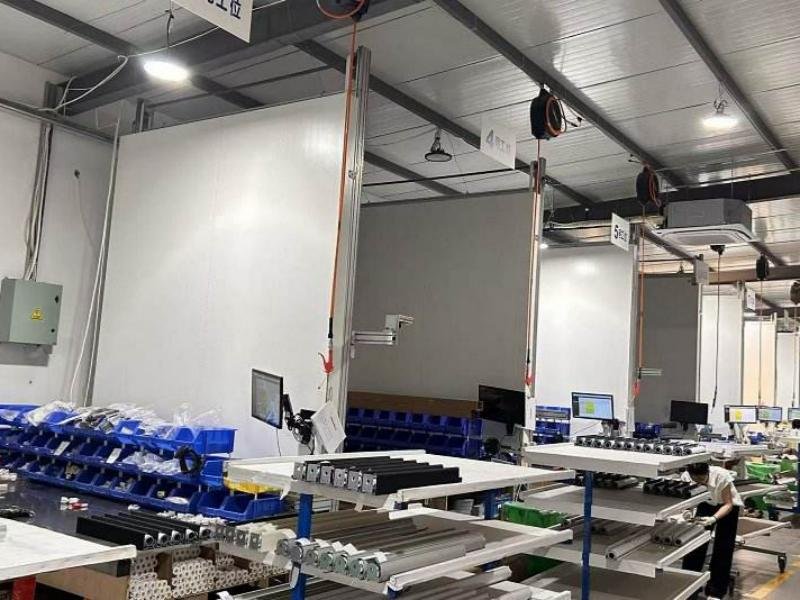
Ask questions that only a factory can answer in specifics. A trading company can often tell you what a product does. It rarely knows how it was made, checked, or why a specification was chosen.
Three questions tie directly to your margin:
- Which processes are done in your own facility, and which are outsourced? Look for a clear split. A genuine manufacturer will readily say what it buys in. Vague answers like "we control everything" deserve a follow-up.
- At which points in production do you inspect, and what is the rejection threshold? You want numbers, like a width tolerance or an operating-force limit, not "strict quality control."
- Who decides the tube diameter, spring type, and bottom rail weight, and what happens if I ask you to change it? The answer shows whether specifications are engineered or just quoted. Ask about spring material too: stainless steel springs last 40–60% longer than carbon steel in hot, south-facing windows, and many buyers never think to ask.
For a longer version of this checklist, see our guide on telling a window blinds manufacturer from a trading company. For the full picture of how to evaluate a factory partner, start with our roller shade manufacturers guide for B2B buyers. If you want to see how the factory itself is set up, our window shade manufacturer page covers the production base in more detail.
The bottom line on margin
The word "manufacturer" on a website doesn't protect your margin. What protects it is knowing who owns the specification, where the checks happen, and how fast a problem gets fixed. If you order at volume and need a stable, controllable roller shade supply, a direct relationship usually gives you more control. If you need small mixed orders across many categories, a good supplier may serve you better. Either way, ask for the specifics.
Ready to compare? If you replenish a defined range and want to confirm what we can commit to, check current production capacity for your roller shade product mix. If your needs are small, mixed, or spread across many categories, a consolidating supplier may fit better than we do. We'd rather tell you that up front than win an order that doesn't suit you.
Frequently Asked Questions
What is the difference between a roller blind supplier and a manufacturer?
A manufacturer makes and assembles the product in its own facility and controls production, inspection, and specifications. A supplier is a broader term covering factories, trading companies, and distributors, so a supplier may or may not make anything itself.
Is buying directly from a roller shade manufacturer always cheaper?
Not automatically. Removing a middle layer can improve your margin and shorten the feedback loop when problems occur, but the right choice depends on your volume and product range. Small mixed orders across many categories can be easier to handle through a consolidating supplier.
Does a 1-piece minimum order mean there are no order limits at Shadesmart?
No. Standard products start at 1 piece and OEM customization starts at 10 pieces, which makes testing easy. Orders above 500 pieces are produced on a planned schedule and cannot be promised for next-day shipment.
How can I tell whether a supplier is a real roller shade factory?
Ask which processes are done in-house and which are outsourced, at which points in production they inspect and what their rejection thresholds are, and who decides tube diameter and spring type. A real factory answers with specifics and numbers, not general claims.
What do you inspect before roller shades ship?
We use four checkpoints: incoming materials, in-process checks, finished-product testing, and outbound packing. Finished products are inspected 100% before shipment by our 16-person QC team.