A distributor we work with in Munich told us about a hotel project that went sideways. Twelve hundred rooms, all fitted with roller blinds from a supplier who had passed every sample check. The blinds looked right, operated smoothly, and matched the specification sheet. What nobody had checked was the tube diameter.
The rooms with windows wider than 2,000mm — about 340 of them — all developed the same visible bow in the middle of the blind within eighteen months. The fabric bunched unevenly, the retraction was uneven, and guests started complaining. The hotel wanted a full replacement.
The failure had nothing to do with fabric quality, mechanism wear, or installation. It was a single structural decision made at production: using 38mm aluminum tubes on windows that needed 50mm tubes. The manufacturer knew the difference. Nobody asked.
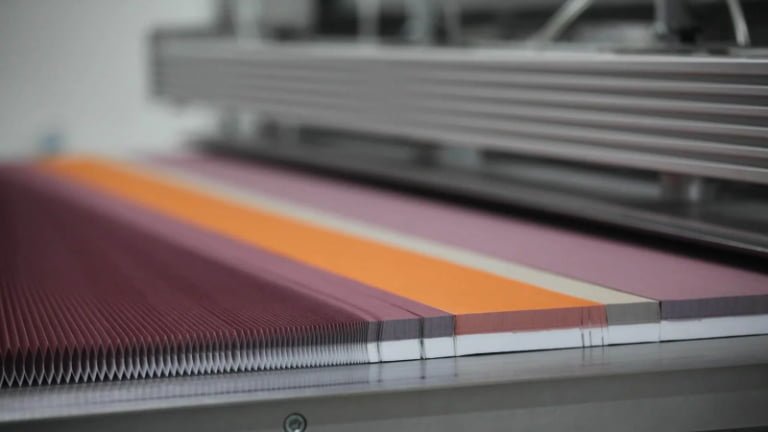
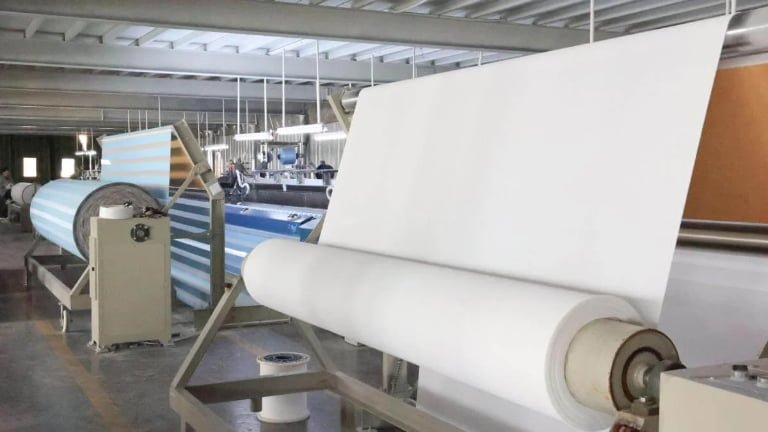
We're Shadesmart, a roller blinds and window shade manufacturer based in Xiamen, China. Our facility runs 12 dedicated production lines and ships over 11 million window covering units annually to wholesale distributors in North America, Europe, and Australia. This guide is written from the factory floor outward — to help B2B buyers ask the questions that change outcomes.
What are roller blinds manufacturers?
Roller blinds manufacturers are factories that produce roller shade products — fabric, tube, bottom rail, and operating mechanism as an integrated system — for wholesalers, distributors, and commercial buyers globally. Unlike trading companies, they own and operate their own production lines, control quality at source, and offer direct customization. A mid-to-large roller blinds manufacturer typically operates multiple dedicated production lines with annual output measured in millions of units, and holds key international compliance certifications for target export markets.
What Is a Roller Blinds Manufacturer?
A roller blinds manufacturer is a factory that takes raw materials — fabric rolls, aluminum extrusions, spring or chain mechanisms, bottom rails — and assembles them into finished window covering products.
The category spans a wide range of operational scales and capabilities, and the distinction matters for B2B buyers.
Manufacturer vs. trading company: A manufacturer owns production equipment and controls the entire process from material sourcing through final inspection. A trading company sources finished goods from factories and adds a margin. The cost difference is typically 15–30% per unit, but the more important difference is accountability: when something goes wrong at scale, a manufacturer can diagnose and fix it at the source.
OEM vs. ODM manufacturers: OEM (Original Equipment Manufacturing) means the factory produces to your specification — your fabric code, your dimensions, your packaging. ODM (Original Design Manufacturing) means the factory develops the product design itself, which you then license or adapt. For distributors building private-label window covering lines, ODM factories are the path to product exclusivity.
The Tube Diameter Problem Most Buyers Don't Know About
Tube selection is the single most under-specified dimension in roller blind procurement. Most buyers specify width and fabric type. Almost nobody specifies tube diameter — so factories default to whatever is cheapest for the size.
The engineering reality: aluminum tubes under load develop mid-span deflection. A 38mm aluminum tube carrying 250 g/m² blackout fabric at 1,800mm width develops approximately 4mm of mid-span deflection at full extension. At 2,000mm width with the same fabric, that deflection increases to around 7–8mm — well past the threshold where fabric starts rolling unevenly and the blind sits at an angle when partially raised.
What makes this worse over time: aluminum under sustained load experiences metal creep. A deflection of 4mm at installation can become 6–7mm after twelve to eighteen months — which means a blind that looks fine when installed can develop problems without any change in operating conditions.
The specification table we use at our factory:
| Width Range | Tube Diameter | Wall Thickness | Max Fabric Weight |
|---|---|---|---|
| Up to 1,200mm | 32mm | 1.2mm | 120 g/m² |
| 1,200–1,800mm | 38mm | 1.5mm | 200 g/m² |
| 1,801–2,800mm | 50mm | 1.8mm | 350 g/m² |
| 2,801–4,200mm | 63mm | 2.0mm | 550 g/m² |
The question to ask every manufacturer: "For a 2,400mm wide blackout blind using 280 g/m² fabric, what tube diameter do you specify as default?" If the answer is 38mm, that is either a cost-cutting decision or a knowledge gap.
For windows wider than 3,000mm, the industry-standard practice is two independent roller blinds side by side rather than a single wide unit. Any manufacturer claiming routine production of single-unit roller blinds beyond 3,000mm with standard tube specifications should be asked to provide deflection data.
7 Technical Criteria for Evaluating Roller Blinds Manufacturers
Manufacturing Capacity and Delivery Consistency
Annual production capacity is the most direct indicator of a factory's ability to handle large or concurrent orders without disrupting lead times. A facility producing fewer than 500,000 units annually has limited buffer capacity — your large order competes directly with other clients' production runs.
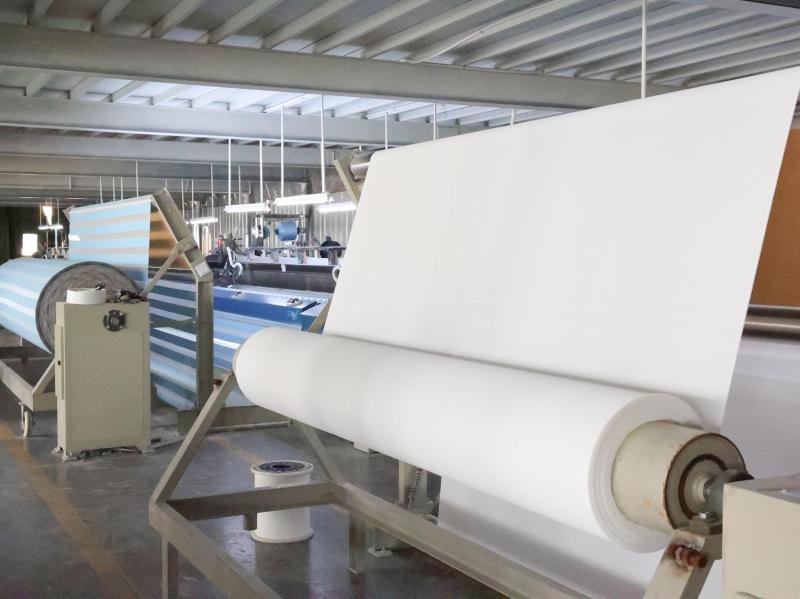
Our Xiamen facility covers 58,883 m² with 12 production lines and 93 specialized machines, outputting over 11 million units annually. At this scale, a 50,000-unit order does not consume enough throughput to destabilize other commitments.
Probe delivery reliability directly: on-time delivery rate over the past twelve months? Peak season performance in Q3–Q4? How are concurrent project orders sequenced?
Quality Certifications — What They Mean and What to Verify
ANSI/WCMA A100.1-2018 (U.S. market): Requires that products marketed for households with children under eight must be cordless or feature an inaccessible cord design. This is the industry baseline for U.S. residential distribution.
NFPA 701 (commercial and hospitality): The National Fire Protection Association's standard for flame propagation of textiles. Method 1 applies to large-scale hanging installations (the relevant method for most commercial projects); Method 2 applies to smaller samples. Always confirm which method the certificate covers.
OEKO-TEX Standard 100: Tests for over 100 harmful substances including formaldehyde, heavy metals, and allergenic dyes. Class I is required for products in infants' environments; Class II is adequate for standard adult residential applications.
CE Marking (EU market): Required for all motorized products sold in the EEA, covering both the Low Voltage Directive (2014/35/EU) and the EMC Directive (2014/30/EU).
Verification rule: request documents directly from the issuing body with a traceable certificate number. Laminated photocopies of expired certificates are more common than most buyers expect.
Quality Control Infrastructure
The difference between a 10% statistical sampling QC system and 100% finished product inspection is material. For a 1,000-unit order inspected at 10%, approximately 900 units ship without individual checking. Defects that appear at random frequency pass through sampling-based inspection.
Our QC process runs four checkpoints: incoming materials inspection (IQC) when raw materials arrive; in-process inspection (IPQC) every two production hours; finished goods inspection (FQC) at 100% coverage; and outgoing quality check (OQC) before shipment. Our dedicated 16-person QC team inspects every finished unit — not a sample — before packing.
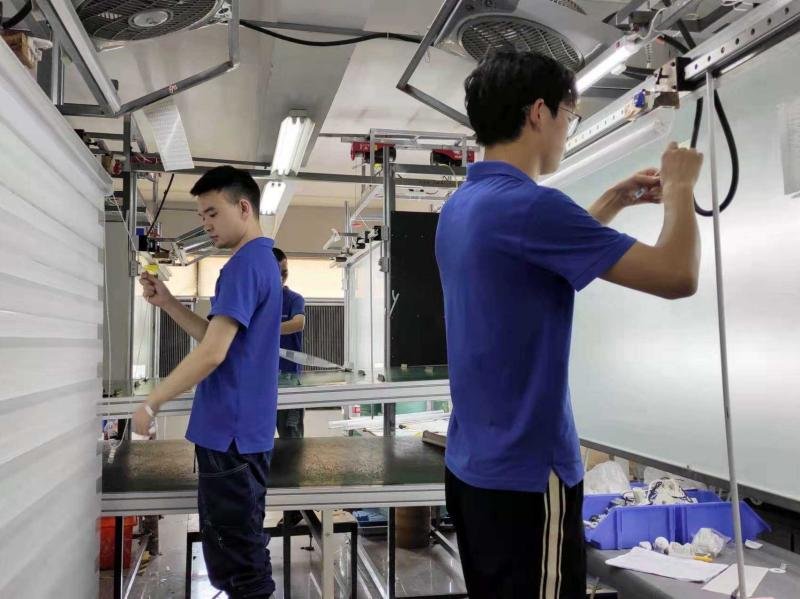
When evaluating any manufacturer's QC claims, ask: "What is your defect escape rate to customers? Can you share the last 12 months of return rate data by defect category?" Genuine quality-focused manufacturers track this data and share it.
MOQ Flexibility and Order Scalability
Our MOQ structure reflects how our production lines are configured:
- Standard catalog products: 1 unit (for testing and sampling)
- OEM customization: 10 units per SKU
- New product development: negotiable by project scope For buyers entering a new market or testing a new category, 1-unit availability for catalog products eliminates the financial risk from initial product testing. For OEM, 10-unit MOQ means you can test a private-label specification before committing to production volume.
Customization and OEM/ODM Capabilities
Three levels of customization cover most B2B needs: light customization (size adjustments, packaging changes), sample development (prototype production before committing to production), and deep customization (project-level structural engineering for entirely new products).
Our R&D team of 17 engineers releases over 20 new products annually, covering structural design, smart integration, and material development. This means custom fabric specifications, proprietary mechanism designs, and smart home protocol integrations are executed in-house rather than subcontracted.
Mechanism Quality and Rated Cycle Life
Chain mechanisms — the most common manual operation for commercial applications — have rated cycle lives that vary significantly by construction:
| Mechanism Type | Materials | Rated Cycle Life | Application |
|---|---|---|---|
| All-plastic chain drive | ABS | 8,000–12,000 cycles | Low-traffic residential |
| Plastic housing, metal sprockets | ABS + zinc alloy | 20,000–25,000 cycles | Standard residential |
| Full metal mechanism | Zinc/aluminum alloy | 50,000+ cycles | Commercial |
For a residential window operated twice daily, the 20,000-cycle mechanism represents approximately 27 years of service life. For a commercial space with 15 daily cycles, the same mechanism lasts about 3.6 years. Specifying mechanism type matters far more for commercial buyers than residential.
Communication and Documentation Standards
Before placing any order, evaluate: average response time to technical inquiries; availability of English-language spec sheets, certification documents, and compliance declarations; capability to produce accurate commercial invoices, packing lists, and country-of-origin documentation.
Factories experienced in exporting to your target markets handle this fluently. Factories primarily serving domestic markets often lack the documentation infrastructure.
The Blackout Performance Gap: What Your Manufacturer Won't Volunteer
Roller blinds marketed as "blackout" are consistently the most misunderstood product category in window coverings.
Here is what the specification sheet almost never says:
Blackout fabric achieves light transmission below 0.1%. The fabric itself does what it claims. But when a roller blind is installed in a standard inside-mount configuration, there are structural gaps on each side between the edge of the fabric and the window frame. For a standard installation, these gaps measure 3–8mm per side.
For a 2,400mm wide by 2,400mm tall window, each side gap creates approximately 19 cm² of unobstructed light entry. Both sides combined: roughly 38 cm². In a darkened room on a bright day, this produces two vertical bands of light along the sides — clearly visible against the wall.
This is not a manufacturing defect. It is a structural characteristic of roller blinds as an installation category. Every roller blind manufacturer's product has this characteristic, including ours.
The complete blackout specification requires three components: blackout-rated fabric, a cassette housing (covering the rolled fabric at the top), and side channels (U-shaped tracks along both sides that the fabric slides through). Without all three, "blackout" describes the fabric, not the installation.
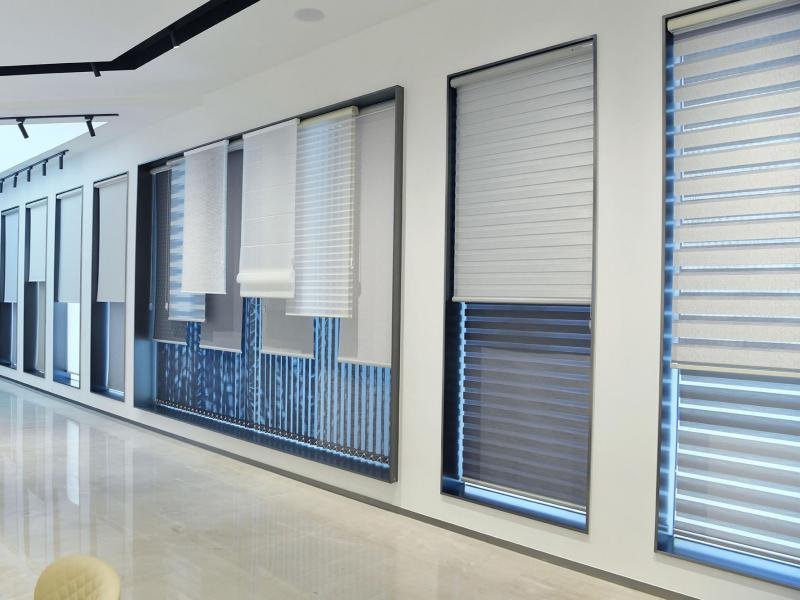
For projects where absolute zero-light penetration is the primary requirement — cinema rooms, photography darkrooms, night-shift workers' bedrooms — roller blinds with full side channel systems deliver reliable performance. For buyers who cannot accommodate side channel installation due to window reveal depth or aesthetic preferences, blackout cellular shades with built-in side tracks often provide a more practical solution.
This is not a reason to avoid roller blinds. It is a reason to specify them correctly.
Sourcing Roller Blinds from China: What Experienced Buyers Check
China accounts for the majority of global roller blind production. The structural advantages — vertically integrated fabric supply chains, competitive processing costs, concentrated manufacturing expertise — are real and durable. But experience shapes what buyers verify before committing to a supplier.
Aluminum component chemical compliance
REACH Regulation (EC) No 1907/2006 restricts 197 Substances of Very High Concern (SVHC). For aluminum components in window coverings, the critical restriction is lead content at ≤ 0.1% by weight.
Recycled aluminum — widely used in lower-tier manufacturing — has inherently variable composition. Without independent chemical testing, the lead content is unknown.
We conduct independent third-party chemical testing on all our aluminum component batches, quarterly, from an accredited laboratory — not from the component supplier's self-certification. This protocol was put in place after a 2018 incident where a component supplier's self-declared compliance proved inaccurate, resulting in a detained shipment and significant remediation cost.
Fabric batch consistency
Color consistency across multiple batches is the most common quality problem in large project fulfillment. The same color from the same mill, dyed six weeks apart, can produce a Delta E (color difference) of 2.0–3.5 — visible to the naked eye when two panels hang side by side.
For projects involving more than 30 individual blinds, we source all fabric from a single production batch and maintain a 15% material buffer within that batch for replacements.
Factory verification
The question that separates manufacturers from traders more reliably than any document: "Can you walk me through your production floor live, via video call, from raw material storage through assembly to inspection, right now?"
A manufacturer can do this immediately. A trading company has to arrange access to another factory — which takes days, or doesn't happen.
How to Structure Your First Engagement with a Roller Blinds Manufacturer
Step 1: Write a technical sourcing brief before outreach
Specify product types, fabric weight ranges, target markets, annual volume estimate, and whether OEM/ODM capability is needed. Technical briefs produce technical responses — and the quality of the response tells you as much as the product.
Step 2: Request specification samples, not showroom stock
Ask for samples produced at your exact specification: fabric weight, tube diameter, bottom rail weight, mechanism type. Request three units from production — not the showroom display piece. Test at every point in the travel range; the spring should hold the blind at any set position without the fabric creeping down over 30 minutes.
We ship full-specification samples within 5–10 business days for catalog products. For custom specifications requiring fabric not in current stock, sample lead time extends to 15–20 business days.
Step 3: Conduct a production floor verification
In-person visits are ideal; live video walkthroughs are acceptable for initial evaluation. Verify: production line in operation, QC area with measurement equipment, raw material inventory (fabric rolls, not finished boxes), and active assembly workstations.
Step 4: Place a trial order at 50% of planned ongoing volume
The first paid order should be smaller than your intended volume. Evaluate dimensional accuracy (width tolerance ±1mm, height ±2mm), mechanism performance across the full travel range, packaging integrity on arrival, and documentation accuracy.
Step 5: Establish ongoing terms in writing
Define: standard production lead time by order volume, advance notice required for large orders, inspection protocol and reporting format, and dispute resolution process for dimensional non-conformance. Experienced manufacturers have standard supplier agreement templates; the absence of any written process for handling defective goods is a risk signal.
Choosing a Manufacturing Partner, Not Just a Supplier
The right roller blinds manufacturer is the one with production capacity to grow with your business, QC infrastructure to protect your brand reputation, and flexibility to support your product strategy — whether catalog replenishment today or a full private-label line tomorrow.
The seven criteria in this guide are the filters that separate short-term vendors from long-term manufacturing partners: capacity, certifications, QC systems, MOQ structure, customization depth, mechanism quality, and documentation standards.
Ready to find a roller blinds manufacturer that meets these standards?
Shadesmart (shadesmart.com) supplies wholesale roller blinds and window shades to distributors, brand owners, and commercial project buyers in North America, Europe, and Australia. Annual output exceeds 11 million units. MOQs start at 1 unit for catalog products.