When sourcing roller shades at volume, supplier evaluation often focuses on the wrong signals: catalog breadth, unit price, and whether the factory can meet your MOQ. These factors matter — but they rarely predict whether a supplier will still be reliable eighteen months into the relationship.
The factories that create problems at scale tend to fail in quieter ways: tube specifications that weren't matched to fabric weight, QC checkpoints placed at the wrong production stage, blackout claims that don't account for installation physics, or production calendars that can't absorb a 500-unit reorder when a larger project is already on the line.
This guide covers four evaluation dimensions — manufacturing structure, quality control timing, product specification accuracy, and supply capacity — with the specific questions and benchmarks that separate a reliable factory partner from a cost-competitive but fragile one.
Most buyers assume that specifying a heavier tube diameter is the key to a stable roller shade — but tube diameter alone doesn't determine long-term performance. Fabric weight does. The same 50mm aluminum tube has a safe width ceiling of approximately 2,800mm with a 350 g/m² fabric, but only around 1,800mm with a 450 g/m² heavy blackout fabric — a difference of nearly 40%. A factory that asks about fabric weight before recommending a tube spec is demonstrating something more valuable than price competitiveness: structural knowledge of their own product.
What "Vertical Integration" Actually Means on the Production Floor
The most reliable test of whether a roller shade factory is truly vertically integrated isn't what their website says — it's a single question: is the aluminum tube extruded in-house, or purchased from an external supplier? Externally sourced aluminum typically carries a wall thickness tolerance of ±0.3–0.5mm; in-house extrusion can hold ±0.1mm. On a 2,000mm-wide commercial order, that variance is the difference between a bottom rail that installs straight and one that shows visible bowing after twelve months.
The Two Manufacturing Models
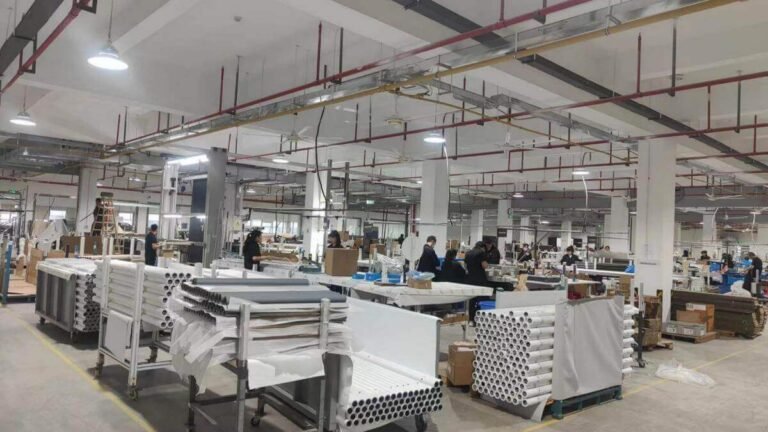
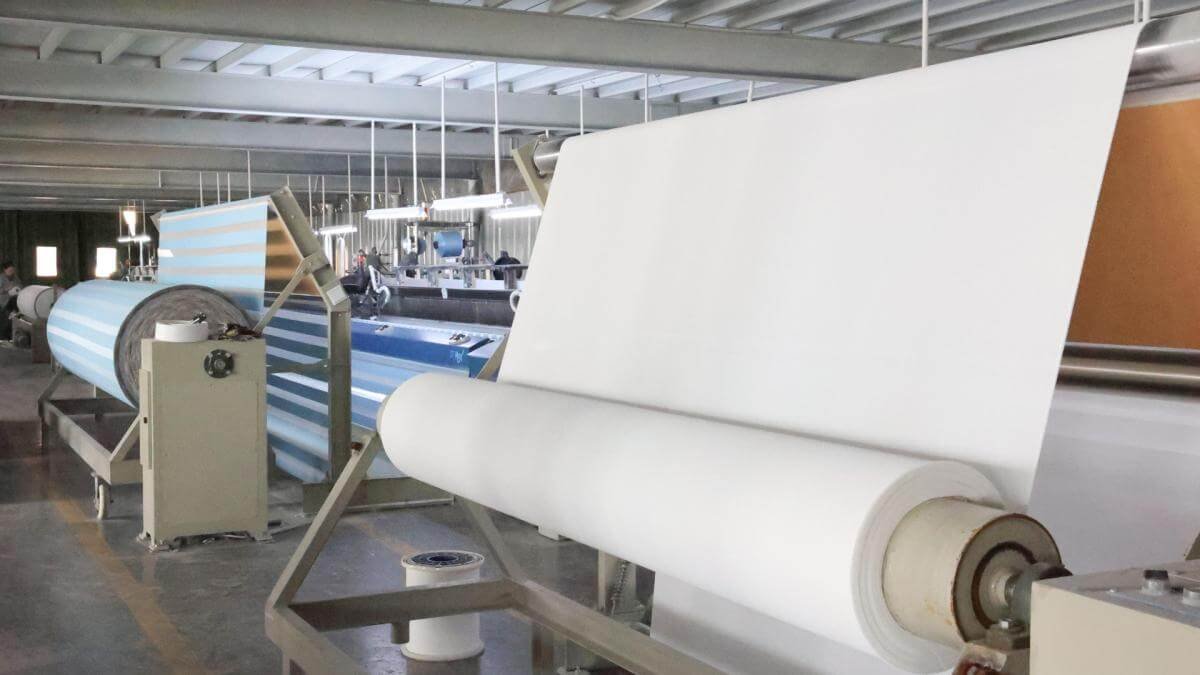
Roller shade manufacturers generally fall into two categories: assembly-based operations that source components externally and focus on finishing and packaging, and vertically integrated factories that control the full production chain — from raw material processing and component manufacturing through to finished shade assembly.
| Dimension | Assembly-Based Factory | Vertically Integrated Factory |
|---|---|---|
| Tube & rail sourcing | External supplier | In-house extrusion |
| Wall thickness tolerance | ±0.3–0.5mm | ±0.1mm |
| Quality consistency | Dependent on supplier QC | Self-controlled |
| Custom spec capability | Limited by supplier catalog | Adjustable at production level |
| Delivery stability | Exposed to upstream supply delays | Self-scheduled |
For wholesale buyers and project procurement teams, the practical implication is straightforward. An assembly-based factory can match price on standard SKUs, but struggles to hold consistent tolerances across large batches or respond to specification adjustments mid-order. A vertically integrated manufacturer absorbs those variables internally — at the component level, before a single shade is cut.
Scale Signals That Matter
Production scale data is frequently presented as a marketing statement. The more useful frame is to read it as a supply stability signal.
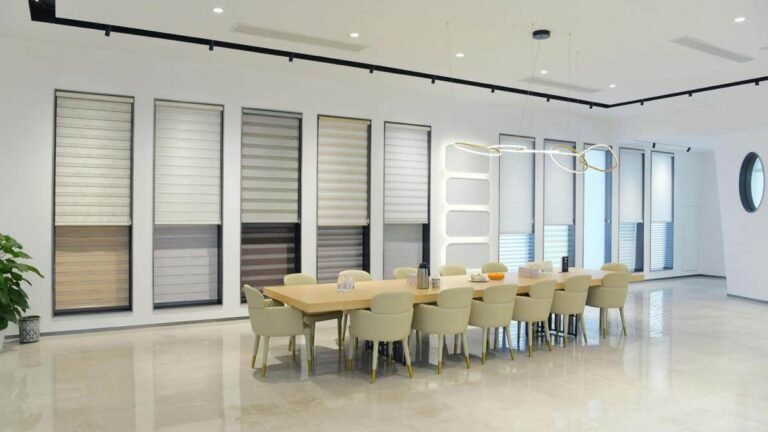
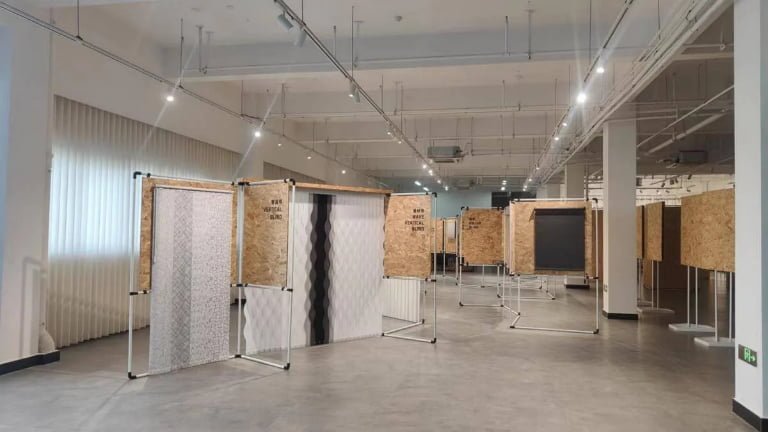
A facility covering 58,883 m² with 12 dedicated production lines and 93 specialized pieces of equipment, producing over 11 million units annually, is communicating something specific to wholesale buyers: that your order won't displace another client's production schedule, and that reorders don't require renegotiating lead time from scratch.
For project buyers, annual output volume also signals whether a factory can run a dedicated project batch without mixing it into general production — a key factor in color batch consistency across multi-room or multi-floor installations.
Quality Control: Where the Inspection Happens Matters More Than How Often
Most importers schedule a third-party inspection before shipment. For roller shades, that timing is structurally too late. The defect type that generates the highest volume of warranty claims — dimensional cutting errors — has to be caught at the cutting stage. By the time a finished shade reaches a pre-shipment inspection, a dimensional error means full reproduction, not rework. A factory that intercepts errors at the cutting checkpoint is fundamentally different from one that finds them at the loading dock.
The Four-Stage Inspection Model
A rigorous QC system for roller shades should operate at four distinct production checkpoints, not just at shipment.
| Stage | Code | Inspection Object | Key Criteria |
|---|---|---|---|
| Incoming Material | IQC | Tubes, fabric, hardware components | Dimensions, fabric weight (g/m²), color delta (ΔE) |
| In-Process | IPQC | Cut accuracy, hemming quality | Width tolerance ±1mm, height tolerance ±2mm |
| Finished Goods | FQC | Assembled shade function | Full-travel extension ×3, operating force, blackout light test |
| Pre-Shipment | OQC | Packaging and carton integrity | Quantity, label accuracy, damage protection |
When evaluating a supplier, ask specifically at which stage dimensional errors are flagged. If the answer is "during final inspection" rather than "during the cutting process," the factory's QC structure is designed for after-the-fact detection — not prevention.
The Tolerance Threshold That Triggers a Production Return
Knowing the tolerance numbers a factory actually enforces is a more reliable quality signal than certifications alone.
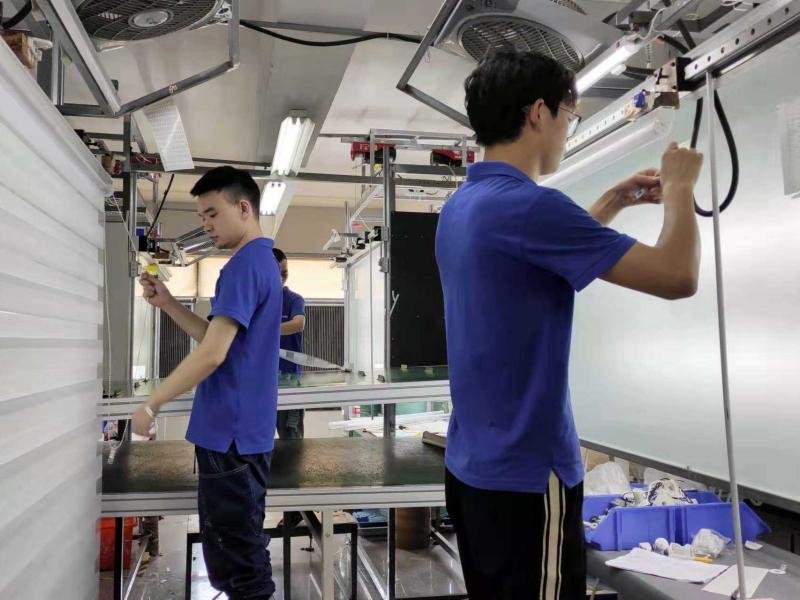
In our production process, a cutting width error exceeding ±2mm triggers a mandatory production return, with no exception for small batches or rush orders. Finished shades complete three full-travel extension cycles before passing FQC. A 16-person dedicated quality management team handles 100% finished-goods inspection prior to shipment.
These aren't aspirational targets — they're the thresholds at which a shade will fail in the field. A width error greater than ±2mm means the shade either won't fit the window frame or will leave a visible installation gap.
For a detailed look at how production-floor calibration frequency affects long-term defect rates, see: How Batch Calibration Cut Roller Shade Cutting Defects by 62%.
Decoding Blackout Claims: What the Spec Sheet Won't Tell You
"Blackout" is among the most loosely applied technical claims in roller shade supplier catalogs. Fabric opacity can reach 99.9% — but that figure is measured under laboratory conditions. Once installed on an actual window, even the densest blackout fabric leaves light gaps on both sides if side channels aren't included. On a standard 2,400mm-wide window, those lateral gaps total approximately 38 cm² of effective light entry area. In a genuinely dark room, that's clearly visible.
The Three-Component Blackout System
A true blackout installation is a system, not a fabric specification. Three components must work together:
- Blackout fabric — fabric opacity ≥ 99.9%, covering the glazed area
- Cassette housing — a closed headrail box that seals the gap above the tube (typically 15–25mm of unobstructed light entry without it)
- Side channels — tracks that seal the 3–8mm lateral gaps between shade edges and window frame on each side
| Configuration | Lateral Light Gaps | Upper Gap | Suitable for True Blackout |
|---|---|---|---|
| Blackout fabric only | Yes (3–8mm per side) | Yes | No |
| Fabric + cassette housing | Yes (3–8mm per side) | Sealed | No |
| Fabric + cassette + side channels | Sealed | Sealed | Yes |
When reviewing a supplier quote that references "blackout roller shades," confirm whether pricing includes all three components. A fabric-only price for a blackout application will generate end-user complaints — and those complaints typically arrive 60–90 days after installation, once clients have lived with the product through varied lighting conditions.
Specification Questions to Ask Any Supplier
Before finalizing a blackout roller shade order, ask these three questions:
- Does the quoted price include cassette housing and side channels, or is it fabric-only?
- What is the tested light transmission percentage of the blackout fabric under your standard specification?
- What is the maximum single-shade width you recommend before specifying a center divider?
For a full technical breakdown of blackout performance and installation configuration options, see: Blackout Roller Shades: The Truth Behind the Marketing Claim.
MOQ, Reorder Capacity, and the Question Wholesalers Forget to Ask
A 1-unit minimum order sounds like maximum flexibility. But the more important question for wholesale buyers isn't whether a factory can ship 1 unit — it's whether a 500-unit reorder will hold its production slot when a large project order enters the same line. Low MOQ and reorder reliability are two separate capability dimensions, and they need to be evaluated separately.
MOQ Tiers and What Each Signals
| Order Type | Minimum Quantity | Typical Use Case |
|---|---|---|
| Standard catalog products | 1 unit | Market testing, trial orders, e-commerce SKU validation |
| OEM custom (branding, spec changes) | 10 units | Private label, branded wholesale partnerships |
| New product development / project orders | Negotiable | Deep customization, structural development, large-scale projects |
A 1-unit minimum is meaningful for e-commerce sellers testing a new SKU, or project buyers who need a production sample before committing to full-spec volume. For wholesale buyers placing regular reorders, the relevant question is capacity allocation: does the factory's annual output support consistent, predictable lead times across your order cycle — including your peak season?
How Annual Output Volume Relates to Your Reorder Reliability
An annual output of 11 million+ units across 12 production lines doesn't primarily signal price efficiency. It signals that no single buyer's order is likely to create a capacity constraint for the factory.
For wholesale buyers, this matters most during peak demand periods. A factory operating near its capacity ceiling will prioritize its highest-volume relationships when production slots are contested. A factory with substantial headroom can hold committed lead times for mid-volume buyers without renegotiation.
We recommend asking any potential factory partner to specify their average lead time for a 500-unit standard catalog reorder during Q3 — the industry's highest-demand quarter — not just their quoted lead time under standard conditions.
For guidance on matching tube and fabric specifications to your order volume requirements, see: Roller Shade Fabric Weight Chart: Matching Fabric to Tube and Motor Specs.
Factory Evaluation Checklist: 5 Questions for Any Roller Shade Supplier
Use the following questions when assessing a roller shade manufacturer for a long-term supply relationship. Each maps to a structural production capability — not a marketing claim.
1. Does the factory ask about fabric weight before recommending tube diameter? The correct specification sequence is: fabric weight → tube diameter → safe width ceiling. If a supplier recommends tube diameter based on window size alone, they're specifying by catalog rather than engineering.
2. Is aluminum tube extrusion done in-house or sourced from external suppliers? Ask for material specification sheets. In-house extrusion facilities should be able to specify their wall thickness tolerance. External sourcing typically cannot provide this at supplier level.
3. At what production stage does QC intercept dimensional errors? The answer should be "at the cutting stage." If the answer is "before shipment" or "at final inspection," the QC model is detection-based rather than prevention-based.
4. Does the "Blackout" spec include cassette housing and side channels, or fabric only? Request a line-item breakdown in the quote. If cassette and side channel costs aren't listed separately, the blackout spec is likely fabric-only.
5. What is the committed lead time for a 500-unit standard reorder during Q3? Peak-season lead time is a more reliable stress test of supply capacity than standard off-season quoted timelines.
Frequently Asked Questions
What should I look for when evaluating roller shade manufacturers? Focus on manufacturing structure (in-house vs. assembly-based), QC checkpoint placement (cutting stage vs. shipment stage), blackout specification completeness (fabric + cassette + side channels), and confirmed reorder lead times during peak season. Unit price and MOQ are secondary to these structural factors.
What is the minimum order quantity for roller shades from a factory? Shadesmart's standard catalog products start at 1 unit. OEM custom orders — including branding and specification changes — start at 10 units. New product development and large project orders are negotiable based on scope and development requirements.
How do I verify a supplier's blackout roller shade claims? Ask whether the quoted price includes all three blackout system components: blackout fabric, cassette housing, and side channels. Confirm the fabric's tested light transmission percentage. Fabric opacity alone does not determine installed blackout performance.
What does "vertically integrated" mean for a roller shade factory? It means the factory produces its own structural components — including aluminum tube extrusion — rather than purchasing finished parts from external suppliers. Vertical integration enables tighter dimensional tolerances and more consistent quality across high-volume orders.
Why does fabric weight matter more than window size when specifying roller shade tubes? Tube diameter determines the safe load span for a given fabric weight. The same 50mm tube has different safe width limits depending on the fabric's grams-per-square-metre rating. Specifying by window size alone — without fabric weight input — is a common cause of long-term tube deflection and uneven fabric tension.
Work With a Vertically Integrated Roller Shade Manufacturer
Shadesmart manufactures roller shades, zebra shades, and cellular shades across 58,883 m² of production facilities, with 12 dedicated production lines and a 16-person in-house QC team running 100% finished-goods inspection.
Standard products start at 1-unit MOQ. OEM custom orders from 10 units. Project and development orders negotiable.