Most sourcing mistakes don't happen because a buyer chose the wrong product. They happen because the buyer chose the wrong supplier — and didn't find out until the third container arrived short on quality, or until a key shipment missed a project deadline by three weeks with no explanation that held up.
We're Shadesmart, a window shade manufacturer in Xiamen, China. We've been manufacturing since 2008, which means we've been on the other side of supplier evaluations for 15 years. We've watched procurement teams ask the right questions and build partnerships that run for a decade. We've watched teams skip due diligence entirely and spend months managing consequences that were completely predictable.
The difference almost always comes down to the quality of questions asked before the first order is placed. These are the seven that matter.
1. Can I See Your Factory Right Now — Unannounced?
Not "can we schedule a visit." Can I video call your production floor in the next hour?
A manufacturer with an active facility and nothing to hide will say yes, or offer a specific time within 24 hours. A trading company presenting as a manufacturer cannot. A factory with significant quality problems will not be comfortable with an unstructured walk-through.
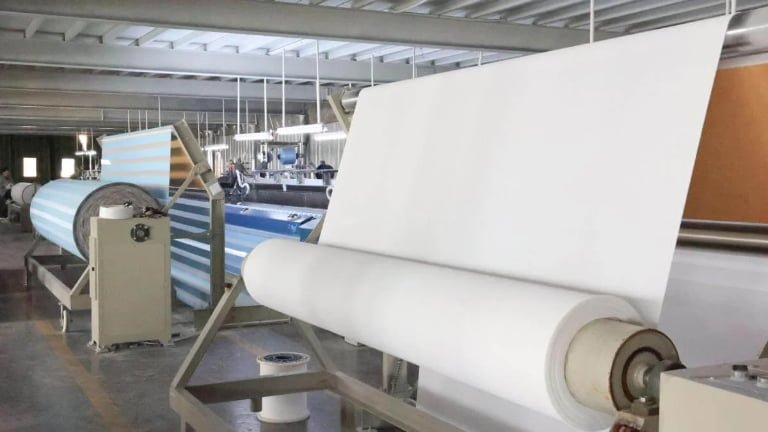
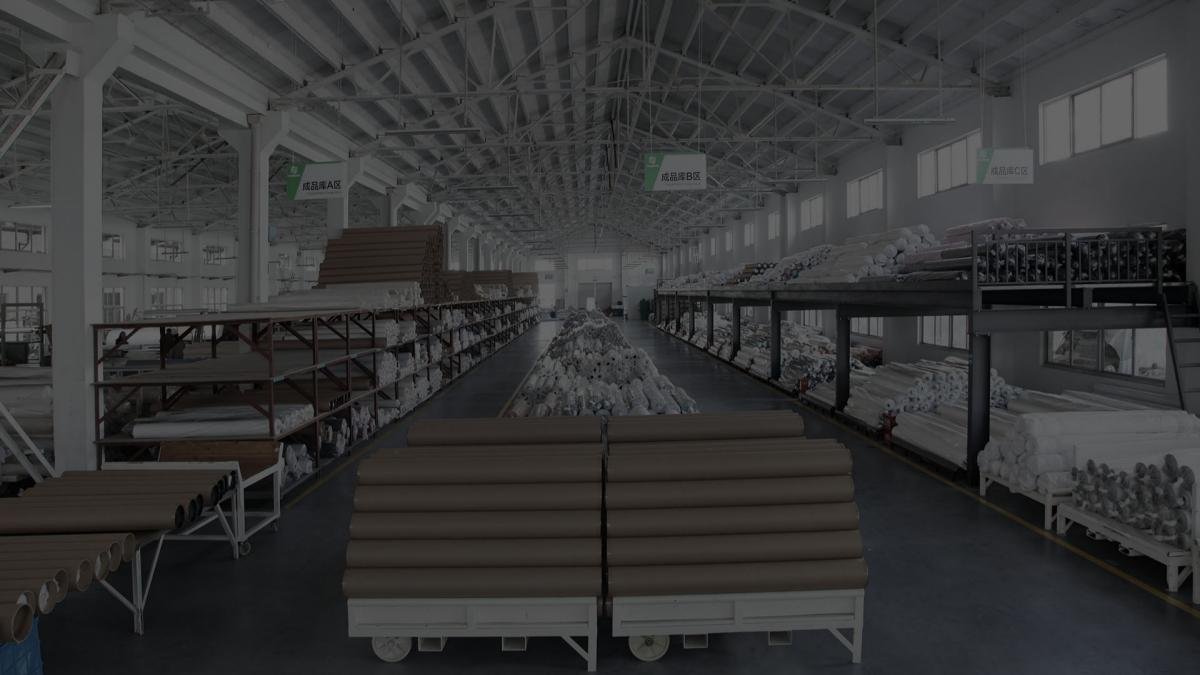
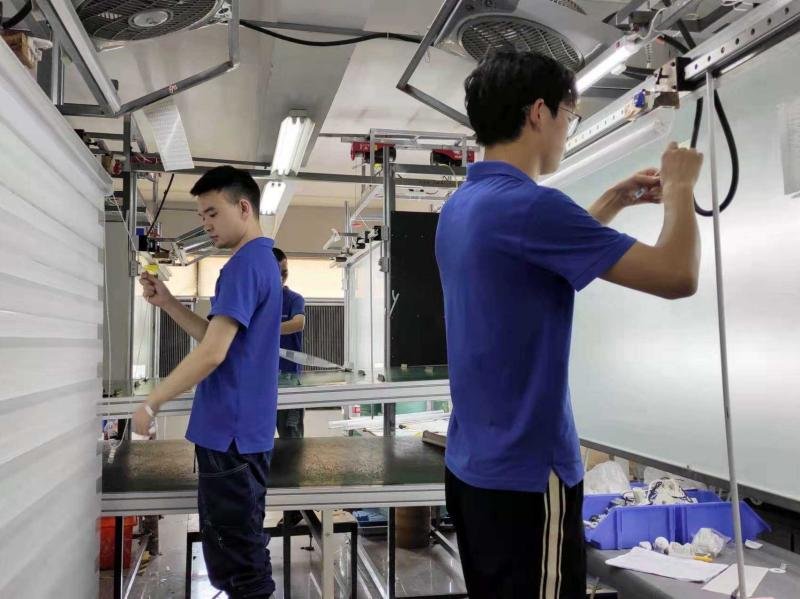
What to look for on a live call: active production lines with workers present, raw material storage visible (fabric rolls, aluminum tubes, hardware in staging areas), QC inspection stations on the production floor rather than only at final packaging, and the general condition of the facility — orderly and well-lit indicates process discipline; unclear or chaotic indicates the opposite.
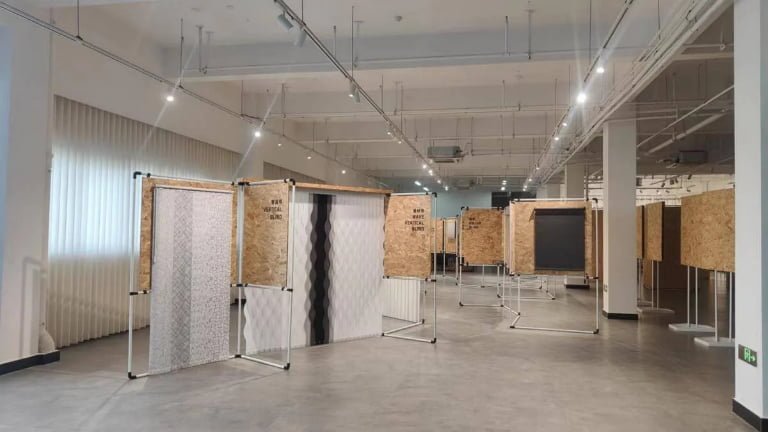
We do these calls regularly for prospective buyers. A walk-through of our 58,883㎡ facility covers everything from our incoming material inspection area through to the packing and staging zones, and takes about 20 minutes. It answers more questions in one session than a week of email.
What a useful answer looks like: "Yes — I can connect you with our factory manager now or schedule a walkthrough within 24 hours. Any production area you want to see."
What a red flag looks like: "We don't do factory tours, but I can send photos." Or a facility visit requiring two weeks of advance notice with no exceptions possible.
2. What Is Your Actual Annual Production Capacity, and How Is It Verified?
Every Chinese manufacturer website claims impressive output figures. The questions that matter: how is that capacity verified, and how does it translate to your specific order in the current production calendar?
Ask for the number of production lines dedicated to your product category, the current capacity utilization rate, and how scheduling works between new and existing clients when the facility is running near capacity. A supplier at 95% utilization cannot reliably absorb a sudden large order without affecting existing commitments — a good supplier will tell you that upfront rather than confirming the order and sorting it out later.
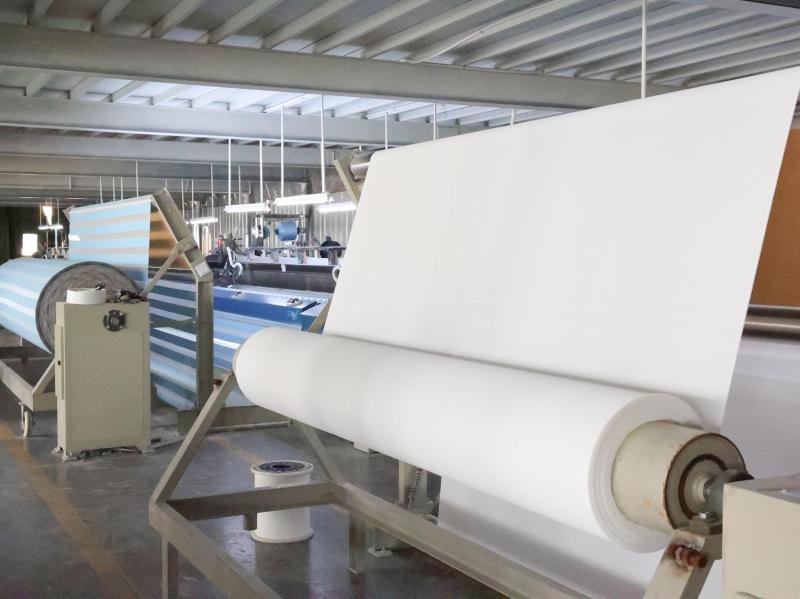
Our 12 production lines turn out over 11 million units annually across roller blinds, zebra blinds, cellular shades, and motorized systems. We can tell you which lines are allocated to which categories and what our current lead time is based on current scheduling — because we actually track it.
What a useful answer looks like: Specific line count, product categories by line, honest current utilization, and a real lead time based on actual scheduling.
What a red flag looks like: "Our capacity is very large, no problem for your order." No specifics, no caveats, no production planning transparency.
3. Walk Me Through Your QC Process — Step by Step
Quality control is a process, not a department name. Ask for a step-by-step description and count how many distinct checkpoints the supplier can identify without prompting.
A robust QC system covers at minimum:
Incoming material inspection — fabric weight, color batch consistency, certification compliance verification, hardware dimensional check before anything enters production.
In-process inspection — dimensional accuracy at the cutting stage, mechanism assembly function check before panels move to finishing.
Pre-final inspection — operated cycle test on mechanisms, visual check for surface defects, color consistency across the batch.
100% final inspection — every unit checked before packaging. Not sampling. Not spot-checking.
Outgoing inspection — packaging integrity, carton labeling accuracy, packing list verification against the purchase order.
If a supplier describes QC as "we check before shipping," that's a single-stage final inspection. It catches visible defects in finished product but cannot catch process errors that produce subtle failures: fabric rolled at incorrect tension, mechanism components assembled in the wrong sequence, color batches mixed across a production run.
Our 16 dedicated QC inspectors operate across all five stages. At our production scale, that staffing ratio means in-process inspection is actually happening rather than just being described on a capability slide.
What a useful answer looks like: Unprompted, detailed description of multiple inspection stages with specific staffing. Mention of defect rate tracking, reject management on the production floor, and a corrective action process for out-of-spec product.
What a red flag looks like: "Quality is our priority. We have experienced workers." No process, no stages, no numbers.
4. What Certifications Do You Hold — and Can You Send the Original Test Reports?
There are two distinct things a supplier may mean when they say they are "certified."
Factory certifications — ISO 9001, BSCI, Sedex — confirm that the factory has a quality or social compliance management system in place. These are audits of the factory's processes.
Product certifications — OEKO-TEX Standard 100, NFPA 701, GREENGUARD, UL — confirm that a specific product has been tested to a specific performance standard. These are tests of the product itself.
A factory with ISO 9001 has not automatically certified its products to OEKO-TEX. These are not interchangeable, and a supplier who presents them as equivalent is either confused or hoping you are.
Every legitimate test report carries a report number, the testing laboratory's name and accreditation number, the specific product and material tested, and an issue date. The certificate number should be cross-referenceable against the testing body's public database. SGS, Intertek, and Bureau Veritas all provide online certificate verification tools. Use them.
What a useful answer looks like: Supplier sends original test reports within 24 hours, distinguishes clearly between factory certifications and product test reports, and confirms report numbers are publicly verifiable.
What a red flag looks like: "We have all certifications" with no specifics, or marketing collateral with certification logos but no underlying reports available for review.
5. What Does Your Sample Process Look Like — and Where Does the Sample Material Come From?
How a supplier handles samples is a more accurate signal of production process discipline than almost anything else.
Ask: how long does a pre-production sample take, what does it cost and is the cost credited against a production order, and — critically — does the sample come from the same materials, the same machines, and the same workers as the production run, or from a separately managed sample room?
The last question is the one that matters. Some factories maintain a "sample room" with premium inputs used exclusively for buyer evaluation, while production runs use different grades of material. Pre-production samples should be made using production-run materials and production-run processes — because that's the only way the sample tells you anything useful about what will arrive in your container.
Standard pre-production sample lead time for a well-run factory is 7–14 days for a custom specification. Significantly faster than 5 days on a complex spec is a warning sign — it usually means the sample came from stock, not from a production setup. Longer than 21 days for a straightforward specification is an operational red flag.
What a useful answer looks like: Clear written policy: timeline, cost, credit terms, and a description confirming that sample and production materials are the same.
What a red flag looks like: "We can send samples quickly, no problem" with no timeline committed and no written terms — followed by a sample that differs noticeably from the eventual production run.
6. How Do You Handle a Quality Problem After the Goods Have Shipped?
Ask this before there's a problem. The answer tells you whether the supplier treats the relationship as transactional — ending at shipment — or operational.
A well-run manufacturer should be able to describe: how quality issues are documented and submitted (photos, video, written description format), their internal root cause analysis process, what remedies are available (replacement units, credit note, rework), their standard resolution timeline, and whether warranty terms are in writing.
Quality problems occur in even well-run factories at a low rate. A supplier who has a clear, practiced process for handling them is more reliable than one who assures you quality problems will never happen. The assurance is not a process.
What a useful answer looks like: Specific process description with timeline commitment, named escalation contact, written warranty terms.
What a red flag looks like: "We have very good quality, this won't happen." That is a sales statement, not an operational answer.
7. What Percentage of Your Revenue Comes From Your Top Three Clients?
This question reveals supplier-side concentration risk — a factor that directly affects your order reliability, and one that almost no procurement checklist includes.
If a supplier's top three clients represent more than 60% of annual revenue, your order is at risk of being de-prioritized whenever those anchor clients make demands on production capacity. Lead time slippage and quality inconsistency tend to happen at exactly the moments when key clients have priority — peak season, large rush orders, or when a major client changes a specification mid-production.
A well-diversified manufacturer with a broad client base across industries, geographies, and order sizes is more operationally resilient. You don't need an exact percentage — ask the question and observe whether the supplier understands why you're asking and can speak to their client concentration with any self-awareness. That response, by itself, tells you quite a lot about their business maturity.
How to Use These Questions Together
These aren't a sequential checklist. They're a conversation — and the pattern of responses matters as much as any individual answer.
The signal you're looking for: specificity, consistency, and a willingness to say "I'm not sure of that exact number, let me check and get back to you" rather than smooth, generalized assurance on everything. Confident, specific answers with documentation behind them indicate a supplier who manages their operation and knows it. Polished, vague answers with nothing verifiable underneath indicate a supplier who manages their sales process.
The two are not the same thing, and the difference matters a great deal by the time your third container arrives.
Published by Shadesmart | Window shade manufacturer, Xiamen China | shadesmart.com