We've been manufacturing window shades since 2008, with close to two decades of production and export experience behind us, and one of the most common questions we hear — from homeowners researching a purchase and from small brands researching a supplier — is some version of "why can't I get a straight answer on price?" The honest answer is that window shades don't have a single price; they have a price structure, built from a handful of variables that stack on top of each other. Once you understand those variables, you can look at any quote — ours or a competitor's — and tell whether it makes sense. We also work with buyers who need production flexibility rather than a one-size-fits-all product, which is why our development process runs across light customization, sample development, and deep customization stages depending on what a project actually needs.
This guide breaks down what actually drives cost, without pretending to hand you a fixed price list. We don't publish one — because the honest answer for any specific project is "it depends on the four or five variables below," not a single number.
What Actually Determines the Cost of Window Shades?
The price of a window shade is set by three interacting variables: fabric grade, control mechanism, and the size or customization complexity of the order — not by "brand" or a simple manual-versus-motorized split. Two shades that look identical in a product photo can carry very different costs once you account for fabric density, whether the control mechanism is a basic chain system or a motorized unit with smart protocol support, and how far outside standard sizing the order falls.
Buyers often default to comparing window shades the way they'd compare a commodity — by width and color. That comparison misses almost everything that actually drives cost. A 1,800mm-wide roller shade in a 120 g/m² fabric on a basic chain mechanism and a 1,800mm-wide roller shade in a 250 g/m² blackout fabric on a motorized system with smart hub support can differ substantially in price, even though both are technically "the same size roller shade." The sections below walk through each variable so you can see where your own project sits.
How Much Does Fabric Choice Affect the Price?
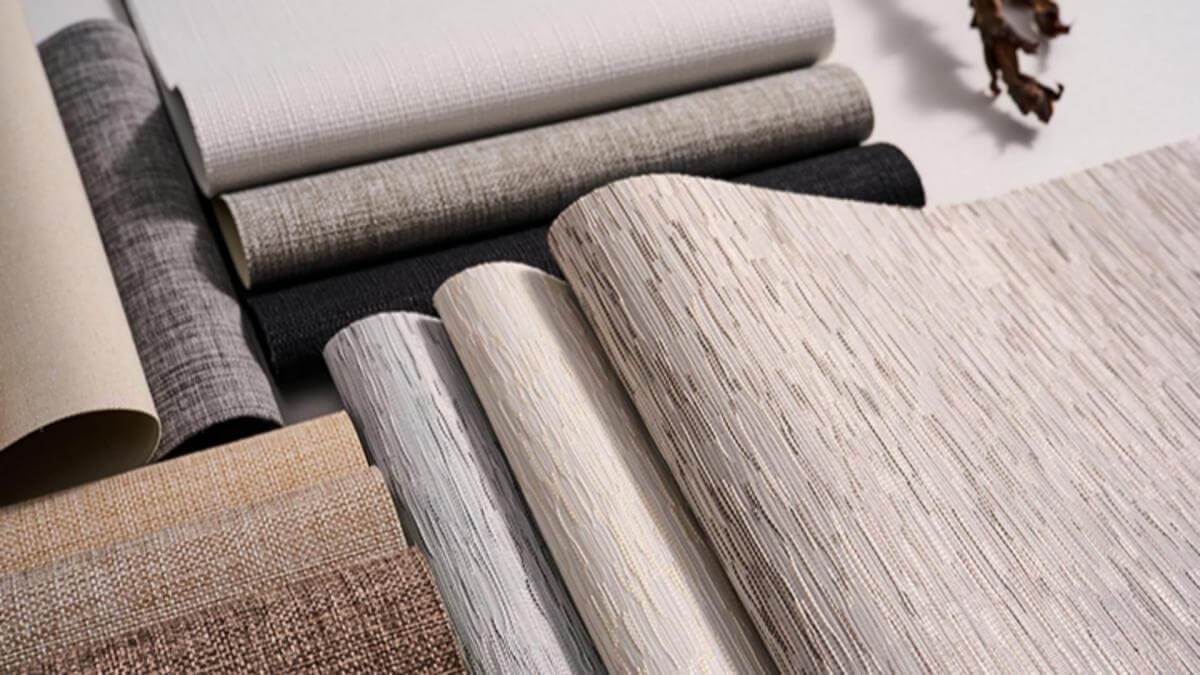
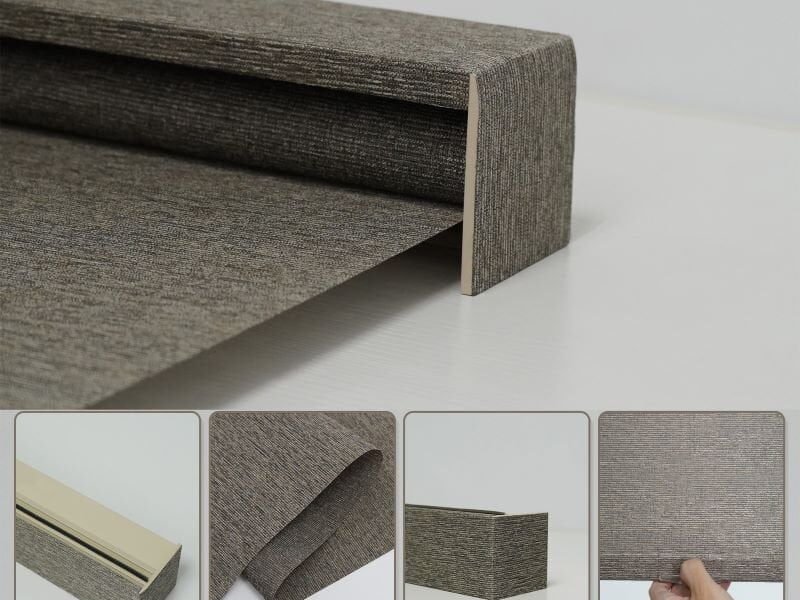
Fabric grade is usually the single largest cost variable in a window shade, and it's also the variable buyers are least equipped to evaluate from a photo. Fiber density (measured in denier), fabric weight (grams per square meter), weave tightness, and colorfastness rating all affect both the raw material cost and how long the shade performs before it fades, sags, or loses its light-control function.
Take zebra/dual-roller shades as an example, since the fabric quality spread in this category is unusually wide. Our own production standard sits meaningfully above what we typically see at the low end of the market:
Table 1: Fabric Grade Comparison — Zebra Shade Fabric
| Parameter | Higher-grade standard (what we produce to) | Low-end market fabric |
|---|---|---|
| Base fiber density | 150D–300D polyester | 75D–100D |
| Opaque stripe weight | 220–280 g/m² | 150–180 g/m² |
| Sheer stripe hole density | 65–85 holes/cm² | 40–60 holes/cm² |
| Colorfastness (ISO 105-B02 test method)1 | Grade 6 or higher | Grade 4–5 |
A similar pattern holds for cellular (honeycomb) shades, where fabric weight directly determines how long the honeycomb structure holds its shape. A 25mm-deep honeycomb cell needs a minimum fabric weight of around 75 g/m² to avoid collapsing within two to three years; a well-built version of the same cell depth is typically produced closer to 85 g/m² to leave a safety margin. Fabric priced below that threshold isn't necessarily defective — it's just built for a shorter service life, and that should be reflected in a lower price, not hidden behind an identical-looking spec sheet.
When you're comparing two quotes for what looks like the same product, ask for the fabric weight and density numbers. If a supplier can't give them to you, that's usually a sign the fabric wasn't selected deliberately in the first place.
Manual vs Motorized: What's the Real Cost Gap and Why?
Motorized shades typically cost more than manual shades of the same size and fabric because you're paying for an additional mechanical system — the motor, its control electronics, and (for smart-enabled units) a communication module — not because "electric" is inherently a premium category. The gap isn't a fixed markup; it scales with motor torque rating, which itself scales with the total load the motor has to lift.
That load calculation matters more than most buyers realize. A motor has to lift the total weight of the fabric plus the bottom rail plus a margin for mechanical resistance, and the correct motor for a given shade is determined by fabric area and fabric weight — not by window size alone. We size motors so the actual working load stays under roughly 70% of the motor's rated maximum, because running a motor near its ceiling shortens its service life and increases the chance of premature failure. This is worth knowing as a buyer because motor oversizing or undersizing is one of the most common reasons an otherwise reasonable-looking motorized quote turns out to be a poor value — an undersized motor that fails within the warranty period isn't actually cheaper than a correctly sized one, it's just cheaper today.
One honest limitation here: we won't quote a motorized configuration we believe is undersized for the job, even if it would produce a lower headline price — because a motor running consistently over its safe load range is a warranty claim waiting to happen, and that costs the buyer more in the long run than paying for the correct motor upfront.
What Drives Motor and Smart Protocol Pricing Specifically?
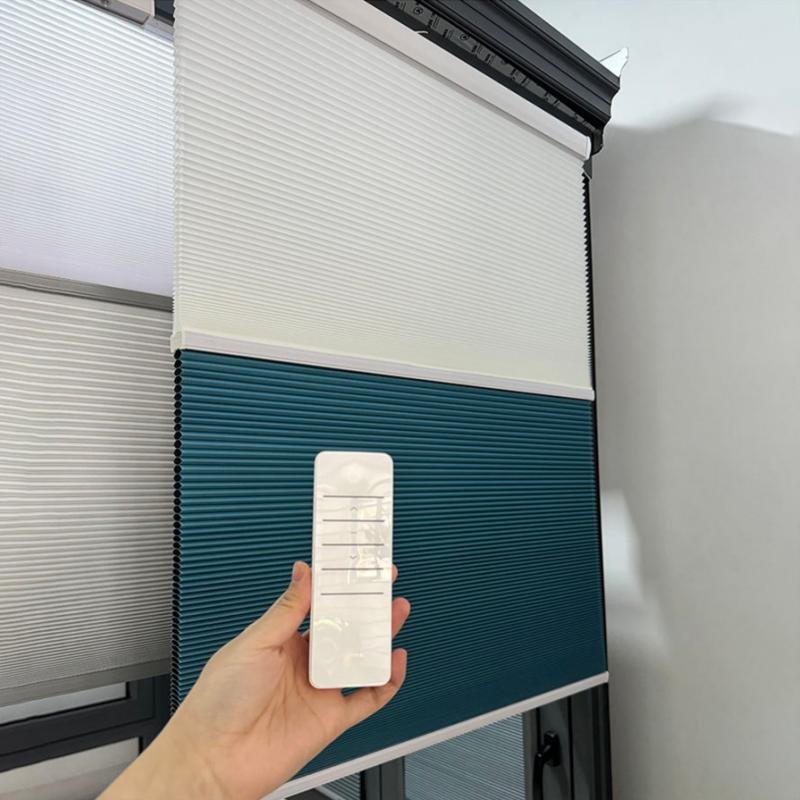
Within motorized shades, cost is further shaped by the wireless protocol (if any) the motor supports and by the power source — because both affect the electronics inside the motor housing, not just the motor's mechanical torque. Simple point-to-point RF remote control sits at the lower end of the cost range; mesh-networking protocols that support whole-home smart integration sit higher, largely because they require more sophisticated onboard electronics and, in many cases, a compatible gateway or hub. Battery-powered and solar-powered motors add cost for the battery and charging circuitry but remove the need for in-wall wiring, which can offset installation cost on a renovation project.
Power source also has a cost implication buyers don't always see upfront: ongoing maintenance. Lithium battery cells used in rechargeable shade motors lose roughly 0.05–0.1% of capacity with every charge cycle, and by around 500 cycles they're typically down to 78–85% of original capacity. How fast you hit that isn't about calendar time — it's about how often the shade actually opens and closes. A bedroom shade opened once or twice a day might go five years between meaningful battery degradation; a shade in a hotel room opened eight to fifteen times a day can reach the same wear point in under a year and a half.
This is a limitation worth stating plainly: for high-frequency commercial settings like hotel rooms, a hardwired AC motor is usually the more cost-effective choice over the life of the installation, even though battery-powered units often carry a higher margin for the supplier. We'd rather flag that tradeoff at the quoting stage than have a property manager discover it eighteen months into a hospitality project.
On smart home compatibility specifically: we design our motorized and smart control lines to connect into mainstream smart home ecosystems, but exact platform-by-platform compatibility can shift as hardware modules are updated on our end. If a specific integration (a particular voice assistant, a particular hub) is a hard requirement for your project, confirm current compatibility with us directly rather than assuming from a general product description — ours or anyone else's.
How Does Size and Customization Change the Price?
Cost rises with size in two separate ways: material quantity (more fabric, a heavier bottom rail) and structural requirements, since wider shades need thicker-walled tubing to avoid sagging under the fabric's own weight. Roller shade tubing, for example, comes in graduated diameters, and each step up is tied to a specific width ceiling and fabric weight allowance — a 38mm tube is rated for widths up to roughly 1,800mm at fabric weights under about 200 g/m², while wider or heavier configurations need to step up to 50mm or 63mm tubing. Using an undersized tube on an oversized shade doesn't just risk failure; it produces visible fabric sag at the tube's midpoint that shows up as a faint "bowing" effect across the fabric surface.
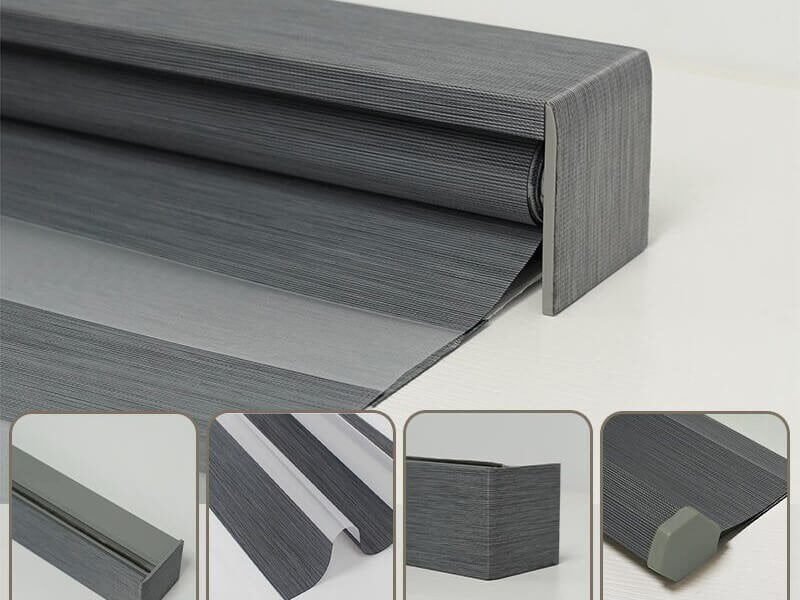
Precision requirements also add cost, particularly on patterned fabrics like zebra shades, where the two fabric layers have to stay aligned as the shade moves. Tighter stripe-alignment tolerances cost more to produce because they require closer control over fabric tension during weaving and assembly — a wider shade with a tight alignment tolerance is a meaningfully more demanding production job than the same width with a loose tolerance, even though both look similar in a product photo.
Beyond size, the depth of customization changes both cost and lead time:
Table 2: Customization Complexity vs. Typical Cost Drivers
| Customization level | What it typically involves | Primary cost driver |
|---|---|---|
| Light customization | Standard sizing/color adjustments within an existing product line | Minimal — mostly fabric quantity |
| Sample development | Prototyping and functional verification of a new configuration | Tooling and testing time, low volume |
| Deep customization | Structural development, material optimization, exclusive design work | Engineering time, new tooling, extended lead time |
If your project needs anything beyond a standard configuration, expect the quote to reflect the customization tier — this is a normal and predictable part of the cost structure, not a sign of being overcharged.
Why Do Quoted Prices Vary So Much Between Suppliers?
Quoted prices for what looks like the same shade can vary significantly between suppliers because of differences in fabric sourcing, supplier tier for motors and electronics, and timing relative to seasonal raw material demand. None of these differences are visible on a spec sheet, which is exactly why two quotes for "the same product" can land far apart.
Raw fabric supply timing is one factor: standard roller shade fabric (100–250 g/m²) typically ships from stock in 3–5 days, while custom colors or specifications can run 20–30 days, and this window shifts further during Q3 (July–September), when fabric mills see peak demand tied to Western holiday-season retail buying. This is fabric material lead time — how long it takes raw fabric to be available for production — and it is a completely separate figure from how long it takes a finished, made-to-order shade to reach a customer after an order is placed. The two numbers get conflated constantly in online cost guides, and it's worth being skeptical of any source that quotes one figure without specifying which one it means.
Motor and electronics sourcing is a second factor. Suppliers source motors and smart modules from different tiers of manufacturer, and those tiers carry meaningfully different lead times and price points — without naming specific brands, the general pattern in the market is that premium international motor suppliers carry longer lead times and a substantial price premium over mainstream domestic suppliers, who in turn sit above lower-tier suppliers on both price and consistency. A quote that looks unusually low is worth asking about specifically on this point.
One more distinction worth making explicitly, because it's the reason we're pointing this out here: everything above describes retail-facing pricing logic for a single order. If you're a wholesaler, an independent brand, or an e-commerce seller sourcing at volume rather than buying one shade for one window, the pricing structure works differently — factory-direct wholesale pricing is built around order volume, standard SKU efficiency, and ongoing reorder relationships, not the per-unit retail variables covered in this guide. If that's closer to your situation, our wholesale program is a more useful starting point than this cost breakdown — standard products start at a 1-piece minimum order for testing purposes, with OEM customization available from 10 pieces through a trade account. Larger orders (roughly 500 pieces and above) do need to go through normal production scheduling rather than shipping next-day, so if volume and turnaround time both matter to your project, it's worth discussing your timeline with us directly rather than assuming either extreme.
How Should Buyers Budget for Their Project?
Rather than looking for a single number, it's more useful to work through the variables above as a checklist before you request a quote:
- Fabric grade: Do you know the fabric weight and density being quoted, or just the color and finish?
- Control mechanism: Manual chain, cordless spring, or motorized — and if motorized, is the motor sized to the actual fabric load, not just the window size?
- Smart protocol (if applicable): Does the project need a specific ecosystem integration, and has that been confirmed rather than assumed?
- Size and structural requirements: Does the width fall within a standard tube diameter's rated range, or does it push into a heavier structural tier?
- Customization tier: Standard configuration, or does the project need sample development or deep customization?
- Order volume: A single-window retail purchase and a multi-unit project or wholesale reorder are priced on different logic entirely.
Working through these six points before requesting quotes won't give you an exact dollar figure — no honest guide can promise that, since we don't publish fixed pricing ourselves — but it will tell you which questions to ask, and it will make it much easier to tell whether a quote you receive actually makes sense for what you're buying. If you still have a specific question this guide didn't cover, our FAQ page covers a number of related sourcing and production questions.
Frequently Asked Questions
Does motorized always cost more than manual for the same window shade? Almost always, because you're paying for an additional mechanical and electronic system on top of the base shade. The size of that gap depends on motor torque rating and whether the unit includes smart protocol support — a basic RF-remote motor adds less cost than a mesh-networked smart unit.
Why do two quotes for the same size shade come back so different? Usually because the fabric grade, motor/electronics supplier tier, or customization level differ even when the headline size and product category match. Ask each supplier for the specific fabric weight and, for motorized units, the motor's rated torque and load.
Is a higher price always a sign of better quality? Not automatically, but an unusually low price on a motorized or fabric-heavy shade is worth questioning specifically — it often means a lighter fabric grade, an undersized motor, or a lower-tier component supplier, any of which shortens the product's service life even if the shade looks identical on delivery.
What's the difference between fabric lead time and delivery lead time? Fabric lead time is how long it takes raw fabric material to become available for production (as short as a few days for in-stock standard fabric, longer for custom colors). Finished-product delivery time — how long it takes a completed order to ship after you place it — is a separate figure and depends on order volume, customization level, and production scheduling.
How does order volume change the pricing logic? Single-unit retail purchases and volume/wholesale orders are priced on entirely different structures. Volume buyers should look at wholesale programs directly rather than trying to extrapolate a per-unit retail cost guide to a bulk order.
Sourcing at volume, not pricing a single window? Check current production capacity and MOQ terms for your product mix — standard products start at 1 piece, with OEM customization from 10 pieces.
Testing the market as an independent brand or online seller? Request a 1-piece sample before you commit to a larger order, so you can evaluate fabric grade and build quality firsthand rather than from a spec sheet.
This is the international test method used to grade how well a fabric's color resists fading under light exposure — worth knowing if you're comparing colorfastness claims between suppliers. ↩