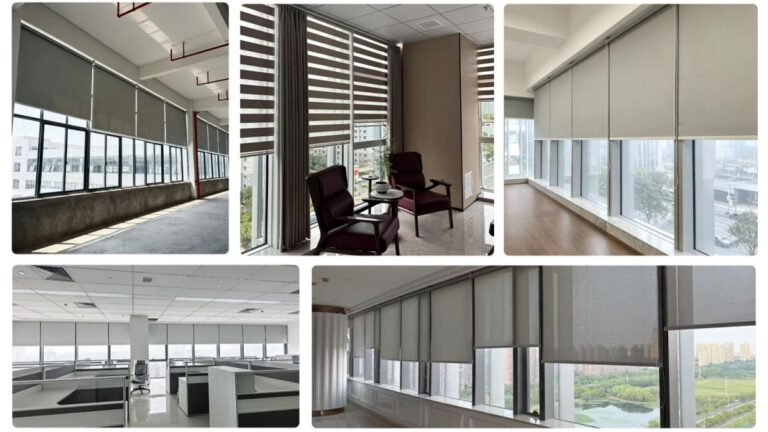
Window shades — sometimes called "blinds" in general B2B sourcing conversations — cover a specific set of products: roller, cellular, zebra, sheer, and their motorized variants. If you're reading this, you already know you need a shade supplier in China. What you probably don't have yet is a clear picture of where to actually start looking, and which starting point saves you the most time before you get to real conversations about specs, MOQ, and lead time.
We've been on the manufacturing side of this search for almost two decades — our company was founded in 2008 and has spent nearly 20 years producing and exporting window shades to markets across North America, Europe, and Australia. In that time, we've been found through every channel this article covers: trade show floors, B2B directory listings, and buyers who skipped all of that and emailed us directly. Some channels get you to a real conversation faster than others. This article walks through each one honestly, including where each one tends to waste your time.
One note before we start: this article is about finding candidates, not vetting them. Knowing where to look and knowing how to confirm a supplier is legitimate are two different skills, and conflating them is how buyers end up wiring deposits to companies that turn out to be trading companies reselling someone else's product under a different name.
What are the main channels for sourcing window shades from China?
There are four channels most B2B buyers use, and each one exists for a different stage of the sourcing process. B2B platforms are best for casting a wide net early on. Trade shows work well if you want face-to-face conversations and can see physical samples in person. Industry directories and trade associations offer a smaller, more curated list but with less searchability. Going directly to a manufacturer's own website and sales team is the slowest to discover but the most direct once you get there.
| Channel | Typical Strength | Typical Limitation | Verification Difficulty | Best Suited For |
|---|---|---|---|---|
| B2B platforms (e.g., Alibaba-type marketplaces) | Large volume of listings, easy initial filtering by product/price | Trading companies and factories often look identical on a listing page | High — photos and claims are self-reported | Early-stage browsing, price benchmarking |
| Trade shows | In-person product inspection, direct conversation with company reps | Costly and time-consuming to attend; not every real manufacturer exhibits every year | Medium — you can see samples, but not the factory floor | Buyers already close to a sourcing decision |
| Industry directories / associations | Smaller, more curated lists | Coverage varies widely by region and category | Medium — directory listing alone doesn't confirm manufacturing capability | Supplementing a shortlist, not building one from scratch |
| Direct outreach to a manufacturer's own site | Fastest path to a decision-maker, no intermediary markup | Requires already knowing which company you're contacting | Lower — you're dealing with the source, not a reseller | Buyers who already have a candidate or referral |
The practical takeaway: most experienced buyers use B2B platforms or trade shows to build an initial shortlist, then move to direct contact with the two or three candidates that seem most credible. Very few serious sourcing decisions get made entirely within a directory listing.
Are B2B platforms a reliable starting point?
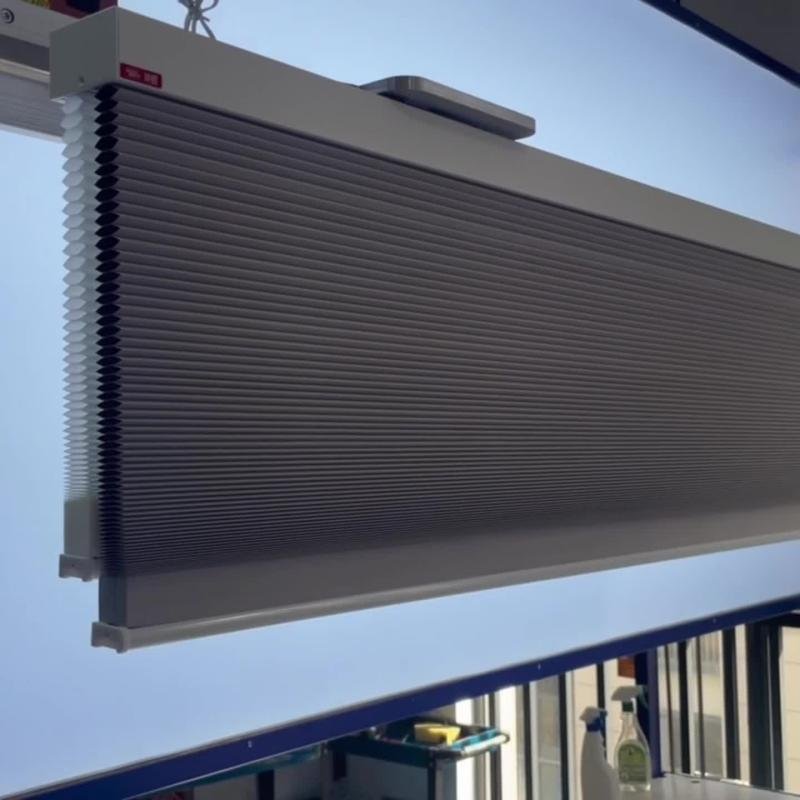
B2B marketplaces are a reasonable place to start browsing, but they are not a reliable place to finish your decision. The core problem is that these platforms don't distinguish clearly between a company that owns and operates production lines and a company that buys finished shades from someone else and resells them under its own storefront. Both can list identical-looking product photos, similar price ranges, and similar-sounding company descriptions.
This isn't a flaw unique to any one platform — it's structural. A marketplace listing is self-reported information, and there's no built-in mechanism on most platforms that verifies whether the seller actually manufactures what's in the photos. For a buyer doing initial research, that's fine — it's a filtering tool, not a trust tool. The mistake is treating a well-reviewed storefront as equivalent to a verified factory relationship.
If you've already built a shortlist from a marketplace search, the next question isn't "which listing looks most professional" — it's "how do I confirm this company actually makes what it's selling." That's a separate topic with its own checklist — we've laid out ten specific questions worth asking before you send any money in a companion guide.
Trading company or manufacturer — why the distinction changes your MOQ and customization options
A trading company sources finished shades from one or more external factories and resells them, while a manufacturer — sometimes described in the industry as a "vertically integrated" producer — makes its own core components and assembles finished product in-house. The distinction matters more than it might sound, because it directly affects what you can actually negotiate: MOQ flexibility, customization depth, lead time predictability, and whether quality issues get resolved quickly or get passed through two or three layers of communication before anyone with production authority even hears about them.
We manufacture on a "self-supplied components, in-house finished assembly" model — our raw material processing, core component production, and final assembly all happen within our own facilities, rather than being outsourced and reassembled from third-party parts. In practice, this is what lets us offer a 1-piece minimum order quantity on standard products and a 10-piece minimum on OEM customization, along with a three-tier customization structure — light customization (size and color adjustments), sample development (prototyping and function verification), and deep customization (structural development and material optimization for private-label or large-scale projects). You can see the full breakdown of this policy on our wholesale and customization terms page. A trading company reselling someone else's product typically can't offer this kind of flexibility, because customization requests have to be relayed back to a factory that has no direct relationship with you.
Here's the honest limit on that flexibility, and it applies no matter which channel you found us through: a 1-piece MOQ means you can test the product and confirm quality before committing to volume — it does not mean a 2,000-piece order can be turned around on the same production schedule as a sample. Orders above roughly 500 pieces go into normal production scheduling, the same as any other order of that size. If a supplier — any supplier, not just us — tells you they can rush a large order to ship "next day" regardless of what's already in their production queue, that's a claim worth questioning rather than a feature worth celebrating.
When does it make sense to contact a manufacturer directly?
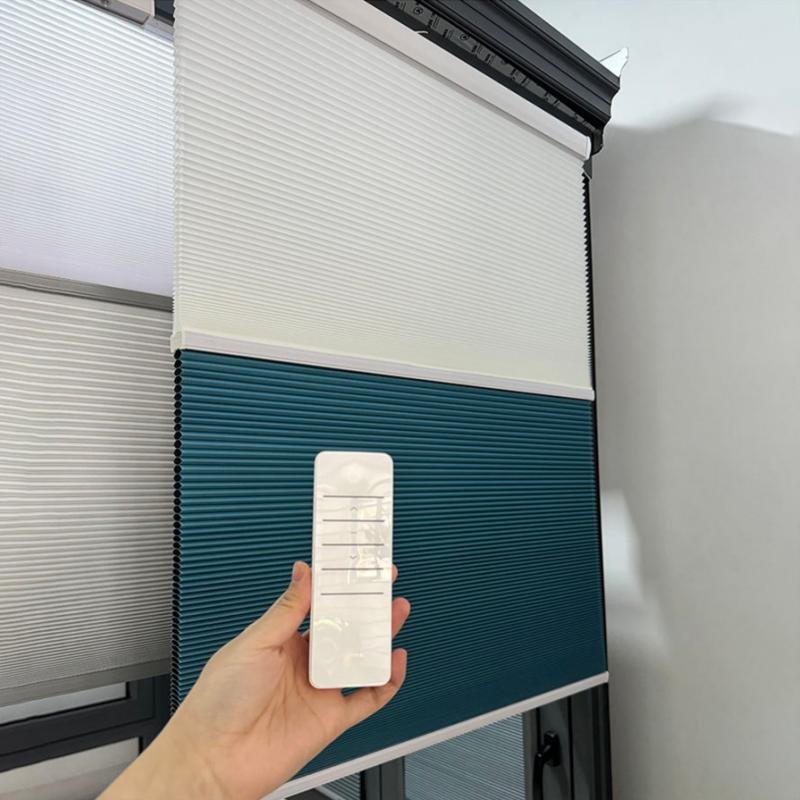
Going straight to a manufacturer makes the most sense once you know roughly what you need — not before. If you're still comparing product categories or price ranges in general, browsing a marketplace or directory is a reasonable way to build context. But once you have a specific product line in mind and a real question — can you develop a private-label version of this shade, can you get a sample before committing to a bulk order, can you meet a specific delivery timeline for a project — that question is best answered by the people who actually run the production line, not by an intermediary relaying it on your behalf.
This is particularly true for two groups of buyers. OEM/ODM brand customers developing a private-label product benefit from talking directly with a manufacturer's R&D and production team, since structural changes, packaging customization, or logo application all require direct coordination that a reseller can't manage efficiently. E-commerce sellers testing a new product line benefit from the low barrier of a 1-piece sample order, which lets you verify quality firsthand before deciding whether to scale up — something that's much easier to arrange when you're talking to the factory instead of a middleman.
Whichever channel gets you to that first conversation — a marketplace listing, a trade show booth, or a direct website inquiry — the conversation itself should cover the same ground: can they show you real production capacity, are they willing to discuss MOQ and customization tiers specifically, and can they give you a straight answer about lead time rather than a vague reassurance.
Where to go from here
Finding a candidate supplier is the first step, not the last one. Once you have a shortlist — whether it came from a marketplace, a trade show, or a direct referral — the next task is confirming that what you're looking at is a real manufacturer with the capacity it claims, not a well-photographed storefront. That's a different set of questions entirely, and worth working through before any deposit changes hands.
If you're developing a private-label product, our OEM/ODM solutions page walks through how our development process works, from initial spec discussion to sample approval.
If you're testing a new product line as an e-commerce seller, you can request a 1-piece sample before committing to anything larger — no need to negotiate a bulk order just to check quality first.
Frequently Asked Questions
What's the difference between a window shade trading company and a manufacturer? A manufacturer owns and operates its own production — raw materials, core components, and final assembly all happen in-house. A trading company sources finished shades from one or more external factories and resells them, usually without direct control over production timing, customization requests, or quality issues.
Is a B2B marketplace like Alibaba a reliable place to find a window shade manufacturer in China? It's a reasonable place to start browsing and compare product types, but marketplace listings are self-reported and don't distinguish clearly between factories and resellers. Treat it as a filtering tool for building a shortlist, not as proof that a listed company actually manufactures what it's selling.
What MOQ can I expect when sourcing window shades directly from a Chinese manufacturer? It varies by supplier, but a 1-piece MOQ on standard products and a 10-piece MOQ on OEM customization is achievable with the right manufacturer. Keep in mind that low MOQ applies to testing and sampling — larger orders (roughly 500+ pieces) typically require normal production scheduling rather than expedited turnaround.
Should I go to a trade show or just contact manufacturers directly? Trade shows are useful if you want in-person conversations and physical samples before narrowing your list, but they're costly and time-limited. If you already know your product category and have a specific question about customization, capacity, or timeline, contacting a manufacturer directly is usually faster.
How do I know if a supplier I found online is actually a real factory? That requires a separate verification process — checking for specifics like production line details, quality control procedures, and documentation, rather than taking marketing claims at face value. We cover this in more depth in a companion guide on vetting window shade suppliers in China.